CM Pema Khandu congratulates new Chief of Defence Staff
Synopsis
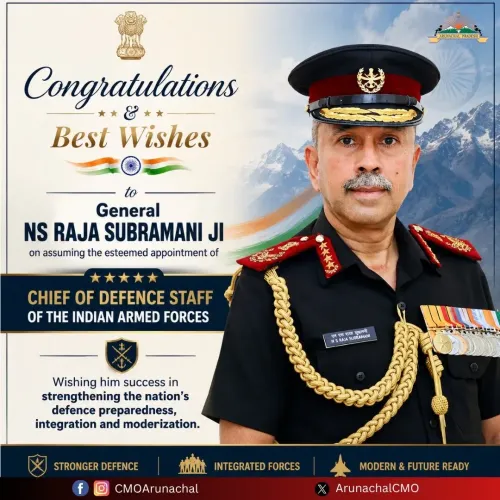
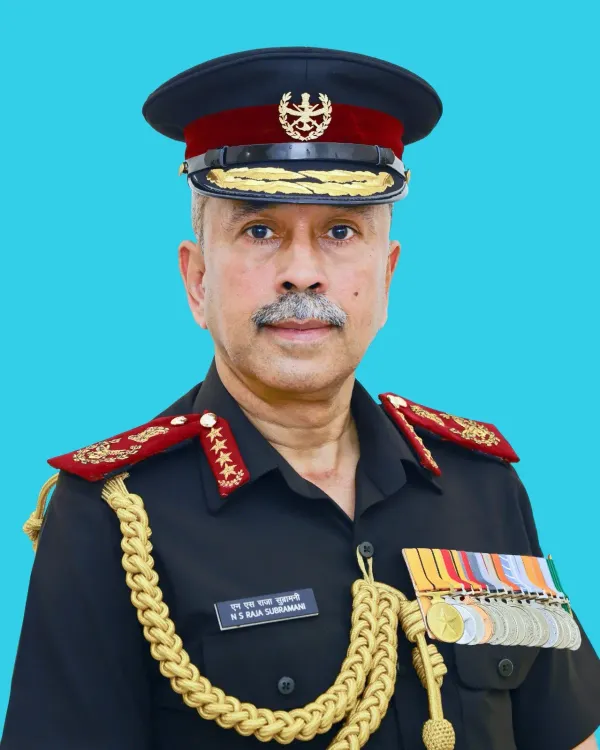
Arunachal Pradesh Chief Minister Pema Khandu on June 1, 2026 congratulated General NS Raja Subramani on assuming charge as India's Chief of Defence Staff, highlighting his operational experience and calling his leadership pivotal for advancing jointness, integration and modernisation across the Indian Armed Forces.
Key Takeaways
CM Pema Khandu congratulated General NS Raja Subramani on becoming India's new Chief of Defence Staff on June 1, 2026 .
The CDS post was created by the Government of India on 31 December 2019 to drive tri-service integration and higher defence reforms.
General Bipin Rawat was the first CDS (January 2020) and General Anil Chauhan was the second (September 2022).
Arunachal Pradesh shares a long border with China , making its Chief Minister's comments on defence appointments especially significant.
The new CDS inherits an ongoing agenda of theaterisation of commands, joint logistics, and armed forces modernisation.
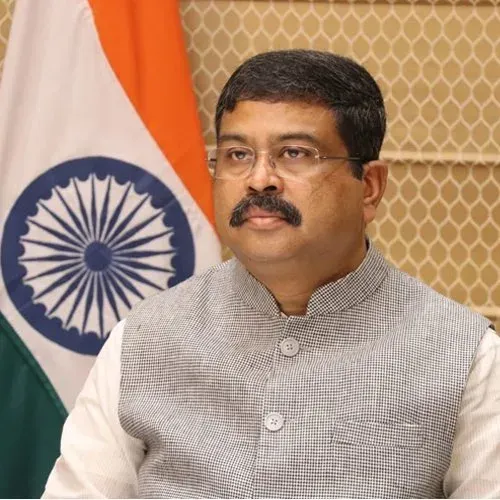
Arunachal Pradesh Chief Minister Pema Khandu on Monday, June 1, 2026, extended his congratulations to General NS Raja Subramani on assuming charge as the Chief of Defence Staff (CDS) of the Indian Armed Forces, describing him as a 'distinguished soldier with an exceptional record of service.'
Context
In his post, CM Khandu praised General Subramani's 'vast operational experience, visionary leadership and deep strategic insight,' expressing confidence that these qualities 'will play a pivotal role in advancing jointness, integration and modernization across the Armed Forces.' The Chief Minister wished the new CDS 'every success in this important responsibility and in his continued service to the country.'
The message from the Chief Minister of Arunachal Pradesh — a state sharing a long and sensitive border with China — carries particular weight, as frontier state leaders closely follow appointments at the apex of India's military command structure.
Policy Backdrop
The Chief of Defence Staff post was created by the Government of India on 31 December 2019, following long-standing recommendations for higher defence management reforms aimed at integrating the Army, Navy and Air Force under unified strategic planning.
General Bipin Rawat was appointed the first CDS in January 2020, serving until December 2021. General Anil Chauhan was subsequently appointed the second CDS in September 2022, carrying forward the agenda of jointness and theaterisation. General NS Raja Subramani now assumes this role as the latest steward of India's defence integration project.
The CDS functions as the principal military adviser to the government on tri-service matters and is central to driving structural reforms across the armed forces, including the creation of integrated theatre commands designed to improve operational synergy.
Stakeholders and Impact
The appointment is significant for border states such as Arunachal Pradesh, which depend directly on the operational readiness and strategic coherence of the Indian Armed Forces along India's northern frontiers. Political leaders from these states routinely signal their stake in national security appointments, and CM Khandu's post is consistent with that pattern.
For the Indian Armed Forces as a whole, the incoming CDS inherits an ongoing reform agenda that includes theaterisation of commands, joint logistics, and modernisation of equipment and doctrine. The emphasis in CM Khandu's message on 'jointness, integration and modernization' mirrors the institutional priorities the government has set for the office since its creation.
What's Next
Attention will now turn to the pace of theaterisation of commands under the new CDS, a structural reform that has seen deliberate, incremental progress since 2019. Any related budgetary or legislative measures in the next parliamentary session will be closely watched as indicators of how swiftly the new CDS moves the reform agenda forward.
As a senior BJP leader from a strategically vital border state, CM Khandu's public endorsement also underscores the broad political consensus around strengthening India's higher defence management — a consensus that has held across successive appointments to the CDS post.
Point of View
It signals the strategic weight that border-state leaders attach to the CDS appointment. His explicit invocation of 'jointness, integration and modernization' aligns precisely with the institutional mandate of the office, suggesting an awareness of the reform agenda that goes beyond routine political courtesy. The post also reinforces the BJP's consistent messaging around defence modernisation as a governance achievement. As theaterisation of commands remains the defining unfinished business of India's higher defence reforms, the new CDS will be watched closely by political and military stakeholders alike.
NationPress
15 Oct 2026
Frequently Asked Questions
Who is the new Chief of Defence Staff of India in 2026?
General NS Raja Subramani assumed charge as India's new Chief of Defence Staff in 2026 , as confirmed by congratulatory messages from senior political leaders including Arunachal Pradesh CM Pema Khandu .
What is the role of the Chief of Defence Staff in India?
The Chief of Defence Staff is a four-star tri-service position created on 31 December 2019 to act as the principal military adviser to the government and to drive integration, jointness and modernisation across the Army, Navy and Air Force .
Who were the previous Chiefs of Defence Staff in India?
General Bipin Rawat was India's first CDS, appointed in January 2020 , and General Anil Chauhan was the second, appointed in September 2022 .
Why did Arunachal Pradesh CM comment on the CDS appointment?
Arunachal Pradesh shares a long and sensitive border with China , making its Chief Minister's views on apex defence appointments particularly significant as a reflection of frontier-state security concerns.
What is theaterisation of commands in India?
Theaterisation refers to the structural reform of reorganising India's military into integrated theatre commands that bring the Army, Navy and Air Force under unified operational control, a key goal of the Chief of Defence Staff since the post was created in 2019 .