CM Pema Khandu Meets SBI Official to Boost MSME Credit in Arunachal
Synopsis
Arunachal Pradesh Chief Minister Pema Khandu met SBI's Tezpur Regional Business Office manager on 23 June 2026 to push for a better Credit-Deposit ratio, stronger MSME support, and simpler loan access — addressing the state's historically low banking penetration and credit gaps.
Key Takeaways
CM Pema Khandu held a direct meeting with SBI RBO Tezpur Regional Manager Rajib Bhagawati on 23 June 2026 .
Discussions focused on improving the Credit-Deposit (CD) Ratio in Arunachal Pradesh , which historically lags national averages.
Key loan sanction parameters reviewed included land valuation , financial documentation, and repayment capacity.
The meeting also covered expanding MSME support through bank tie-ups and streamlining finance access.
The engagement aligns with RBI mandates and national Atmanirbhar Bharat goals to raise institutional credit in the Northeast.
Follow-up state-level MSME outreach initiatives and RBI quarterly credit data for the region are key indicators to watch.
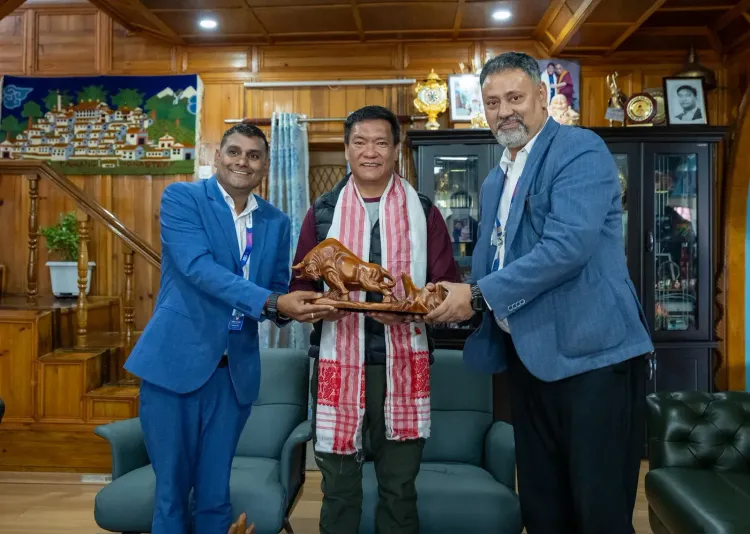
Arunachal Pradesh Chief Minister Pema Khandu met with Rajib Bhagawati, Regional Manager of the State Bank of India Regional Business Office (RBO), Tezpur, on Tuesday, 23 June 2026, to discuss expanding institutional credit access for entrepreneurs and micro, small, and medium enterprises (MSMEs) in the state.
Context
CM Khandu stated that 'greater access to institutional credit is key to unlocking the potential of our entrepreneurs and MSMEs.' The meeting centred on four core areas: improving the Credit-Deposit (CD) Ratio, strengthening support for MSMEs, expanding business through bank tie-ups, and streamlining access to finance. The discussions also covered key parameters in loan sanctions, including land valuation, financial documentation, and repayment capacity.
Arunachal Pradesh has historically recorded lower banking penetration and CD ratios compared to national averages, making institutional credit a persistent challenge for local businesses. The Chief Minister's direct engagement with a senior SBI official signals a push to address these structural gaps at the state level.
Policy Backdrop
The Reserve Bank of India (RBI) has maintained a sustained focus on raising CD ratios in north-eastern states through annual credit plans and financial inclusion drives since the early 2010s. A higher CD ratio indicates that a greater proportion of deposits mobilised in a region are being deployed as loans within the same region, directly benefiting local economic activity.
The 2020 Atmanirbhar Bharat stimulus package introduced emergency credit lines and enhanced guarantee cover for MSMEs through public sector banks, including SBI. Successive central and state governments have prioritised formalising the economy in the Northeast, reducing dependence on informal lending networks that often charge higher interest rates and carry less regulatory protection for borrowers.
Public sector banks are regularly tasked with improving CD ratios in under-served regions through targeted MSME lending and simplified documentation norms, aligning with national objectives of financial inclusion and balanced regional growth.
Stakeholders and Impact
The primary beneficiaries of improved MSME credit access would be small business owners, traders, and entrepreneurs across Arunachal Pradesh, many of whom currently rely on informal credit channels. Easier access to bank finance — with clearer norms on land valuation and documentation — could lower the cost of capital and reduce barriers to formal borrowing for first-time applicants.
Bank tie-ups discussed in the meeting could also open channels for co-lending arrangements or guarantee-backed schemes that make credit available to borrowers who may not meet conventional collateral requirements. This is particularly relevant in Arunachal Pradesh, where land titling and documentation norms differ from mainland India and have historically complicated loan processing.
What's Next
Observers will watch for follow-up announcements from the Arunachal Pradesh government, including state-level MSME credit outreach camps or revised documentation guidelines that may emerge from this engagement. The RBI's next quarterly credit deployment data for the North Eastern Region will provide a broader indicator of whether CD ratios in the region are trending upward. CM Khandu's direct involvement in banking-level discussions suggests the state government intends to actively monitor and advocate for improved credit flow rather than leaving the issue solely to institutional processes.
Point of View
Signalling that the state views banking access as a political as much as a financial priority. The focus on land valuation and documentation norms is telling: these are precisely the friction points that have long excluded Arunachal Pradesh's entrepreneurs from formal credit, and any relaxation would have outsized impact in a state where land titling is complex. This move fits a broader pattern across BJP-governed northeastern states of using high-visibility engagement with public sector banks to demonstrate economic governance. Whether the meeting translates into measurable CD ratio improvements will depend on follow-through at the branch level and RBI's willingness to set region-specific credit targets.
NationPress
22 Sept 2026
Frequently Asked Questions
What did CM Pema Khandu discuss with SBI in Tezpur?
CM Pema Khandu met SBI's Tezpur Regional Business Office manager to discuss improving the Credit-Deposit ratio, strengthening MSME support, expanding business through bank tie-ups, and streamlining loan access, including norms on land valuation and documentation.
What is the Credit-Deposit ratio and why does it matter for Arunachal Pradesh?
The Credit-Deposit (CD) ratio measures what share of deposits collected in a region are lent out locally. Arunachal Pradesh has historically had a low CD ratio, meaning deposits flow out of the state rather than funding local businesses, which limits economic growth.
How does SBI support MSMEs in northeast India?
SBI, as India's largest public sector bank, participates in priority sector lending mandates, government guarantee schemes, and RBI-directed credit plans aimed at improving MSME finance in under-served regions like the Northeast.
What is Atmanirbhar Bharat's relevance to MSME credit in Arunachal Pradesh?
The 2020 Atmanirbhar Bharat package introduced emergency credit lines and enhanced guarantee cover for MSMEs through public sector banks, providing a policy framework that states like Arunachal Pradesh can leverage to expand formal lending.
What should I watch for next regarding MSME credit in Arunachal Pradesh?
Watch for state government announcements on MSME credit outreach camps or revised loan documentation guidelines, as well as RBI's quarterly credit deployment data for the North Eastern Region, which will indicate whether CD ratios are improving.