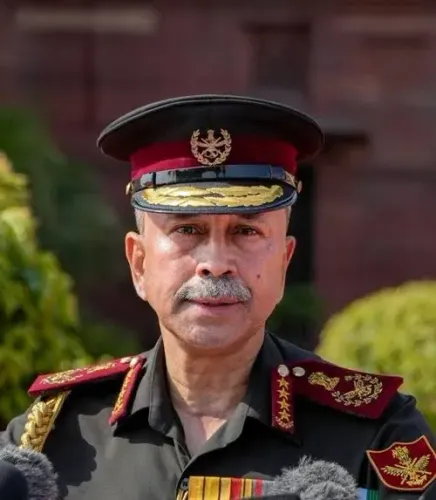
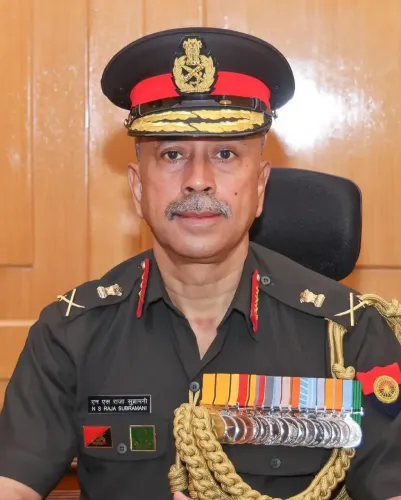
Anand Mahindra Backs New CDS General Raja Subramani
Synopsis
Mahindra Group chairman Anand Mahindra publicly congratulated General N S Raja Subramani on becoming India's new Chief of Defence Staff, calling the office a 'strategic necessity' and endorsing the incoming chief's vision of a unified military-industrial ecosystem spanning the armed forces, private sector, academia, and startups.
Key Takeaways
Mahindra Group chairman Anand Mahindra congratulated General N S Raja Subramani as India's new Chief of Defence Staff on 31 May 2026 .
Mahindra described the CDS office as a 'strategic necessity,' arguing that integration — not just strength — defines modern warfare.
He praised the new CDS's vision of a military-industrial complex uniting the armed forces, private sector, academia, startups, and research institutions .
The CDS position was established in December 2019 , with the Department of Military Affairs created simultaneously to drive tri-service jointness.
The Atmanirbhar Bharat initiative since 2020 has opened defence design and production to private firms and startups, aligning with the vision Mahindra endorsed.
Key policy milestones ahead include approvals for integrated theatre commands and expanded private-sector defence procurement lists.
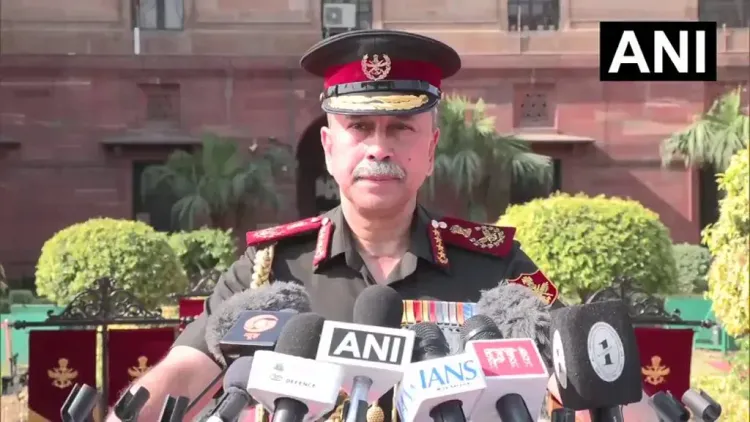
Mahindra Group chairman Anand Mahindra on Sunday, 31 May 2026 took to X to congratulate General N S Raja Subramani on his appointment as Chief of Defence Staff (CDS), calling the office 'a strategic necessity' and praising the incoming chief's articulated vision of an integrated military-industrial complex that brings together the armed forces, private sector, academia, startups, and research institutions.
Context
In his post, Mahindra wrote that 'the defining mantra of modern warfare is no longer just strength — it is integration,' underscoring why the CDS position matters beyond rank or ceremony. He described General Raja Subramani as projecting 'composure, clarity and what appears to be nerves of steel,' and noted being 'particularly struck by his articulate vision of India's new-age military-industrial complex.' The endorsement, from one of India's most prominent industrialists whose group has a significant defence manufacturing footprint, carries weight across both the corporate and policy communities.
Policy Backdrop
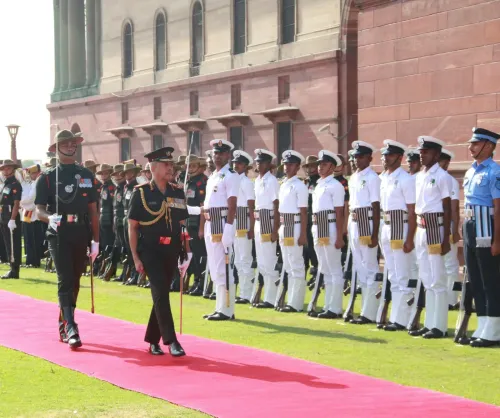
The office of the Chief of Defence Staff was formally created by the Government of India in December 2019, following decades of recommendations tracing back to the Kargil Review Committee of 1999 and the 2001 Group of Ministers report. The CDS serves as the single-point military adviser to the government and heads the Department of Military Affairs, which was simultaneously carved out within the Ministry of Defence to drive tri-service integration and jointness. General Bipin Rawat, India's first CDS, initiated the structural groundwork for integrated theatre commands before his death in 2021.
The broader policy environment has reinforced this integrationist push. The Atmanirbhar Bharat initiative, announced in 2020, explicitly opened defence design and production to private firms and startups, while successive procurement reforms have reserved categories for domestic players and eased foreign direct investment ceilings. Mahindra's emphasis on 'the armed forces, private sector, academia, startups, research and innovation' as a single ecosystem maps directly onto this policy architecture.
Stakeholders and Impact
For private defence manufacturers, the appointment of a CDS who articulates a clear industrial-integration vision signals continuity and potential acceleration of procurement pipelines that include non-public-sector entities. Startups operating in defence technology — drones, electronic warfare, advanced materials — stand to benefit if the new CDS actively champions their inclusion in capability development roadmaps. Academia and research institutions, long peripheral to procurement decisions, are explicitly named in the vision Mahindra highlighted.
For the armed forces themselves, the CDS role remains the linchpin of the long-pending move toward integrated theatre commands — a structural shift that would redraw how India's Army, Navy, and Air Force plan and execute joint operations. Mahindra's public endorsement amplifies civilian-sector confidence in the transition at a moment when that confidence has tangible consequences for investment and talent flows into the defence ecosystem.
What's Next
Attention will now turn to whether General Raja Subramani moves swiftly on Cabinet or parliamentary approvals for specific integrated theatre command structures, and to the next round of defence procurement lists that expand private-sector and startup participation. The new CDS's early institutional decisions — on jointness frameworks, indigenisation timelines, and industry engagement — will test whether the vision Mahindra found compelling translates into structural change. India's defence modernisation story is entering a phase where industrial policy and military strategy are increasingly inseparable.
Point of View
Suggesting the private sector sees General Raja Subramani as a potential accelerant for procurement reform. The post also implicitly raises the bar: by publicly anchoring the CDS's credibility to an 'articulate vision' of integration, Mahindra creates a reputational benchmark the new chief will be measured against. For policymakers, the convergence of industrial and military voices around the integration agenda strengthens the political case for moving quickly on theatre commands and domestic procurement expansion.
NationPress
14 Oct 2026
Frequently Asked Questions
Who is the new Chief of Defence Staff of India in 2026?
General N S Raja Subramani has been appointed as India's new Chief of Defence Staff, as referenced in Anand Mahindra's post on 31 May 2026 . The CDS is the single-point military adviser to the government and heads the Department of Military Affairs.
What did Anand Mahindra say about the new CDS?
Mahindra Group chairman Anand Mahindra called the CDS office 'a strategic necessity,' praised General Raja Subramani's 'composure, clarity and nerves of steel,' and said he was struck by the new chief's vision of an integrated military-industrial complex spanning the armed forces, private sector, academia, startups, and research institutions.
What is the role of the Chief of Defence Staff in India?
The Chief of Defence Staff is India's single-point military adviser to the government and heads the Department of Military Affairs within the Ministry of Defence. The position was created in December 2019 to promote integration and jointness across the Army, Navy, and Air Force.
Why is defence integration important for India?
Integration allows the three services — Army, Navy, and Air Force — to plan and operate jointly rather than in silos, improving effectiveness in modern multi-domain conflicts. India has been working toward integrated theatre commands and a unified military-industrial base since recommendations made after the Kargil conflict of 1999 .
How does Atmanirbhar Bharat relate to India's defence sector?
The Atmanirbhar Bharat initiative, launched in 2020 , explicitly encouraged private firms, startups, and research institutions to participate in defence design and production. It has been accompanied by eased FDI limits and reserved procurement categories for domestic players, forming the policy foundation for the integrated military-industrial ecosystem Mahindra endorsed.