CM Joseph Vijay Announces State Incentive for Paddy and Sugarcane Farmers
Synopsis
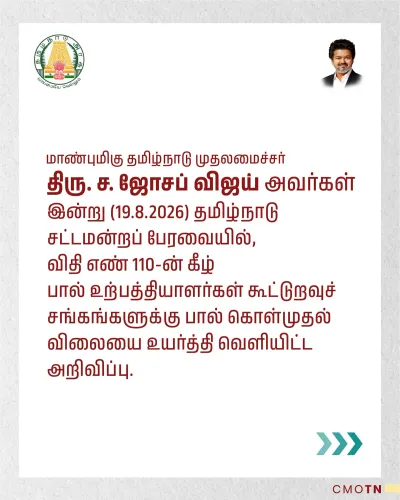
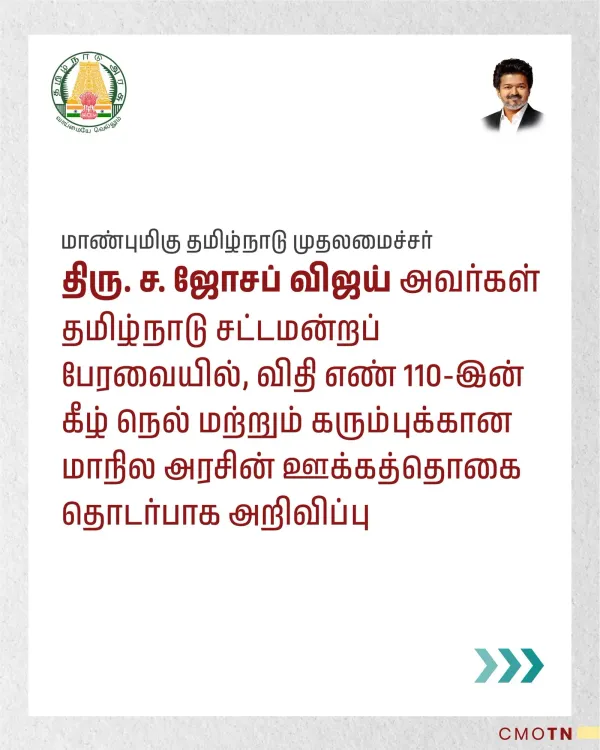
Chief Minister C. Joseph Vijay announced state incentives for paddy and sugarcane farmers in the Tamil Nadu Legislative Assembly under Rule 110 on 10 August 2026, placing the government's agricultural support commitment formally on the legislative record.
Key Takeaways
Joseph Vijay made a formal announcement on state incentives for paddy and sugarcane in the Tamil Nadu Legislative Assembly on 10 August 2026 .
The statement was made under Rule 110 , a procedural provision for ministerial announcements of public importance, giving it official legislative standing.
Tamil Nadu has a long-standing policy of providing state-level crop incentives on top of the central government's Minimum Support Price, especially for Cauvery delta paddy farmers.
Specific incentive amounts, eligibility criteria, and disbursement timelines were not disclosed in the initial post and are expected in follow-up government orders.
Both paddy and sugarcane farmers are named as beneficiaries, covering two of the state's most economically significant crops.
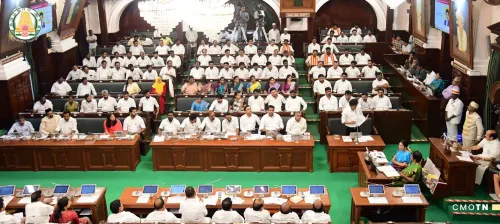
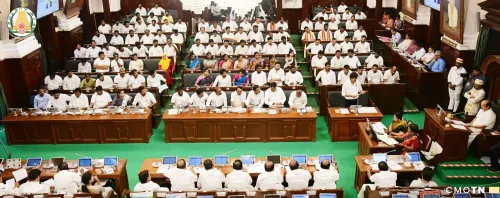
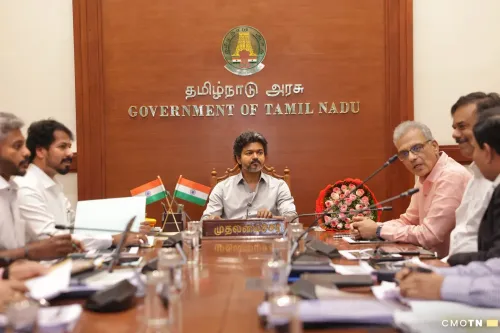
Tamil Nadu's paddy and sugarcane farmers received a direct signal from the top on Monday, 10 August 2026, as Chief Minister C. Joseph Vijay rose in the Tamil Nadu Legislative Assembly to make a formal announcement on state incentives for the two crops — a move that places the government's agricultural support commitment on the legislative record.
The announcement was made under Rule 110 of the assembly's procedural rules, a provision reserved for statements of public importance by ministers. By choosing this route, the Chief Minister's Office signalled that the incentive declaration carries official weight and is not a mere policy intention — it is a floor statement that the government is accountable to.
Why Paddy and Sugarcane, and Why Now
Tamil Nadu has a long-standing practice of layering state-level incentives on top of the central government's Minimum Support Price for paddy, particularly for farmers in the Cauvery delta — the state's rice bowl. Sugarcane growers, concentrated in districts feeding the state's sugar mills, have similarly depended on periodic state top-ups to make cultivation viable when mill payment delays or market fluctuations bite.
Announcing such incentives through a Rule 110 assembly statement, rather than a press release or cabinet note, is a deliberate political and administrative choice. It forces the government to own the numbers in a forum where the opposition can immediately question, scrutinise, and hold it to account — raising the stakes of the commitment considerably.
What Farmers Will Be Watching
The post from the Chief Minister's Office of Tamil Nadu does not specify the exact incentive amounts, the eligibility criteria, or the disbursement timeline — details that will determine how meaningful the announcement proves on the ground. For the state's paddy and sugarcane farming communities, those specifics are everything: a headline figure without a clear procurement or payment mechanism has limited practical value.
Follow-up details from the assembly session and subsequent government orders will clarify whether this incentive builds on previous years' support levels or marks a fresh enhancement. Either way, the legislative announcement puts the government on record — and farmers, farm unions, and opposition benches will be watching the fine print closely.
The crop incentive may be a familiar instrument in Tamil Nadu's agricultural policy toolkit, but every rupee announced on that assembly floor is a rupee the exchequer must account for — and a promise the government now owns.
Point of View
Raising the political cost of non-delivery. Tamil Nadu has historically used state-level top-ups to cushion farmers from central MSP gaps, especially in the Cauvery delta, making this part of a durable welfare-politics pattern. The absence of specific figures in the initial post is notable: the real test of this announcement lies in the government orders that follow. For the DMK administration, visible farmer support ahead of any electoral cycle is both a policy imperative and a political necessity in a state where agrarian distress has historically shaped electoral outcomes.
NationPress
24 Sept 2026
Frequently Asked Questions
What did CM Joseph Vijay announce for Tamil Nadu farmers?
Chief Minister C. Joseph Vijay announced state government incentives for paddy and sugarcane farmers in the Tamil Nadu Legislative Assembly on 10 August 2026, using a Rule 110 statement to place the commitment on the official legislative record.
What is Rule 110 in the Tamil Nadu Assembly?
Rule 110 is a procedural provision in the Tamil Nadu Legislative Assembly that allows ministers to make formal statements on matters of public importance, giving those announcements official standing and making the government accountable to the legislature.
How much incentive will Tamil Nadu paddy farmers get in 2026?
The specific incentive amounts have not been disclosed in the initial announcement. Follow-up government orders after the Rule 110 assembly statement are expected to detail the figures, eligibility, and disbursement process.
Why does Tamil Nadu give separate state incentives for paddy and sugarcane?
Tamil Nadu supplements the central government's Minimum Support Price with state-level incentives to protect farmers — particularly in the Cauvery delta rice belt — from price volatility, procurement delays, and the high cost of cultivation.
Which farmers benefit from Tamil Nadu's sugarcane and paddy incentive scheme?
Paddy farmers, especially in the Cauvery delta region, and sugarcane growers supplying the state's sugar mills are the primary beneficiaries of Tamil Nadu's periodic state crop incentive announcements.