TN CM announces relief for Sivakasi blast victims' families
Synopsis
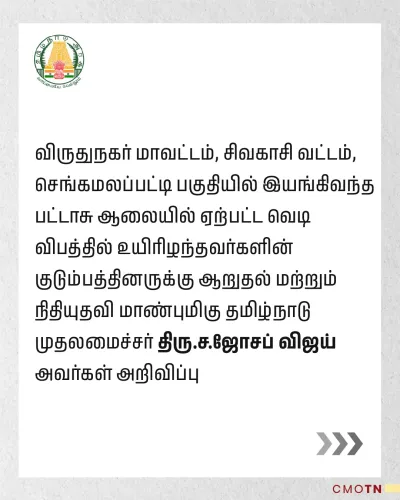
Chief Minister S. Joseph Vijay announced financial assistance and condolences for families of victims killed in a fireworks factory blast in Vadapatti village, Sivakasi taluk, Virudhunagar district on 13 August 2026, as Tamil Nadu's fireworks belt faced yet another deadly explosion.
Key Takeaways
A fatal explosion struck a privately owned fireworks factory in Vadapatti village, Sivakasi taluk, Virudhunagar district on 13 August 2026 .
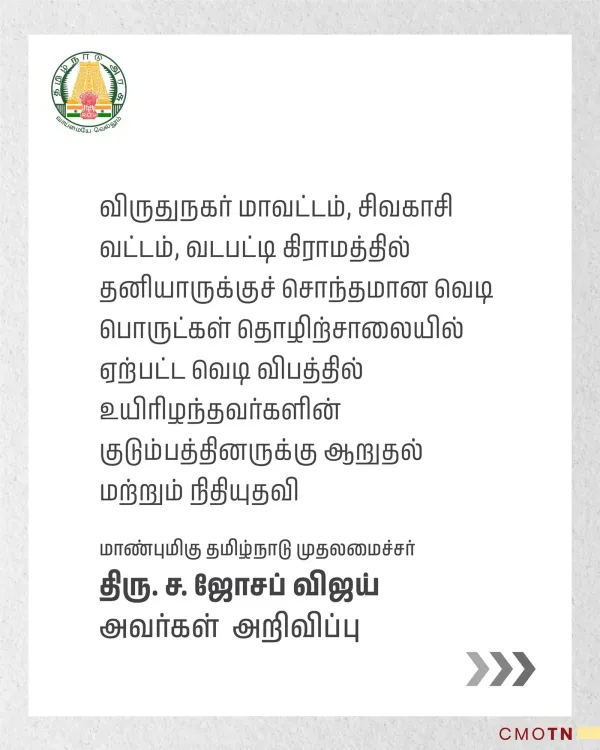
Joseph Vijay announced financial relief and condolences to the victims' families through the Chief Minister's Office.
Sivakasi is India's primary fireworks and safety-match manufacturing hub, employing tens of thousands of workers in privately owned units.
Tamil Nadu governments have historically responded to Sivakasi blasts with ex-gratia payments and temporary closures, with incidents recorded as far back as 2012 and earlier.
Fireworks units operate under PESO licences ; improper storage and handling remain persistent causes of fatal accidents.
An official accident inquiry is expected, with its outcome likely to determine whether fresh safety audits or licensing directives follow.
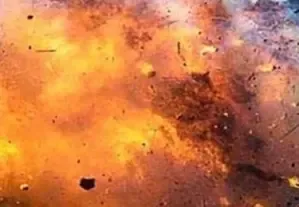
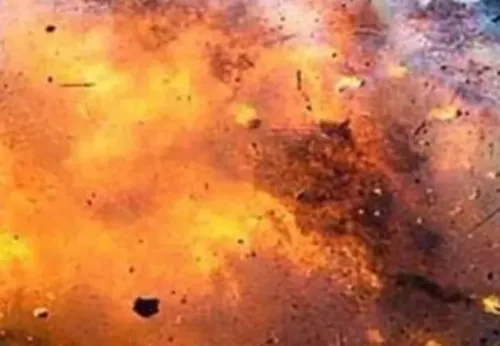
A deadly explosion at a privately owned fireworks factory in Vadapatti village, Sivakasi taluk, Virudhunagar district has claimed lives — and the Chief Minister's Office of Tamil Nadu moved swiftly on Thursday, 13 August 2026, announcing financial assistance and condolences to the bereaved families on behalf of Chief Minister Mr. S. Joseph Vijay.
What the CM announced for victims' families
The Chief Minister's Office confirmed that Chief Minister S. Joseph Vijay has announced both condolences and financial relief (nidhi udavi — monetary assistance) for the families of those killed in the blast. The explosion occurred at a private explosives manufacturing unit in Vadapatti, a village within the Sivakasi industrial belt that has long been the nerve centre of India's fireworks trade.
Sivakasi's long shadow: a town built on fire
Sivakasi is no stranger to this grief. Nestled in Virudhunagar district in southern Tamil Nadu, the town produces the overwhelming majority of India's fireworks and safety matches, running hundreds of privately owned units licensed under explosive safety regulations. The industry employs tens of thousands of workers — many from low-income families with few alternative livelihoods.
Fatal blasts are a recurring chapter in Sivakasi's story. Tamil Nadu governments across administrations have responded to high-casualty incidents — including major explosions in 2012 and before — with ex-gratia payments, temporary factory closures, and renewed pledges to enforce safety norms. The pattern is painfully familiar: tragedy, compensation, inquiry, and a return to the same structural vulnerabilities.
The regulatory tightrope: jobs versus safety
Every Sivakasi blast reignites the same debate. Fireworks units operate under licences issued by the Petroleum and Explosives Safety Organisation (PESO), yet improper storage and handling remain persistent risk factors. State administrations have historically balanced the industry's enormous employment footprint against the imperative to enforce safety standards — a tightrope walk that rarely ends without cost.
The outcome of the official accident inquiry now ordered will be closely watched. Whether it triggers meaningful action on licensing conditions or safety audits — or becomes another entry in a long ledger of unimplemented recommendations — will define the government's response beyond the immediate relief announcement.
For the families of Vadapatti, the announcement of financial assistance is the first, necessary step. Whether it is followed by the harder work of making sure this does not happen again is the question that will outlast the headlines.
Point of View
Solemn condolences, and a promised inquiry. For the new CM, Joseph Vijay, this is an early test of whether his administration can move beyond the reactive cycle that has defined the state's relationship with its fireworks industry for decades. The structural tension between Sivakasi's economic weight — it is a major employer in a region with limited alternatives — and the persistent failure to eliminate basic safety hazards remains unresolved. How aggressively the government pursues the accident inquiry and translates its findings into enforceable action will signal whether this administration intends to break the pattern or simply manage it.
NationPress
28 Sept 2026
Frequently Asked Questions
What happened at the Sivakasi fireworks factory in August 2026?
A fatal explosion occurred at a privately owned fireworks manufacturing unit in Vadapatti village, Sivakasi taluk, Virudhunagar district, Tamil Nadu on 13 August 2026, killing multiple workers.
What relief did Tamil Nadu CM announce for Sivakasi blast victims?
Chief Minister S. Joseph Vijay announced financial assistance and condolences for the families of those killed in the Vadapatti fireworks factory explosion, as announced by the Chief Minister's Office on 13 August 2026.
Why do fireworks factory accidents keep happening in Sivakasi?
Sivakasi hosts hundreds of privately owned fireworks and safety-match units licensed under explosive safety regulations. Improper storage and handling of raw explosive materials are persistent risk factors, and enforcement of safety norms has historically been inconsistent.
Has the Tamil Nadu government given compensation in past Sivakasi blasts?
Yes. Tamil Nadu governments across administrations have announced ex-gratia payments and job assurances to victim families after major Sivakasi blasts, including incidents in 2012 and earlier, as part of a recurring post-accident response pattern.
What is PESO and how does it regulate Sivakasi fireworks factories?
The Petroleum and Explosives Safety Organisation (PESO) is the central body that issues licences to fireworks manufacturing units in India, including those in Sivakasi. Factories must comply with its storage and handling norms, though enforcement lapses have contributed to repeated fatal accidents.