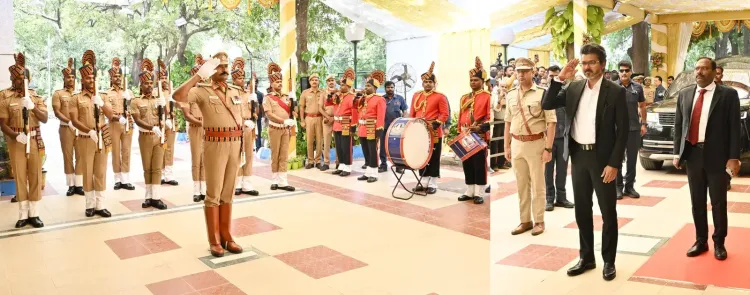
CM Joseph Vijay arrives at Tamil Nadu House, New Delhi
Synopsis
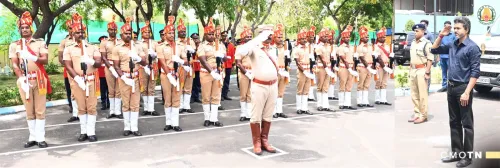
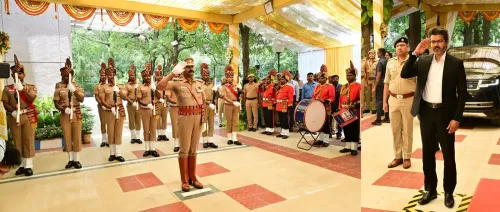
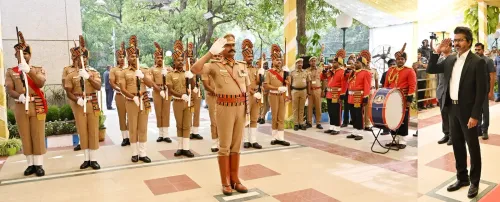
Chief Minister C. Joseph Vijay arrived at Tamil Nadu House in New Delhi on 27 May 2026 and received a ceremonial police guard of honour, marking the formal start of an official visit to the national capital for central-state engagements.
Key Takeaways
Joseph Vijay arrived at Tamil Nadu House, New Delhi on 27 May 2026 .
He received a ceremonial guard of honour from police personnel upon arrival.
The visit was officially announced by the Chief Minister's Office of Tamil Nadu at 4:12 PM IST .
Tamil Nadu House is the state's official guest house and liaison office in the national capital.
The visit is expected to include meetings with union ministries on matters of state interest.
The ceremonial reception follows established federal protocol for sitting Chief Ministers visiting New Delhi.
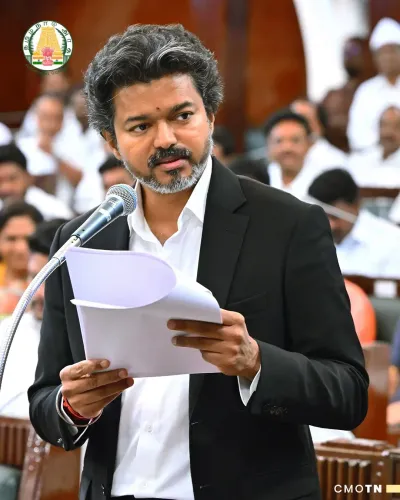
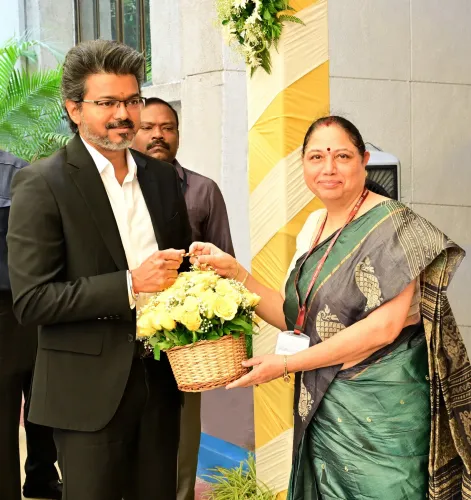
The Chief Minister's Office of Tamil Nadu announced on Wednesday, 27 May 2026 that Chief Minister C. Joseph Vijay arrived at Tamil Nadu House, New Delhi, where he received a ceremonial guard of honour from police personnel. The official post, shared at 4:12 PM IST, was accompanied by an image of the formal reception.
The Tamil-language post stated: 'இன்று (27.5.2026) புதுதில்லி தமிழ்நாடு இல்லத்திற்கு வருகை தந்த மாண்புமிகு தமிழ்நாடு முதலமைச்சர் திரு. ச. ஜோசப் விஜய் அவர்கள் காவல்துறையினரின் அணிவகுப்பு மரியாதையை ஏற்றுக் கொண்டார்.' In English: 'The Honourable Chief Minister of Tamil Nadu, Mr C. Joseph Vijay, who visited Tamil Nadu House, New Delhi today (27.5.2026), received a guard of honour from police personnel.'
Context
Tamil Nadu House in New Delhi serves as the official state guest house and liaison office maintained by the Government of Tamil Nadu for use by state officials during visits to the national capital. A ceremonial guard of honour on arrival is a standard protocol extended to a sitting Chief Minister, reflecting the constitutional standing of the office.
Chief Ministers of Tamil Nadu have long observed this tradition of formal receptions at Tamil Nadu House during New Delhi visits, a practice consistent with conventions followed by successive state governments since independence.
Policy Backdrop
State Chief Ministers routinely travel to New Delhi to engage with union ministries and senior central government officials on matters ranging from fiscal transfers and infrastructure funding to policy implementation. Such visits are a cornerstone of India's centre-state coordination framework under the constitutional federal structure.
The guard of honour and the stay at the state bhawan are established federal protocols that signal the formal, official nature of the visit, distinguishing it from private or political travel.
Stakeholders and Impact
The primary stakeholders in this visit are the Government of Tamil Nadu, central government ministries, and the Delhi Police personnel who performed the ceremonial duty. For the people of Tamil Nadu, a Chief Minister's visit to the capital typically signals active pursuit of state interests at the federal level.
Such engagements carry significance for pending state demands including infrastructure project approvals, special grants, and policy coordination between Chennai and New Delhi.
What's Next
Following the ceremonial arrival, CM Joseph Vijay is expected to hold meetings with union ministers and officials as part of the visit's official agenda. Outcomes of such meetings — including announcements on central funding or project clearances for Tamil Nadu — are typically communicated through the Chief Minister's Office in the days that follow.
The visit underscores the ongoing importance of direct chief ministerial engagement with the central government as a mechanism for advancing state priorities within India's federal framework.
Point of View
Complete with a police guard of honour, signals an official New Delhi engagement at a time when centre-state fiscal and infrastructure negotiations remain consequential for the state. The use of established protocol underscores the visit's institutional character rather than a purely political one. For a Chief Minister, a personal visit to the capital is often the most effective lever for advancing pending state demands that stall in bureaucratic channels. How the visit translates into tangible outcomes — project clearances, funding releases, or policy agreements — will be the real measure of its significance.
NationPress
24 Sept 2026
Frequently Asked Questions
Why did CM Joseph Vijay visit New Delhi on 27 May 2026?
The Chief Minister's Office announced that CM C. Joseph Vijay visited Tamil Nadu House in New Delhi on 27 May 2026 . The stated occasion was an official visit, during which he received a ceremonial guard of honour. Chief Ministers typically travel to New Delhi to meet union ministers on matters of state funding, infrastructure, and policy.
What is Tamil Nadu House in New Delhi?
Tamil Nadu House is the official state guest house and liaison office maintained by the Government of Tamil Nadu in New Delhi . It is used by the Chief Minister and other senior state officials during visits to the national capital for central government meetings.
What is a guard of honour for a Chief Minister?
A guard of honour is a ceremonial protocol in which police or armed personnel form a formal parade to receive a dignitary. For a sitting Chief Minister, it is a standard constitutional courtesy extended upon arrival at official premises, reflecting the status of the office.
Who is the Chief Minister of Tamil Nadu in 2026?
According to the official post by the Chief Minister's Office of Tamil Nadu , C. Joseph Vijay is the Chief Minister of Tamil Nadu as of 27 May 2026 .
What happens during a Tamil Nadu CM's official visit to Delhi?
During an official New Delhi visit, the Tamil Nadu Chief Minister typically stays at Tamil Nadu House , receives ceremonial protocol on arrival, and holds meetings with union ministers and senior central government officials to discuss state-specific issues such as infrastructure funding, special grants, and policy implementation.