CM Joseph Vijay Calls on President Murmu at Rashtrapati Bhavan
Synopsis
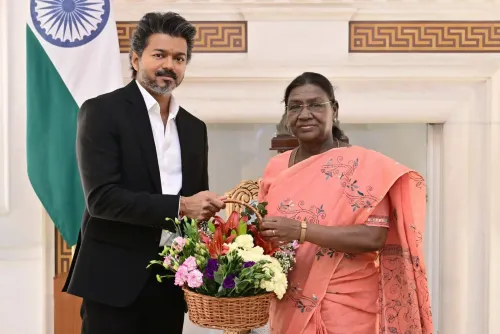
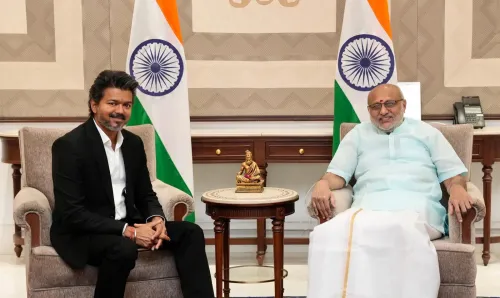
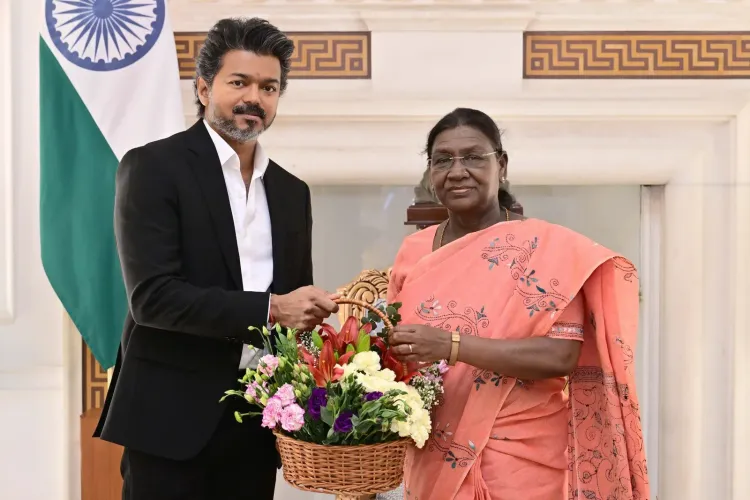
Tamil Nadu Chief Minister S. Joseph Vijay called on President Droupadi Murmu at Rashtrapati Bhavan in New Delhi on 10 June 2026. The courtesy meeting, announced by the Chief Minister's Office on X, reflects standard federal protocol and the state's engagement with India's constitutional head.
Key Takeaways
Joseph Vijay met President Droupadi Murmu at Rashtrapati Bhavan on 10 June 2026 .
The meeting was described by the CMO as a formal courtesy call — மரியாதை நிமித்தமாக — meaning 'as a mark of respect.' Droupadi Murmu has been President of India since July 2022 , the first person from a tribal community to hold the office.
No specific agenda was disclosed; such calls typically cover state development priorities and centre-state coordination.
The interaction is part of a long-standing federal protocol practiced by Chief Ministers across India since the 1950s .
Follow-up policy or funding developments linked to the meeting may emerge in the Tamil Nadu Assembly or Union ministry communications.
Tamil Nadu Chief Minister S. Joseph Vijay called on President of India Droupadi Murmu at Rashtrapati Bhavan, New Delhi, on 10 June 2026, in a courtesy meeting that underscores the state's engagement with the constitutional head of the republic. The Chief Minister's Office of Tamil Nadu announced the meeting on X, sharing an image from the occasion.
Context
The Tamil Nadu CMO's post, written in Tamil, states that 'மரியாதை நிமித்தமாக சந்தித்துப் பேசினார்' — meaning the Chief Minister met and spoke with the President 'as a mark of respect.' Such courtesy calls are a standard feature of India's federal protocol, signalling the state government's regard for the constitutional office of the President.
Droupadi Murmu has served as President of India since July 2022, becoming the first person from a tribal community to hold the office. Her tenure has seen Chief Ministers from across the political spectrum call on her at Rashtrapati Bhavan to discuss state-specific concerns or to maintain centre-state relations.
Policy Backdrop
Courtesy calls by state Chief Ministers on the President are a long-standing convention in Indian parliamentary democracy, dating back to the 1950s. These meetings serve multiple purposes: they allow Chief Ministers to apprise the President of ground-level governance challenges, seek constitutional guidance, and reinforce cooperative federalism.
While the specific agenda of Wednesday's meeting was not disclosed in the official post, such interactions typically cover a range of topics from state development priorities to pending legislative matters that may require the President's assent. The meeting reflects the advisory and ceremonial role the President plays in India's federal structure.
Stakeholders and Impact
The primary stakeholders of this engagement are the people of Tamil Nadu, whose interests the Chief Minister represents at the national level. Any matters raised during the meeting — whether related to central funding, pending Bills, or state-specific constitutional questions — would directly affect the state's governance trajectory.
State officials and Union ministry counterparts also stand to benefit from the goodwill and communication channels that such high-level interactions help maintain. For Tamil Nadu, a state with a distinct political identity and a history of asserting federal autonomy, a direct dialogue with the President carries both symbolic and practical significance.
What's Next
Follow-up discussions in the Tamil Nadu Legislative Assembly or with Union ministries may shed light on the specific issues tabled during the meeting. Observers will watch for any policy announcements or central allocations to Tamil Nadu in the weeks following this visit that could be traced back to the discussions at Rashtrapati Bhavan. The meeting sets the tone for continued centre-state dialogue as the state navigates its governance agenda through the remainder of 2026.
Point of View
Direct access to the President's office is a strategic asset, not merely a ritual. The timing and the CMO's decision to publicise the meeting on social media also suggest an intent to project governance credibility to a domestic audience. Analysts will track whether any tangible policy outcomes — central grants, legislative clearances, or disaster relief — follow in the near term.
NationPress
22 Sept 2026
Frequently Asked Questions
Why did Tamil Nadu CM Joseph Vijay meet President Droupadi Murmu?
The meeting was a formal courtesy call, as stated by the Chief Minister's Office of Tamil Nadu. Such visits are standard federal protocol in India, allowing Chief Ministers to engage with the constitutional head of the republic and discuss state-level concerns.
Where did CM Joseph Vijay meet President Murmu?
The meeting took place at Rashtrapati Bhavan in New Delhi , the official residence and workplace of the President of India.
Who is Droupadi Murmu?
Droupadi Murmu is the President of India, serving since July 2022 . She is the first person from a tribal community to hold the office.
What is the significance of a Chief Minister calling on the President of India?
Such courtesy calls are a long-standing convention in Indian parliamentary democracy. They allow Chief Ministers to brief the President on state affairs, seek constitutional guidance, and reinforce cooperative federalism between the state and the Union.
What issues were discussed during the meeting?
The Chief Minister's Office did not disclose the specific agenda. Typically, such meetings cover state development priorities, pending legislation requiring the President's assent, and broader centre-state coordination matters.