CM Vijay Inspects Koyambedu TTRO Plant in Chennai
Synopsis
Tamil Nadu Chief Minister Joseph Vijay on 27 July 2026 inspected the 45 MLD Tertiary Treatment Reverse Osmosis plant at Koyambedu, operated by CMWSSB. The facility recycles treated sewage for industrial reuse, reducing Chennai's freshwater demand. The visit signals continued state priority on water recycling infrastructure.
Key Takeaways
CM Joseph Vijay personally inspected the Koyambedu TTRO plant on 27 July 2026 .
The facility has a capacity of 45 million litres per day (MLD) and uses reverse osmosis membrane technology.
The plant is operated by the Chennai Metropolitan Water Supply and Sewerage Board (CMWSSB) .
Treated water from the plant is supplied to industrial units, reducing pressure on Chennai's freshwater reservoirs.
Tamil Nadu has expanded TTRO capacity across multiple sites under JNNURM and AMRUT funding frameworks.
The inspection may precede announcements on capacity expansion or new industrial supply pipelines.
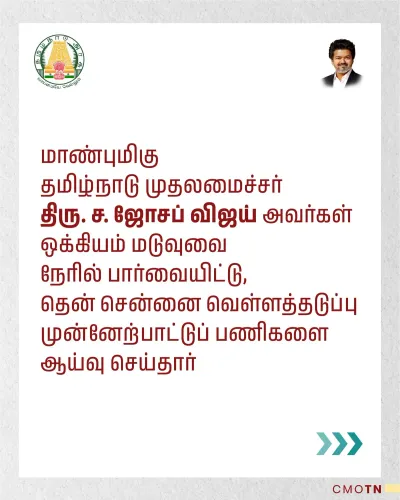
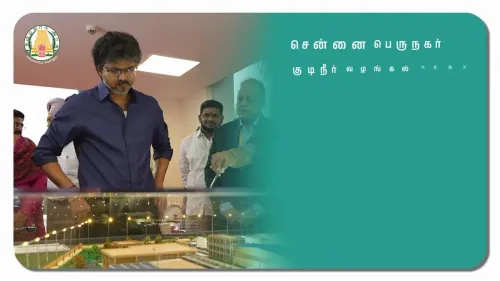
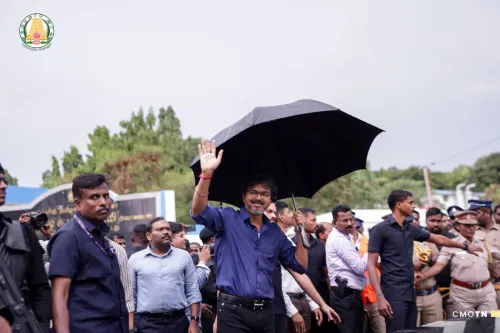
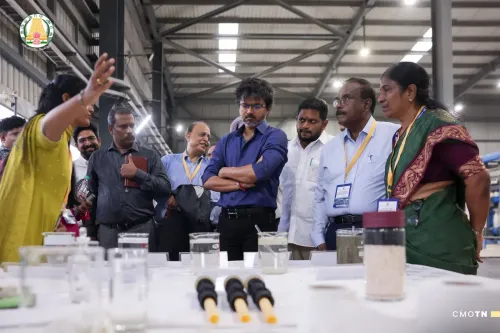
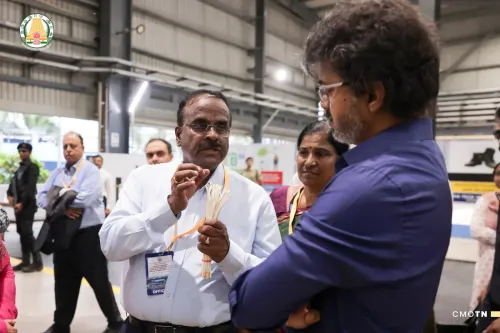
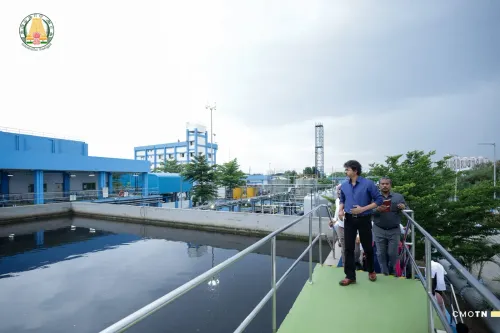
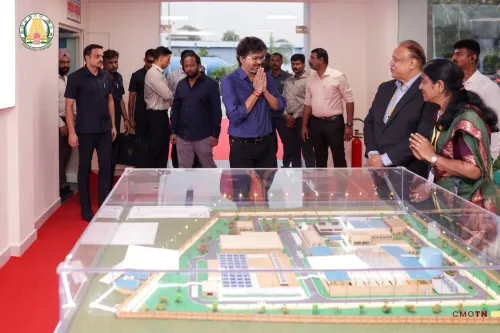
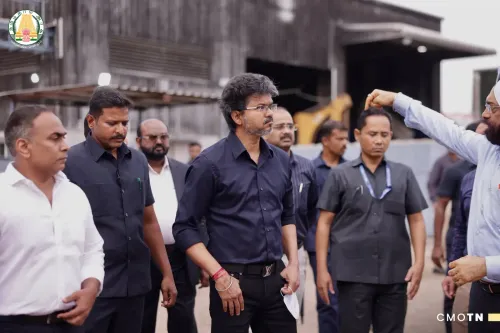
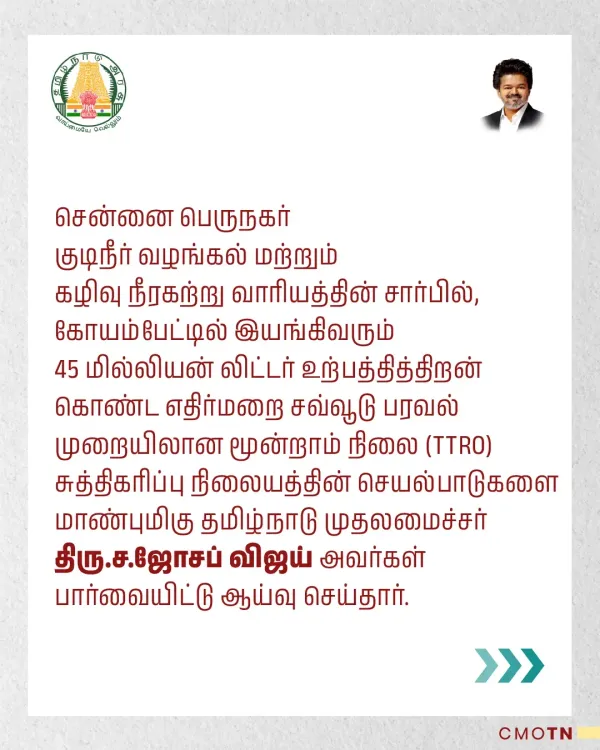
Tamil Nadu Chief Minister Joseph Vijay on Monday, 27 July 2026, inspected and reviewed the operations of the 45 million litre per day (MLD) Tertiary Treatment Reverse Osmosis (TTRO) water reclamation plant at Koyambedu, Chennai, operated by the Chennai Metropolitan Water Supply and Sewerage Board (CMWSSB).
Context
The Koyambedu TTRO facility is one of Chennai's primary wastewater recycling installations, processing secondary sewage effluent through a reverse osmosis membrane system to produce treated water suitable for industrial reuse. The plant operates at a capacity of 45 MLD, reducing the city's dependence on freshwater sources for industrial supply. The Chief Minister's Office posted on X confirming that CM Vijay personally visited and examined the plant's ongoing operations.
Policy Backdrop
Tamil Nadu has systematically expanded its tertiary treatment and wastewater reuse infrastructure over the past decade as a structural response to Chennai's recurring water scarcity, driven by erratic monsoon patterns and rapidly growing urban demand. The CMWSSB has progressively added TTRO capacity across multiple sites, with the Koyambedu plant among the earliest large-scale facilities commissioned under state and central funding frameworks including JNNURM and subsequently AMRUT. These projects form part of a broader push toward a circular water economy in which treated wastewater displaces freshwater in industrial processes.
The reverse osmosis stage in a TTRO plant strips residual dissolved solids from biologically treated effluent, yielding high-quality recycled water. Supplying this to industrial clusters reduces pressure on reservoirs such as Chembarambakkam and Poondi, which serve the city's domestic needs.
Stakeholders and Impact
Chennai's residential population benefits indirectly when industrial demand is redirected from the city's raw water sources to recycled supply. Industrial units in and around Koyambedu and nearby manufacturing zones are the direct consumers of the treated output, gaining a more reliable and cost-effective water source. The CMWSSB also reduces the volume of treated effluent discharged into water bodies, easing environmental load on the city's drainage network.
An on-site inspection by the Chief Minister signals political priority for the infrastructure and may precede administrative decisions on capacity expansion, maintenance funding, or new pipeline networks to widen industrial supply coverage.
What's Next
Observers will watch for follow-up announcements from the Tamil Nadu government on budget allocations or tender notices for additional TTRO modules and distribution pipelines connecting recycled water to industrial clusters across the Chennai metropolitan region. Scaling existing TTRO capacity remains central to the state's long-term water security strategy, particularly as urban population and industrial activity continue to grow. The Chief Minister's direct engagement with the facility suggests that wastewater recycling infrastructure will remain a visible policy priority for the current administration.
Point of View
Where the spectre of 'Day Zero' water crises has shaped urban policy for over a decade, investing political capital in TTRO infrastructure is a calculated move to demonstrate governance competence on a tangible civic issue. The visit also positions the administration ahead of any future budget or tender cycle, giving the Chief Minister personal ownership of outcomes at the plant. Broader than Chennai, it reflects a pattern across Indian states of using water infrastructure visibility to build public trust in urban governance.
NationPress
26 Oct 2026
Frequently Asked Questions
What is the TTRO plant at Koyambedu in Chennai?
The Koyambedu TTRO plant is a Tertiary Treatment Reverse Osmosis facility operated by the Chennai Metropolitan Water Supply and Sewerage Board (CMWSSB). It processes biologically treated sewage through reverse osmosis membranes to produce recycled water suitable for industrial use, with a capacity of 45 million litres per day.
Why did CM Joseph Vijay visit the Koyambedu water treatment plant?
CM Joseph Vijay visited the Koyambedu TTRO plant on 27 July 2026 to inspect and review its operations, as confirmed by the Chief Minister's Office of Tamil Nadu on X. Such inspections typically precede policy or budgetary decisions on infrastructure expansion.
How does the TTRO plant help Chennai's water problem?
The TTRO plant recycles treated wastewater for supply to industrial units, reducing their demand on Chennai's freshwater reservoirs such as Chembarambakkam and Poondi. This helps conserve drinking water for residents, particularly during periods of low rainfall and reservoir stress.
What is CMWSSB and what does it do?
The Chennai Metropolitan Water Supply and Sewerage Board (CMWSSB) is a statutory body responsible for providing water supply, managing sewerage systems, and treating wastewater across the Chennai metropolitan area. It operates multiple water treatment and recycling facilities including the Koyambedu TTRO plant.
What is Tamil Nadu's policy on wastewater recycling?
Tamil Nadu has pursued wastewater recycling as a long-term response to Chennai's recurring water scarcity. The state has expanded TTRO capacity at several sites using state funds and central programmes such as JNNURM and AMRUT, aiming to build a circular water economy where treated effluent replaces freshwater in industrial processes.