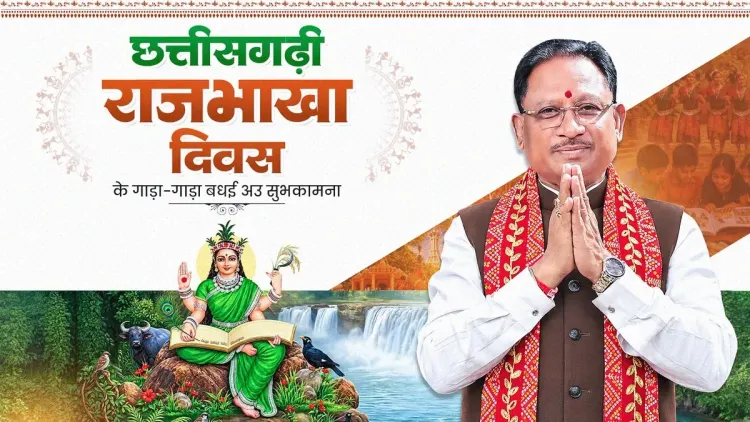
CM Vishnu Deo Sai hails Chhattisgarhi on Rajbhasha Diwas
Synopsis
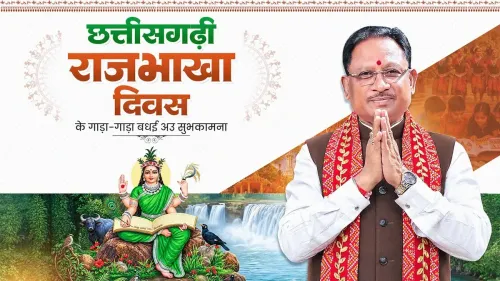
Chhattisgarh Chief Minister Vishnu Deo Sai marked Chhattisgarhi Rajbhasha Diwas by urging residents to speak, write and pass on their mother tongue. He called dialects the identity of the state's cultural richness and asked people to raise the honour of Chhattisgarh, Chhattisgarhi and Chhattisgarhiyas.
Key Takeaways
Chhattisgarh Chief Minister Vishnu Deo Sai greeted the state on Chhattisgarhi Rajbhasha Diwas on 28 November 2026.
He said dialects and languages are the identity of the state's cultural richness.
He asked people to speak, write and read Chhattisgarhi and pass it to the next generation.
He called for raising the honour of Chhattisgarh, Chhattisgarhi and Chhattisgarhiyas.
He closed with the greeting Jai Johar, Jai Chhattisgarh.
Chhattisgarh was formed in November 2000 from eastern Madhya Pradesh, with Raipur as capital.
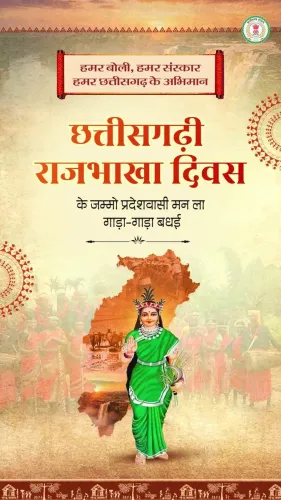
Chhattisgarh Chief Minister Vishnu Deo Sai on Saturday, 28 November 2026 told the people of Chhattisgarh that their dialects are the identity of their cultural richness, and that raising those languages' honour is everyone's duty. Marking Chhattisgarhi Rajbhasha Diwas, he asked residents to speak, write and read their mother tongue and carry it to the next generation.
Writing in Chhattisgarhi, Sai said: ‘Our dialects and languages are the identity of our cultural richness, and enhancing their dignity is everyone's responsibility.’ He then made a direct appeal: come, speak, write and read our sweet language, and take it to the new generation. Raise the honour and self-respect of Chhattisgarh, Chhattisgarhi and Chhattisgarhiyas, he said, offering hearty greetings to all residents. He closed with जय जोहार, जय छत्तीसगढ़ (Jai Johar, Jai Chhattisgarh).
Speak it, write it, hand it to the young
The greeting is warm. The instruction is harder. Vishnu Deo Sai, who took office in December 2023 after the BJP's Assembly victory, is asking households to keep Chhattisgarhi in daily speech and on the page. A language survives in three habits: it is spoken, it is written, it is taught to children. Drop any one, and the Diwas remains a date on the calendar rather than a living tongue.
That is why the Chief Minister's triad matters — the state, the tongue, the people. He did not list new classroom hours or gazette a fresh official-use rule in this message. He named a civic duty and tied it to maan-samman (honour and self-respect).
Chhattisgarh's language turn since 2000
Chhattisgarh was carved from eastern Madhya Pradesh in November 2000, with Raipur as its capital. Statehood sharpened the search for cultural markers that were not simply Hindi by another name. Chhattisgarhi Rajbhasha Diwas grew inside that lineage: an annual observance to promote the language as a badge of local identity.
The pattern repeats across states formed after 2000. Governments lift regional tongues to thicken sub-national belonging while still operating inside India's constitutional frame of Hindi and English as link languages. Jharkhand's work on tribal languages follows a similar logic. Ceremony is the surface. Transmission is the test.
Language days fade by Monday. The question Sai has left with the state is whether Chhattisgarhi will still be heard in courtyards and classrooms long after the greetings stop.
Point of View
Not a new statute in this post. The political wager is intergenerational. If Chhattisgarhi stays in speech and script, the state's distinct identity stays audible; if it does not, Rajbhasha Diwas becomes a once-a-year ritual. The next test is whether the greeting is followed by classroom and official-use steps in the coming fiscal year.
NationPress
28 Nov 2026
Frequently Asked Questions
When did Vishnu Deo Sai greet people on Chhattisgarhi Rajbhasha Diwas?
He issued the greetings on Saturday, 28 November 2026. In his message he offered hearty wishes to all residents of Chhattisgarh and closed with Jai Johar, Jai Chhattisgarh.
What did the Chhattisgarh CM say about the Chhattisgarhi language?
He said dialects and languages are the identity of cultural richness, and that enhancing their dignity is everyone's responsibility. He asked people to speak, write and read the mother tongue and pass it to the next generation.
Who is Vishnu Deo Sai?
Vishnu Deo Sai is the Chief Minister of Chhattisgarh. He took office in December 2023 after the BJP's Assembly election victory and is a senior BJP leader.
Why does Chhattisgarh observe Chhattisgarhi Rajbhasha Diwas?
It is an annual state observance dedicated to promoting the Chhattisgarhi language and its role in local cultural identity. The emphasis grew after Chhattisgarh was formed in November 2000 from eastern Madhya Pradesh.
What did Sai ask Chhattisgarhiyas to do on Rajbhasha Diwas?
He asked them to speak, write and read their sweet language and take it to the new generation. He also called on people to raise the honour and self-respect of Chhattisgarh, Chhattisgarhi and Chhattisgarhiyas.