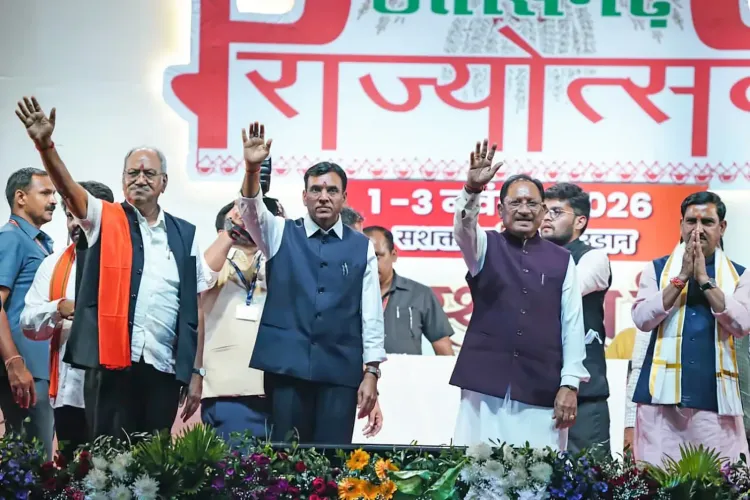
CM Vishnu Deo Sai launches Rajyotsav-2026 on Chhattisgarh's 26th Foundation Day
Synopsis
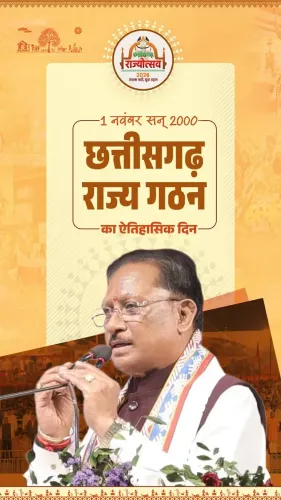
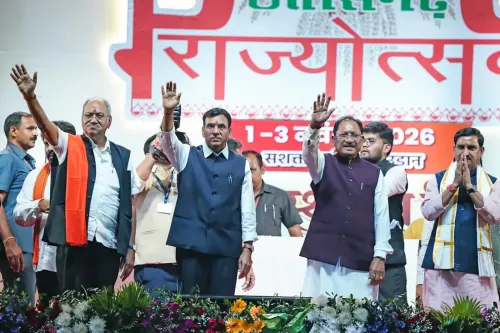
Chhattisgarh Chief Minister Vishnu Deo Sai inaugurated Rajyotsav-2026 on the state's 26th Foundation Day, 1 November 2026, in the presence of Union Minister Dr. Mansukh Mandaviya, celebrating 26 years of statehood, development, and tribal heritage.
Key Takeaways
Chhattisgarh completed 26 years of statehood on 1 November 2026 , having been formed from Madhya Pradesh on 1 November 2000.
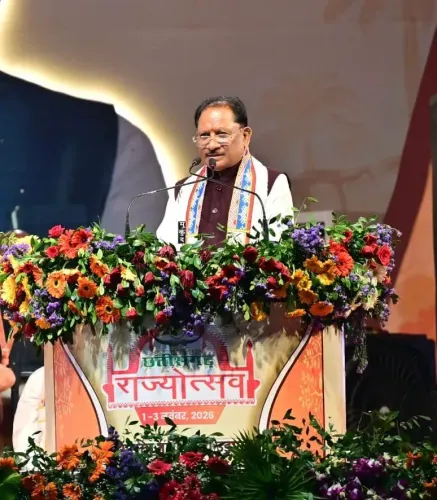
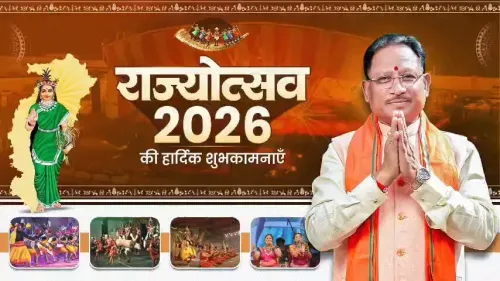
CM Vishnu Deo Sai inaugurated Rajyotsav-2026 , the state's annual formation-day festival, on Sunday evening.
Mansukh Mandaviya graced the event, lending it a national political dimension.
The festival showcased 26 years of developmental achievements alongside Chhattisgarh's folk culture and tribal traditions.
CM Sai's use of the tribal salutation 'Jai Johar' underlined the centrality of tribal communities to the state's identity.
Further Rajyotsav-2026 programmes and potential new scheme announcements are expected over the coming days.
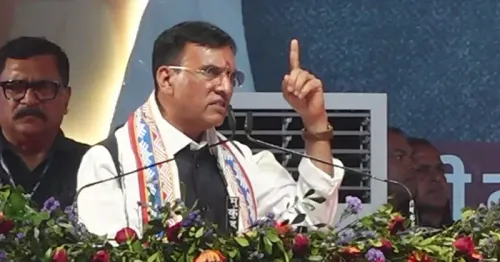
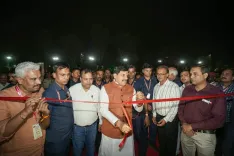
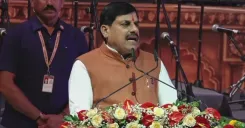
Twenty-six years after a new state was carved out of the heartland of India, Chhattisgarh marked its Foundation Day with a grand celebration — and Chhattisgarh Chief Minister Vishnu Deo Sai was at the centre of it all on Sunday, 1 November 2026, inaugurating Rajyotsav-2026 alongside Union Minister Dr. Mansukh Mandaviya in what the Chief Minister called a 'mahaparv' — a great festival of the state's pride, identity, and self-respect.
A state turns 26: the moment and the message
Chhattisgarh was born on 1 November 2000, when it became India's 26th state, separated from Madhya Pradesh. For a state defined by its dense forests, rich mineral wealth, and the vibrant traditions of its tribal communities, every Foundation Day is equal parts stocktaking and celebration. This year, with 26 editions of Rajyotsav now complete, the occasion carries its own symbolic weight — a full generation of statehood.
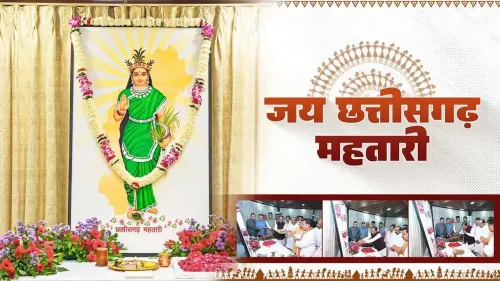
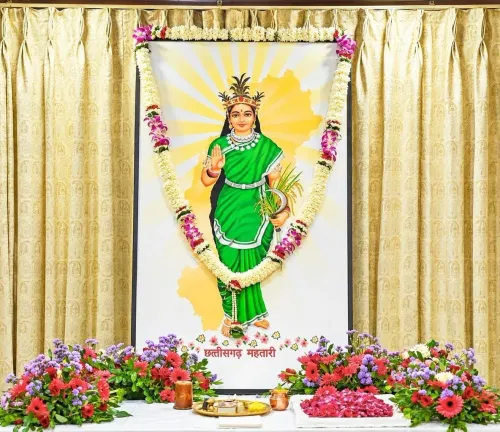
CM Sai, posting in Hindi on X, captured the mood: 'Jai Chhattisgarh Mahtari!' — 'Victory to Mother Chhattisgarh!' He described the inauguration as a moment that 'filled the heart with pride', pointing to the state's 26-year development journey, its achievements, and a showcase of its rich folk culture and tribal traditions.
Mandaviya's presence and the Centre–state signal
The presence of Union Minister Dr. Mansukh Mandaviya at the inauguration was not incidental. When a senior cabinet minister from New Delhi graces a state's formation-day festival, it sends a clear signal of solidarity — and, in BJP-governed states, of a shared political and developmental narrative. Mandaviya's participation adds a national dimension to what is otherwise a state-level cultural event.
CM Sai specifically acknowledged Mandaviya's 'garimamay upasthiti' — dignified presence — underscoring the significance placed on central representation at the ceremony.
Tribal heritage at the heart of Rajyotsav
Rajyotsav is not merely a government function. Each year, the festival weaves together cultural performances, tribal art forms, and a summary of post-statehood progress — making it one of the most publicly visible windows into Chhattisgarh's identity. The state is home to a substantial tribal population, and their traditions — from the Gondi and Halbi languages to distinct dance and craft forms — are central to the Rajyotsav showcase.
CM Sai closed his post with 'Jai Johar! Jai Chhattisgarh!' — the salutation 'Jai Johar' being a traditional tribal greeting, its use by the Chief Minister a deliberate nod to the communities whose culture the festival celebrates. That detail matters: it is an assertion of identity, not just protocol.
As Rajyotsav-2026 unfolds over the coming days, all eyes will be on what policy announcements or new schemes the state government chooses to anchor to this milestone — because in Indian politics, formation-day celebrations rarely end without a promise attached.
Point of View
Blending cultural pride with a development scorecard. The attendance of a Union Minister reinforces the Centre-state alignment under BJP rule — a recurring pattern at such formation-day events across BJP-governed states. CM Sai's deployment of the tribal greeting 'Jai Johar' is a deliberate identity signal aimed at Chhattisgarh's substantial tribal electorate, a constituency that has historically been politically contested. As the 26-year milestone also invites scrutiny of infrastructure, forest rights, and welfare delivery records, the government's framing of the occasion as a celebration of 'achievement and pride' is as much a political posture as it is a cultural one.
NationPress
1 Nov 2026
Frequently Asked Questions
What is Chhattisgarh Rajyotsav?
Rajyotsav is Chhattisgarh's annual state formation-day festival, held on 1 November each year to mark the creation of the state in 2000. It features cultural performances, tribal art showcases, and a review of the state's developmental achievements.
When was Chhattisgarh formed and why is 2026 significant?
Chhattisgarh was formed on 1 November 2000 as India's 26th state, carved out of Madhya Pradesh. The year 2026 marks exactly 26 years of statehood, making Rajyotsav-2026 a milestone edition.
Who is Vishnu Deo Sai?
Vishnu Deo Sai is the Chief Minister of Chhattisgarh and a senior BJP leader. He inaugurated Rajyotsav-2026 on 1 November 2026 alongside Union Minister Dr. Mansukh Mandaviya.
Why was Mansukh Mandaviya at Chhattisgarh Rajyotsav 2026?
Union Minister Dr. Mansukh Mandaviya attended as the central government's representative, a common practice at BJP-governed state formation-day celebrations that signals Centre-state solidarity.
What does 'Jai Johar' mean?
'Jai Johar' is a traditional greeting used among tribal communities in Chhattisgarh and neighbouring regions. CM Vishnu Deo Sai's use of the phrase at Rajyotsav-2026 was a public acknowledgement of the state's tribal heritage and identity.