CM Vishnu Deo Sai Pays Tribute to Nanaji Deshmukh on Birth Anniversary
Synopsis
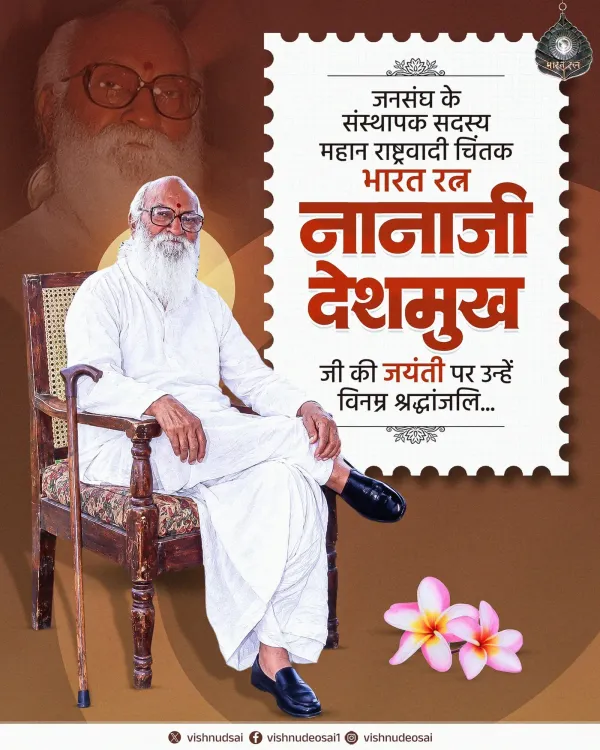
Chhattisgarh Chief Minister Vishnu Deo Sai on Sunday honoured Bharat Ratna Nanaji Deshmukh on his 110th birth anniversary, saluting the Jana Sangh founder's lifelong dedication to rural upliftment, self-reliance, and national service.
Key Takeaways
Chhattisgarh CM Vishnu Deo Sai paid tribute to Nanaji Deshmukh on his birth anniversary, 11 October 2026 .
Deshmukh was born on 11 October 1916 in Hingoli, Maharashtra, and was a founding member of the Bharatiya Jana Sangh .
He served as Lok Sabha MP from Balrampur in 1977 and voluntarily retired from electoral politics after age sixty.
His Deendayal Research Institute in Chitrakoot became a nationally recognised model of integrated rural development.
The Government of India awarded him the Bharat Ratna posthumously in 2019 ; he passed away on 27 February 2010 .
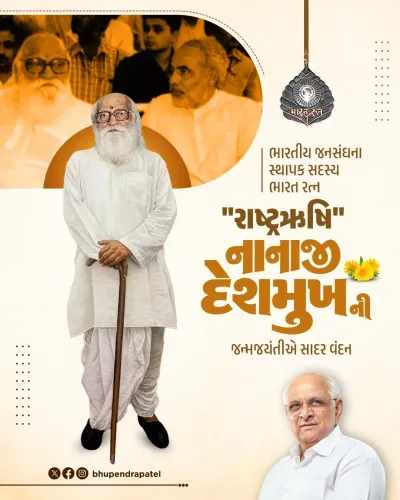
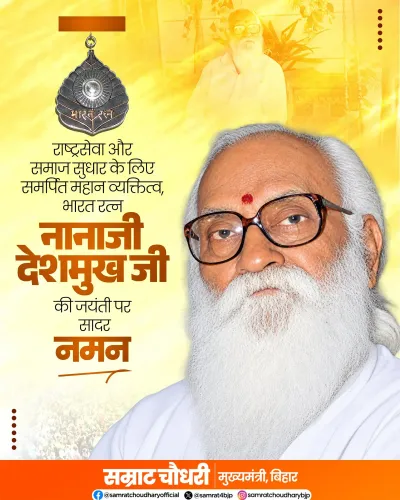
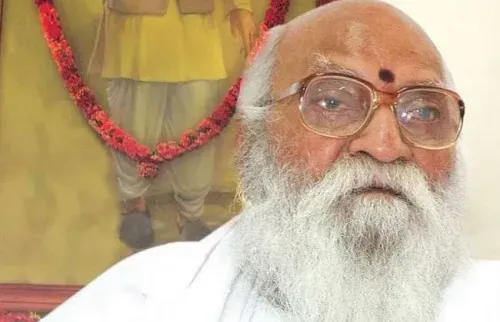
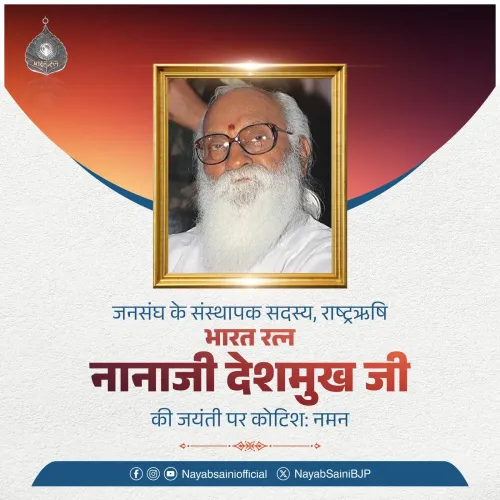
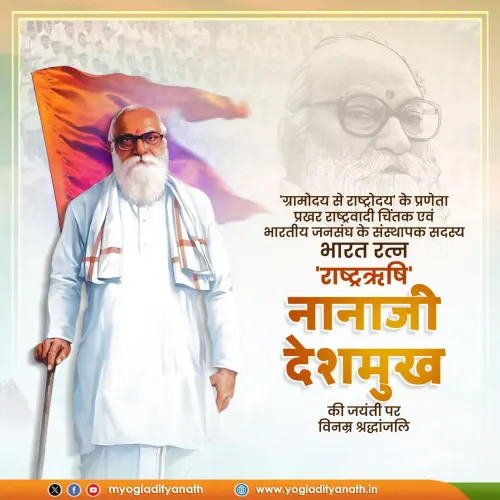
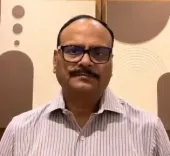
A founding voice of the Jana Sangh, a Bharat Ratna laureate, and a man who gave his final decades entirely to rural India — Nanaji Deshmukh is remembered today, on his birth anniversary, Sunday, 11 October 2026, by leaders across the political spectrum. Chhattisgarh Chief Minister Vishnu Deo Sai led the tributes from his office, calling Deshmukh an inspiration for all those committed to national service and public welfare.
Posting in Hindi on X, CM Sai wrote: 'जनसंघ के संस्थापक सदस्य एवं प्रखर राष्ट्रवादी चिंतक, भारत रत्न नानाजी देशमुख जी की जयंती पर उन्हें शत-शत नमन' — ('A hundred salutations to Nanaji Deshmukh, founding member of Jana Sangh and fervent nationalist thinker, on his birth anniversary'). He added that Deshmukh's life, dedicated to the upliftment of all sections of society, self-reliance, and rural development, 'will always inspire us to move forward on the path of national service and public welfare.'
Who Was Nanaji Deshmukh?
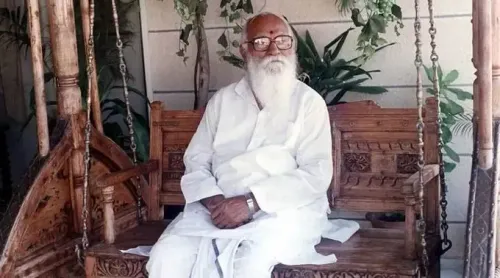
Nanaji Deshmukh, born 11 October 1916 in Hingoli district of present-day Maharashtra, was one of the early pillars of the Rashtriya Swayamsevak Sangh (RSS) and a founding member of the Bharatiya Jana Sangh — the ideological predecessor of the Bharatiya Janata Party. A close associate of RSS ideologue Deendayal Upadhyaya, he helped build the Jana Sangh's organisational backbone across Uttar Pradesh in the 1950s and 1960s. He was elected to the Lok Sabha from Balrampur in 1977, during the post-Emergency Janata Party wave. But what defined his later legacy was his deliberate withdrawal from electoral politics. After 1977, he publicly announced he would not contest elections after the age of sixty — and kept that promise, turning instead toward grassroots reconstruction work.The Chitrakoot Experiment That Redefined Rural Service
Deshmukh relocated to the Chitrakoot region, straddling Uttar Pradesh and Madhya Pradesh, and established the Deendayal Research Institute, which became the laboratory for his vision of integrated rural development. Villages in the Chitrakoot cluster were transformed through work on agriculture, health, education, and self-employment — a model that drew national and international attention as proof that policy change could begin at the village level. For this lifelong commitment to the poor and to rural self-reliance, the Government of India conferred the Bharat Ratna — the country's highest civilian honour — on Deshmukh posthumously in 2019. He had passed away on 27 February 2010. CM Sai's tribute today echoes a strand of BJP governance philosophy that frequently invokes Deshmukh's model of 'gram swaraj' — village self-governance — as the moral foundation for rural welfare schemes. For a state like Chhattisgarh, where a significant share of the population lives in forested and tribal hinterlands, the resonance is more than ceremonial.Point of View
Positioning rural self-reliance as a core ideological inheritance. For CM Sai, invoking Deshmukh in Chhattisgarh, a state with vast tribal and rural constituencies, is also a signal about governance priorities — connecting the state's welfare agenda to a deeper ideological lineage. The Chitrakoot model, built on decentralised village-level development, remains a reference point cited whenever the BJP defends its approach to tribal welfare and rural infrastructure. Deshmukh's legacy, straddling organisational politics and grassroots service, gives the party a figure who transcends factional lines — rare in any political tradition.
NationPress
11 Oct 2026
Frequently Asked Questions
Who was Nanaji Deshmukh?
Nanaji Deshmukh (1916–2010) was a founding member of the Bharatiya Jana Sangh, a close associate of RSS ideologue Deendayal Upadhyaya, and a Lok Sabha MP from Balrampur in 1977. He is best known for his rural development work through the Deendayal Research Institute in Chitrakoot and was awarded the Bharat Ratna posthumously in 2019.
When was Nanaji Deshmukh born?
Nanaji Deshmukh was born on 11 October 1916 in Hingoli district of present-day Maharashtra.
What was Nanaji Deshmukh's contribution to rural development?
After voluntarily retiring from electoral politics, Deshmukh established the Deendayal Research Institute in the Chitrakoot region and led an integrated rural development programme covering agriculture, health, education, and self-employment, transforming dozens of villages into a widely studied model of self-reliance.
Why did Chhattisgarh CM Vishnu Deo Sai pay tribute to Nanaji Deshmukh?
CM Vishnu Deo Sai paid tribute on Nanaji Deshmukh's birth anniversary, 11 October, honouring his legacy as a Jana Sangh founder, nationalist thinker, and champion of rural and societal upliftment — values the BJP leadership frequently cites as foundational to its governance philosophy.
What is the Bharat Ratna awarded to Nanaji Deshmukh for?
The Government of India conferred the Bharat Ratna on Nanaji Deshmukh posthumously in 2019 in recognition of his decades of grassroots public service, particularly his transformative rural development and self-reliance work in the Chitrakoot region.