CM Vishnu Deo Sai Pitches Chhattisgarh to Singapore Investors

Synopsis
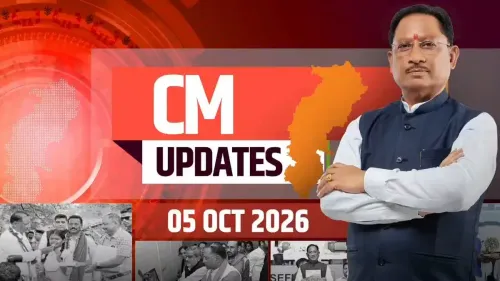
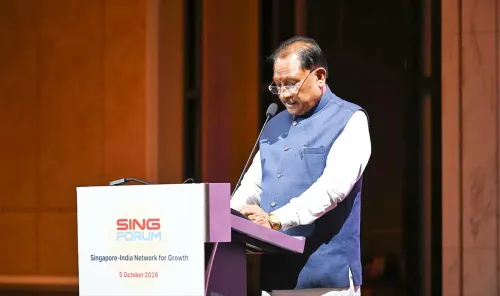
Chhattisgarh Chief Minister Vishnu Deo Sai held investment discussions with global industry leaders in Singapore on 5 October 2026, covering industrial growth, green development, biodiversity conservation, and eco-tourism as the state positions itself as a 'Naya Bharat' growth engine.
Key Takeaways
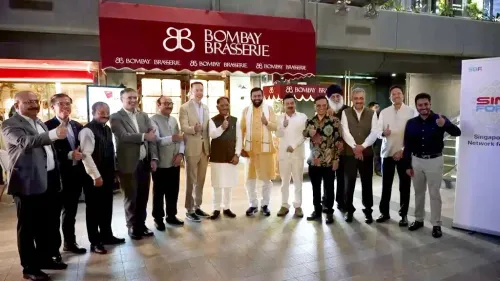
CM Vishnu Deo Sai met international industry representatives in Singapore on 5 October 2026 .
Discussions spanned investment, industrial development, green growth, biodiversity conservation, and eco-tourism .
The outreach frames 'Naya Chhattisgarh' as a growth engine within the broader 'Naya Bharat' development narrative.
Singapore was chosen as a gateway to South-East Asian and institutional investors , reflecting intensifying inter-state competition for FDI.
Chhattisgarh's 44 percent forest cover is positioned as a strategic asset for green and eco-tourism investment.
The CM's stated goal is to link state potential with global capital through investment and innovation .
On a global stage thousands of kilometres from Raipur, Chhattisgarh Chief Minister Vishnu Deo Sai sat across the table from international industry leaders in Singapore on Monday, 5 October 2026 — pitching a state long defined by its mineral wealth as something far more ambitious: a green, innovation-driven growth engine for 'Naya Bharat'.
What Was on the Table in Singapore
The Chief Minister described the Singapore engagements as 'meaningful discussions' (sार्थक चर्चा) covering investment, industrial development, green growth, biodiversity conservation, and eco-tourism. The breadth of that agenda is deliberate — it signals that Chhattisgarh is no longer pitching itself solely on coal and steel, but on a diversified portfolio that includes sustainability and natural heritage. The state's dense forest cover and river ecosystems give it a genuine comparative edge in the biodiversity and eco-tourism space, even if specific project details were not disclosed.
'Naya Chhattisgarh' and the Global Investor Bet
CM Sai framed the outreach in explicitly national terms, positioning the state as a 'growth engine of Naya Bharat' — a phrase that anchors Chhattisgarh's ambitions within the broader BJP development narrative. The core pitch: connect the state's untapped potential to global capital and global ideas. A Singapore roadshow is a pointed choice — the city-state is a gateway for South-East Asian and institutional investment into India, and its industry representatives carry weight with larger investment committees across the region. By taking the conversation directly to Singapore rather than waiting for investors to arrive at a domestic summit, the CM's office is playing an increasingly common but still competitive game among Indian state governments racing for FDI attention.
Green Growth as the New Headline
The explicit inclusion of green development and biodiversity conservation alongside conventional industrial investment is the sharpest signal in CM Sai's post. Chhattisgarh covers roughly 44 percent of its land area in forest — one of the highest ratios among Indian states — making it a natural candidate for carbon-credit markets, eco-tourism circuits, and green-corridor investments that are growing in appeal among ESG-conscious global funds. Pairing that ecological asset with a push for industrial development and innovation suggests a dual-track strategy: attract manufacturing and processing investment while simultaneously monetising the state's environmental capital. Whether those two tracks can run in parallel without friction is a question the policy details will eventually have to answer.
For now, the message from Singapore is clear: Chhattisgarh is open, it is organised, and it is asking the world to look again. The next test is whether the boardroom conversations of October 2026 translate into ground-breaking ceremonies back home.
Point of View
But global funds are increasingly demanding ESG credentials before committing. By branding the state as both an industrial opportunity and a biodiversity asset, the BJP government in Raipur is attempting to widen its investor base beyond the conventional minerals-and-metals story. The real test of this roadshow's success will be whether binding investment commitments, with timelines and sectors, emerge before the next state-level investor summit.
NationPress
6 Oct 2026
Frequently Asked Questions
Why did Chhattisgarh CM Vishnu Deo Sai visit Singapore?
CM Vishnu Deo Sai visited Singapore to engage with global industry leaders and explore investment opportunities in Chhattisgarh across sectors including industrial development, green growth, biodiversity conservation, and eco-tourism.
What is 'Naya Chhattisgarh'?
'Naya Chhattisgarh' (New Chhattisgarh) is the BJP state government's branding framework for its development agenda, positioning the state as a forward-looking growth engine aligned with the national 'Naya Bharat' narrative.
What sectors did Chhattisgarh pitch to Singapore investors?
The discussions in Singapore covered investment, industrial development, green development, biodiversity conservation, and eco-tourism — signalling a diversification beyond the state's traditional minerals-and-metals image.
Why is Singapore significant for Chhattisgarh's investment push?
Singapore is a key gateway for South-East Asian and institutional investment into India. Engaging industry representatives there allows Chhattisgarh to access a wider pool of global capital and ESG-focused funds.
What natural advantage does Chhattisgarh have for green investment?
Chhattisgarh has one of the highest forest-cover ratios among Indian states, making it well-suited for eco-tourism, biodiversity-linked projects, and emerging carbon-credit or green-corridor investment opportunities.