CM Vishnu Deo Sai to Chair Cabinet Meet, Join Anti-Drug Walk
Synopsis
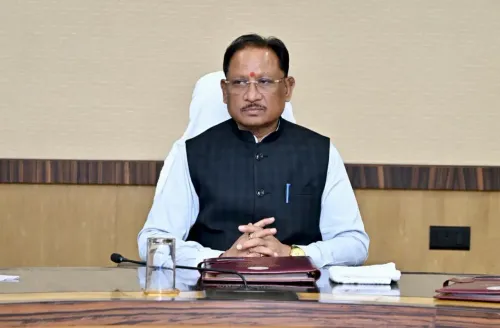
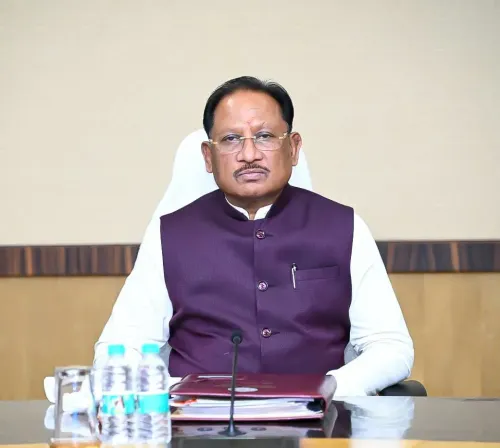
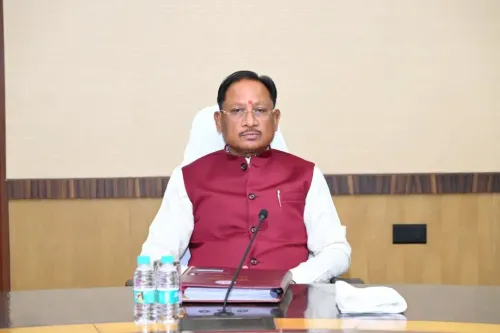
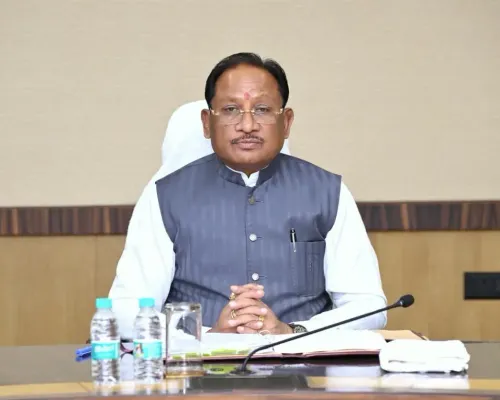
Chhattisgarh CM Vishnu Deo Sai has announced a twin agenda for 30 September 2026: chairing a council of ministers meeting at Mahanadi Bhawan on state development, and joining the Nasha Mukt Bharat Abhiyan padayatra week against drug abuse.
Key Takeaways
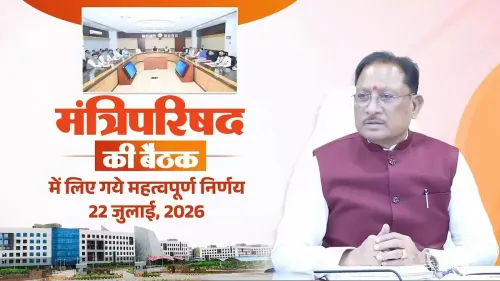
CM Vishnu Deo Sai will chair a cabinet meeting at Mahanadi Bhawan, Naya Raipur on 30 September 2026 .
The meeting will focus on subjects related to the all-round development of Chhattisgarh ; specific agenda items have not been disclosed.
CM Sai will also personally participate in the padayatra saptah (march week) under the Nasha Mukt Bharat Abhiyan .
The Nasha Mukt Bharat Abhiyan was launched nationally in 2020 by the Union Ministry of Social Justice and Empowerment to combat drug abuse.
BJP-governed states have consistently integrated Nasha Mukt Bharat activities into local governance and public outreach calendars.
A cabinet table and a padayatra route — Chhattisgarh Chief Minister Vishnu Deo Sai has mapped out a dual agenda for Wednesday, 30 September 2026: a full council of ministers meeting at the state secretariat, followed by participation in the week-long march being held under the Nasha Mukt Bharat Abhiyan.
Cabinet at Mahanadi Bhawan: Development on the Table
The meeting is scheduled at Mahanadi Bhawan, the secretariat complex in Naya Raipur that serves as the nerve centre of Chhattisgarh's executive machinery. In his post, CM Sai wrote that the council of ministers would deliberate on 'pradesha ke sarvangeen vikas se jude mahatvapurna vishyon' — 'important subjects related to the all-round development of the state.' The agenda items themselves have not been disclosed publicly ahead of the session.
Cabinet meetings at Mahanadi Bhawan have been a routine fixture for the BJP government that came to power after the 2023 Chhattisgarh assembly elections, using the forum to align state priorities with national welfare schemes and push infrastructure and social development decisions.
Padayatra Week Under Nasha Mukt Bharat Abhiyan
The second half of CM Sai's day points to a national campaign with local urgency. The Nasha Mukt Bharat Abhiyan was launched in 2020 by the Union Ministry of Social Justice and Empowerment to mobilise states, communities, and youth groups in a sustained push against drug abuse through rallies, awareness drives, and education programmes. The current 'padayatra saptah' — a week of awareness marches — is part of that broader framework.
By personally joining the walk, CM Sai signals that Chhattisgarh's administration is treating the campaign as more than a calendar obligation. BJP-governed states have broadly integrated Nasha Mukt Bharat activities into their local governance cycles, and a chief minister's visible participation carries weight in districts where outreach workers are simultaneously running awareness events.
What Follows the Day's Decisions
The two tracks — cabinet deliberation and community mobilisation — reflect a pattern common to state governance: executive decisions taken behind closed doors, paired with public-facing events that build political and social momentum. Whether the cabinet produces fresh policy announcements or approves scheme extensions, formal outcomes are expected to be communicated after the meeting concludes. Participation figures from the padayatra week across Chhattisgarh's districts will also offer a measure of how deeply the anti-drug campaign has penetrated at the grassroots.
A state secretariat, a marching route, and one chief minister threading both — today's schedule in Naya Raipur is a snapshot of how Indian state governance blends policy process with public presence.
Point of View
Particularly for youth-facing outreach. The pattern mirrors how BJP-governed states have used centrally sponsored social campaigns as platforms for visible leadership, reinforcing alignment with New Delhi's welfare agenda ahead of any future electoral cycle. Cabinet outcomes from the Mahanadi Bhawan session will be the real test of whether today's governance narrative translates into concrete policy movement.
NationPress
30 Sept 2026
Frequently Asked Questions
What is the Nasha Mukt Bharat Abhiyan?
The Nasha Mukt Bharat Abhiyan is a central government campaign launched in 2020 by the Ministry of Social Justice and Empowerment to reduce drug abuse through community awareness drives, rallies, education programmes, and padayatras (marches) across Indian states.
Where is Mahanadi Bhawan located?
Mahanadi Bhawan is the state secretariat complex located in Naya Raipur, Chhattisgarh, and serves as the venue for cabinet meetings and key administrative functions of the state government.
What did CM Vishnu Deo Sai announce on 30 September 2026?
CM Vishnu Deo Sai announced that he would chair a council of ministers meeting at Mahanadi Bhawan to discuss important subjects related to the all-round development of Chhattisgarh, and would also participate in the padayatra week being held under the Nasha Mukt Bharat Abhiyan.
When did Vishnu Deo Sai become Chief Minister of Chhattisgarh?
Vishnu Deo Sai assumed office as Chief Minister of Chhattisgarh after the BJP won the 2023 state assembly elections.
What is the padayatra saptah under Nasha Mukt Bharat Abhiyan?
The padayatra saptah is a week-long series of awareness marches organised as part of the Nasha Mukt Bharat Abhiyan to mobilise communities, especially youth, against drug and substance abuse at the district and grassroots level.