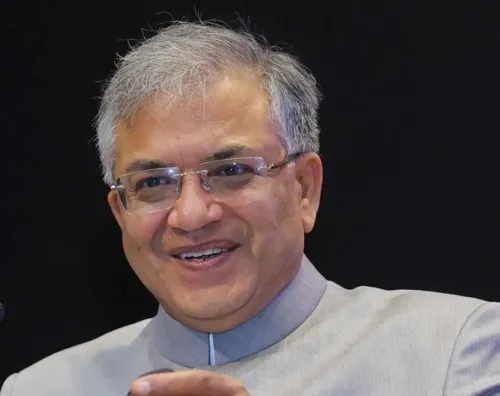
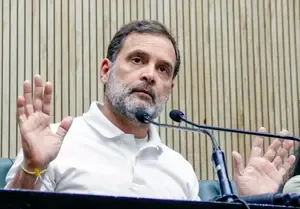
Rahul Gandhi accuses CEC Gyanesh Kumar of aiding poll rigging
Synopsis
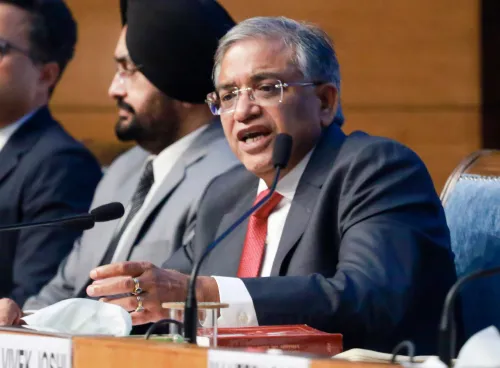
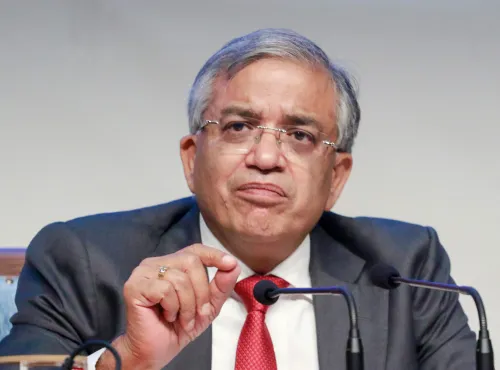
Congress leader Rahul Gandhi on 30 September 2026 accused Chief Election Commissioner Gyanesh Kumar of enjoying unique lifelong legal immunity and alleged Prime Minister Modi uses him to rig elections, escalating the long-running opposition challenge to the Election Commission's independence.
Key Takeaways
Rahul Gandhi posted a direct accusation on 30 September 2026 alleging CEC Gyanesh Kumar has 'lifelong blanket legal immunity' unique among Indians.
Gandhi explicitly accused PM Narendra Modi of using the CEC to 'steal elections' — a claim without cited evidence in the post.
The CEC's security of tenure under Article 324 is a constitutional provision dating to independence, not a recent creation.
The 2023 Appointment Act removed the Chief Justice of India from the selection panel for Election Commissioners, a change the opposition strongly opposed at the time.
Opposition allegations of Election Commission bias have intensified since the 2019 Lok Sabha elections , covering EVMs, voter rolls, and scheduling decisions.
The Election Commission had not publicly responded to Gandhi's post at the time of publication.
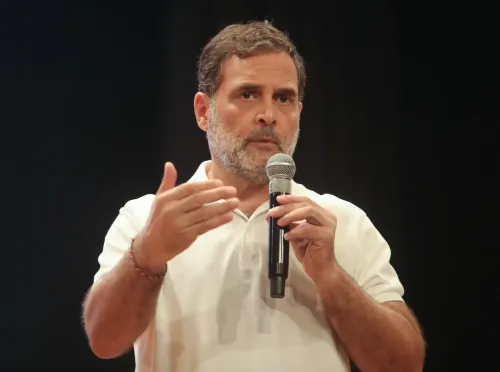
A pointed question-and-answer — posted by Congress leader Rahul Gandhi on Wednesday, 30 September 2026 — has reignited one of Indian democracy's sharpest recurring debates: whether the Election Commission of India operates with genuine independence from the ruling dispensation.
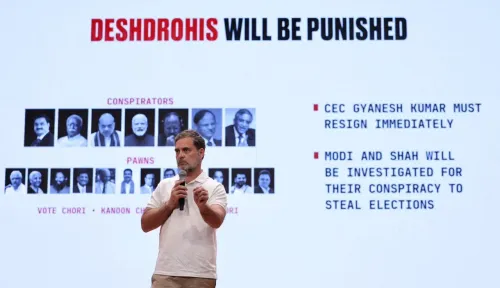
Gandhi's post frames the matter as a rhetorical exchange, asking why Chief Election Commissioner (CEC) Gyanesh Kumar is, in his words, 'the only Indian with lifelong blanket legal immunity,' and supplying his own answer: 'Because PM Modi uses him to steal elections.' The post carries no citations; it is a direct political accusation levelled at both the constitutional office-holder and Prime Minister Narendra Modi.
The immunity question and the 2023 appointment law
The constitutional architecture Gandhi is gesturing at is real, even if his characterisation of it as 'lifelong blanket immunity' is contested. Under Article 324 of the Constitution, the CEC can be removed only through a process akin to the impeachment of a Supreme Court judge — a deliberate design to insulate the office from political pressure. The security of tenure has been a feature of the framework since independence, not a Modi-era creation.
What did change under the current government was the selection mechanism. The Chief Election Commissioner and Other Election Commissioners (Appointment, Conditions of Service and Term of Office) Act, 2023 replaced the earlier selection panel that included the Chief Justice of India with a committee that does not have judicial representation. Opposition parties opposed that change vigorously at the time, arguing it tilted the appointment process in favour of the executive.
A pattern of opposition accusations against the Commission
Gandhi's post is the latest salvo in a running battle between the Indian National Congress and the Election Commission that has grown louder since the 2019 Lok Sabha elections. Opposition parties have repeatedly alleged institutional bias, particularly around Electronic Voting Machine (EVM) integrity and voter-roll management. The Election Commission has consistently denied all such allegations, maintaining that its processes are transparent and auditable.
The broader pattern is well established: after every major electoral outcome that goes against the opposition, questions about the Commission's autonomy resurface in Parliament, in courtrooms, and on social media. Whether those questions gain legislative traction depends largely on which parties hold the numbers in a given session.
What comes next in this fight
With Parliament sessions ahead and a Supreme Court that has previously examined aspects of EVM functioning and the 2023 appointment law, this debate is unlikely to stay confined to social media. Gandhi's post — framed as a question demanding a public answer — appears designed to keep that pressure alive ahead of any fresh electoral cycle.
The Election Commission of India had not responded to the post at the time of publication.
If the 2023 appointment law was the spark, today's post is the reminder that the fire has not gone out — and that the opposition intends to keep asking the question until it gets an answer it finds satisfactory.
Point of View
The Congress is attempting to shift the Overton window on how ordinary voters perceive the Election Commission's independence. The move fits a broader opposition strategy of delegitimising electoral outcomes before they occur, a tactic that carries real risks: repeated unsubstantiated accusations can erode public faith in democratic institutions without delivering accountability. The Supreme Court and Parliament remain the arenas where this argument must ultimately be tested with evidence.
NationPress
30 Sept 2026
Frequently Asked Questions
Why did Rahul Gandhi attack CEC Gyanesh Kumar?
Gandhi accused CEC Gyanesh Kumar of enjoying unique 'lifelong blanket legal immunity' and alleged that PM Modi uses him to rig elections, posting the claim on X on 30 September 2026 as part of the Congress party's sustained challenge to the Election Commission's independence.
What legal protection does the Chief Election Commissioner actually have?
Under Article 324 of the Constitution, the CEC can be removed only through a process equivalent to impeaching a Supreme Court judge — a security-of-tenure provision designed to insulate the office from executive pressure that has existed since India's independence.
What changed about the CEC appointment process in 2023?
The Chief Election Commissioner and Other Election Commissioners (Appointment, Conditions of Service and Term of Office) Act, 2023 replaced the earlier selection committee that included the Chief Justice of India with a panel that has no judicial representation, a change opposition parties strongly opposed.
Has the Election Commission responded to Congress allegations of bias?
The Election Commission of India has consistently denied all allegations of institutional bias raised by opposition parties, maintaining that its processes — including EVM functioning and voter-roll management — are transparent and auditable.
Is this the first time the opposition has challenged the Election Commission's independence?
No. Opposition parties have raised questions about the Commission's autonomy with increasing intensity since the 2019 Lok Sabha elections, covering issues from EVM integrity to scheduling decisions, and the 2023 appointment law reignited those concerns sharply.