CM Mohan Yadav Distributes Free E-Cycles to Women Workers in Ujjain
Synopsis
Chief Minister Dr. Mohan Yadav distributed free electric cycles to women workers in Ujjain on 26 May 2026, extending Madhya Pradesh's women-focused asset-transfer model into green mobility and reducing daily commute costs for working women.
Key Takeaways
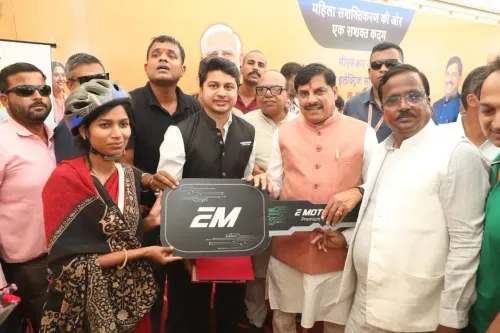
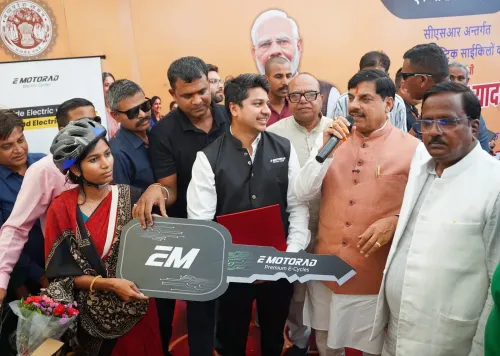
Mohan Yadav personally distributed free e-cycles to women karmayogis in Ujjain on 26 May 2026 .
The initiative combines the state's green mobility agenda with its established women's empowerment framework.
It follows the asset-transfer model of Ladli Behna Yojana , moving from cash support to durable goods for working women.
Ujjain, a major urban-religious centre in Madhya Pradesh , was chosen as the rollout location, signalling high symbolic and administrative intent.
Similar distributions in other districts are being watched as a likely next step, with potential budget provisions in the next state fiscal year.
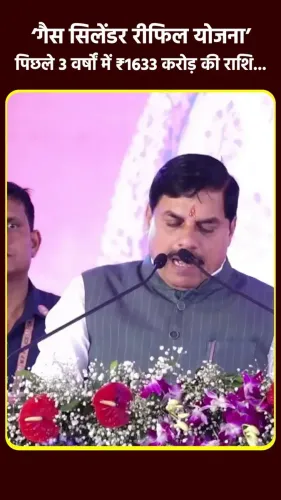
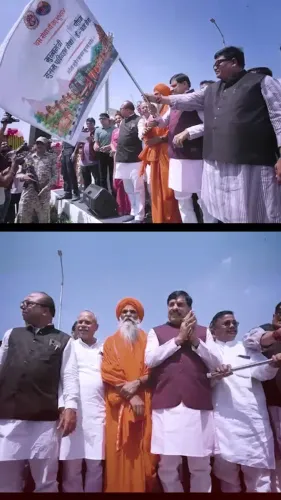
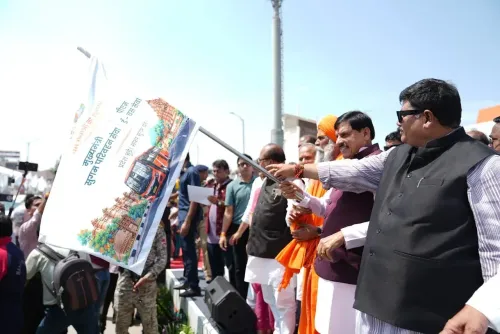
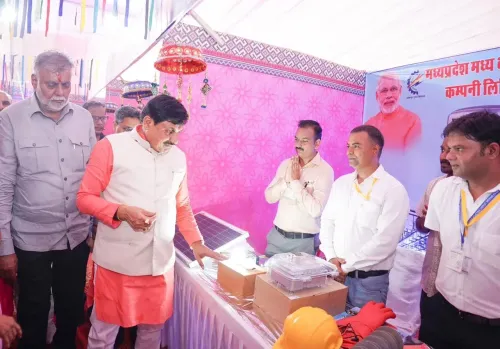
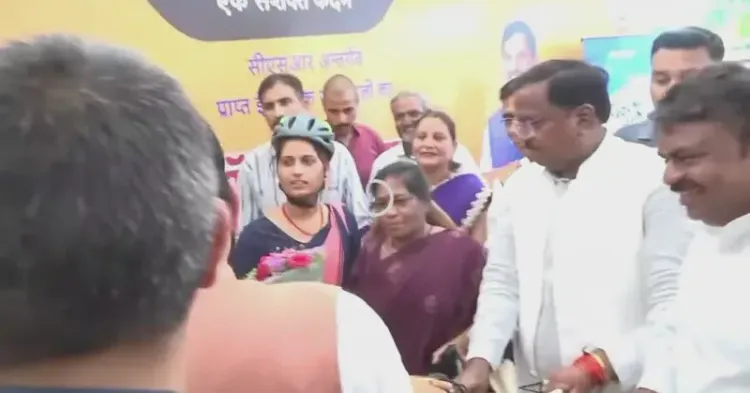
The Chief Minister's Office of Madhya Pradesh announced on Tuesday, 26 May 2026, that Chief Minister Dr. Mohan Yadav distributed free electric cycles to women karmayogis (workers) in Ujjain, marking a fresh push by the state government to combine green mobility with women's economic empowerment.
Context
The event, held in Ujjain — one of Madhya Pradesh's most prominent cities and a major religious and cultural centre — saw Dr. Mohan Yadav personally hand over the e-cycles to beneficiaries described as mahila karmayogis, or working women. The Chief Minister's Office shared the announcement alongside a live broadcast link, signalling the administration's intent to give the initiative wide public visibility.
The free distribution is positioned as a practical intervention: putting zero-emission, low-cost daily transport directly into the hands of women in the workforce, reducing their commute burden without adding to household fuel expenditure.
Policy Backdrop
The Madhya Pradesh government has built a layered architecture of women-focused welfare since 2023, most visibly through the Ladli Behna Yojana, which provides monthly direct financial transfers to women across the state. The e-cycle distribution extends that logic from cash support to asset transfer, giving beneficiaries a durable mobility tool rather than a recurring payment.
The state's broader electric vehicle policy framework has encouraged two-wheeler and light EV adoption, and earlier rounds of subsidised or free two-wheelers to women workers in various districts laid the administrative groundwork for an initiative of this kind. Ujjain, as a densely populated urban-religious hub, presents both a high concentration of working women and strong symbolic value for a flagship rollout.
Stakeholders and Impact
The immediate beneficiaries are women employees — government and potentially contractual workers — in Ujjain. For many, daily commutes on shared or private transport represent a significant share of take-home income; an e-cycle eliminates that recurring cost while also reducing dependence on male family members for mobility, a factor with documented links to women's workplace participation.
The programme also feeds into the state's EV adoption targets, adding a gender-equity dimension to what is otherwise a climate and infrastructure goal. Local e-cycle manufacturers and suppliers stand to benefit if the government scales procurement across districts.
What's Next
The Ujjain event is likely a template the administration will replicate in other districts, particularly ahead of the next state budget cycle, where provisions for scaling the programme could be announced. Observers will watch whether eligibility criteria are broadened beyond the current karmayogi category to include self-employed or informal-sector women. The success of this rollout — measured by uptake, maintenance support, and impact on commute patterns — will shape the political and policy case for expansion across Madhya Pradesh.
Point of View
The Mohan Yadav administration is threading two policy imperatives into a single optic, which carries obvious electoral utility ahead of future local body elections. The choice of Ujjain, a city with deep cultural resonance, amplifies the symbolic weight of the announcement beyond its immediate beneficiary pool. Whether the programme achieves lasting impact will depend on maintenance infrastructure and the breadth of eligibility criteria, neither of which has been publicly detailed yet.
NationPress
22 Oct 2026
Frequently Asked Questions
What did CM Mohan Yadav distribute in Ujjain on 26 May 2026?
CM Dr. Mohan Yadav distributed free electric cycles (e-cycles) to women workers, referred to as mahila karmayogis, in Ujjain, Madhya Pradesh on 26 May 2026.
Who are the beneficiaries of the free e-cycle scheme in Madhya Pradesh?
The beneficiaries are women workers described as karmayogis in Ujjain. The exact eligibility criteria for the 26 May 2026 distribution have not been officially detailed in public records.
How does this e-cycle scheme relate to Ladli Behna Yojana?
Both initiatives are part of Madhya Pradesh's broader women's empowerment framework. While Ladli Behna Yojana provides monthly cash transfers, the e-cycle distribution is an asset-transfer model giving women a durable mobility tool.
Is Madhya Pradesh distributing free e-cycles in other districts too?
As of the Ujjain event on 26 May 2026, no official announcement has been made about identical distributions in other districts, though the state's EV and welfare policy trajectory suggests expansion is being considered.
Why was Ujjain chosen for the free e-cycle distribution?
Ujjain is one of Madhya Pradesh's most prominent cities, known for the Mahakaleshwar temple and as a Kumbh Mela site, making it a high-visibility location with a large working population for a flagship welfare rollout.