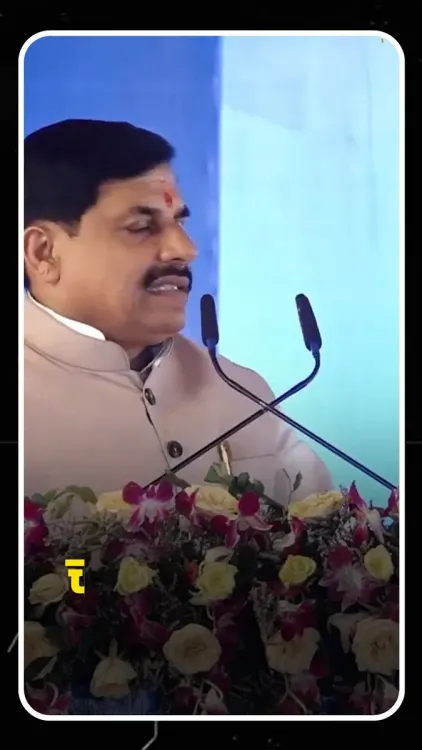
CM Mohan Yadav: GYAN framework anchors MP's progress
Synopsis
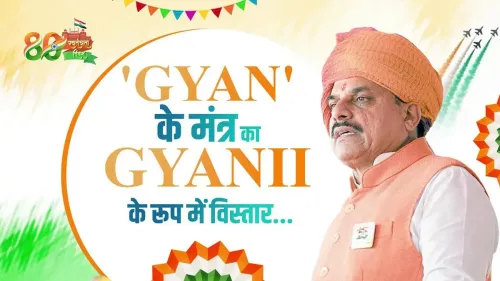
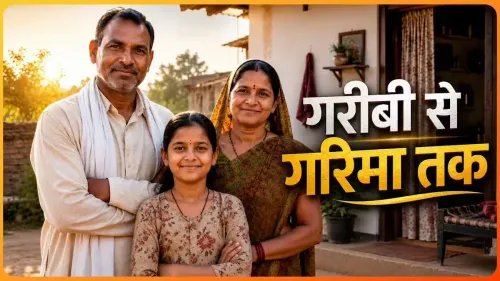
Chief Minister Dr. Mohan Yadav has articulated a four-pillar development philosophy for Madhya Pradesh under the acronym GYAN — Garib, Yuva, Annadata, Nari — framing the empowerment of the poor, youth, farmers, and women as the state's core progress agenda.
Key Takeaways
GYAN stands for Garib (poor), Yuva (youth), Annadata (farmers), and Nari (women) — the four groups CM Yadav identifies as central to state progress.
Mohan Yadav has led Madhya Pradesh since December 2023 , continuing the BJP's unbroken governance of the state since 2003 .
The Ladli Behna Yojana , launched in 2023 , is the state's flagship women's welfare scheme, providing monthly direct transfers to eligible women.
Farmer welfare in MP is built on both central schemes like PM-KISAN and state-level supplements across successive budgets.
The GYAN framing consolidates multiple existing welfare streams into a single communicable policy identity.
Upcoming state budgets and assembly sessions will be key moments to watch for GYAN -linked scheme announcements and allocation figures.
The Chief Minister's Office of Madhya Pradesh, on behalf of Chief Minister Dr. Mohan Yadav, stated on Saturday, 30 May 2026 that the empowerment of four core groups — the poor, youth, farmers, and women — forms the foundation of progress for both the state and the nation, framing this vision under the acronym GYAN.
Context
The post articulates a governing philosophy using the Hindi acronym GYAN — standing for Garib, Yuva, Annadata aur Nari (poor, youth, farmers, and women) — as the structural lens through which the Madhya Pradesh government frames its development agenda. CM Yadav stated directly: 'The empowerment of these four groups — Garib, Yuva, Annadata and Nari — is the very foundation of the progress of the country and the state.'
The statement was shared via the official @CMMadhyaPradesh handle and tags Dr. Mohan Yadav's personal account, signalling it as a formal articulation of the administration's priorities rather than an incidental remark.
Policy Backdrop
Madhya Pradesh has been governed by the BJP since 2003, with successive administrations building a portfolio of targeted welfare schemes for these demographic groups. Landmark among these is the Ladli Behna Yojana, launched in 2023, which provides monthly direct financial transfers to women in the state.
Farmer welfare in the state has been layered atop central programmes such as PM-KISAN, with state-level supplements added over successive budgets. Youth-focused interventions have centred on skill development and employment linkages, while poverty alleviation efforts have leaned on direct benefit transfers and food security measures.
The GYAN framing consolidates these pre-existing policy streams into a single communicable identity, a practice common in both central and state-level BJP governance, where acronym-driven branding helps anchor multi-scheme welfare architecture.
Stakeholders and Impact
Madhya Pradesh has a large rural population with significant agricultural dependency, making farmers and the rural poor central to any state-level welfare calculus. Women have been a particularly high-priority constituency since the Ladli Behna Yojana demonstrated strong political and social resonance after its 2023 launch.
Youth unemployment and skill gaps remain a persistent challenge across the state, and formal articulation of youth empowerment as a pillar of state policy signals continued budgetary attention to this segment. Together, the four groups identified under GYAN represent the overwhelming majority of Madhya Pradesh's population, meaning the framework effectively encompasses the state's broad development mandate.
What's Next
Policy watchers will look to the next state budget and forthcoming assembly sessions for evidence of consolidated GYAN-linked scheme announcements, coverage targets, and allocation figures that translate this stated philosophy into measurable commitments. How the administration operationalises the acronym — whether as a new umbrella programme or a rebranding of existing schemes — will determine its substantive impact.
The articulation also sets a rhetorical benchmark against which CM Yadav's government will likely be measured in the run-up to future electoral cycles in Madhya Pradesh.
Point of View
Where acronym-driven frameworks lend coherence and memorability to multi-scheme governance. With the state having delivered the Ladli Behna Yojana as a high-visibility women's welfare instrument, anchoring that success within a broader four-pillar narrative strengthens the administration's claim to comprehensive, inclusive governance. The real test will come when budget allocations and scheme coverage data are placed before the assembly — that is when rhetoric meets accountability.
NationPress
13 Oct 2026
Frequently Asked Questions
What does GYAN stand for in CM Mohan Yadav's statement?
GYAN is a Hindi acronym standing for Garib (poor), Yuva (youth), Annadata (farmers), and Nari (women) — the four groups CM Yadav has identified as the foundation of Madhya Pradesh's progress.
Who is the Chief Minister of Madhya Pradesh in 2026?
Dr. Mohan Yadav is the Chief Minister of Madhya Pradesh , having assumed office in December 2023 as the BJP's choice following the state assembly elections.
What is the Ladli Behna Yojana in Madhya Pradesh?
The Ladli Behna Yojana is a state government scheme launched in 2023 that provides monthly direct financial transfers to eligible women in Madhya Pradesh , and is one of the flagship programmes under the 'Nari' pillar of the GYAN framework.
What welfare schemes does Madhya Pradesh have for farmers?
Madhya Pradesh supplements the central PM-KISAN programme with state-level agricultural support measures that have been expanded across successive BJP budgets, targeting the 'Annadata' (farmer) group.
What is the BJP's governance record in Madhya Pradesh?
The BJP has governed Madhya Pradesh continuously since 2003 , building a welfare architecture centred on targeted schemes for women, farmers, youth, and the poor — groups now formalised under the GYAN framework by CM Yadav.