MP CM unveils GYANII model linking welfare goals to industry

Synopsis
Madhya Pradesh's Chief Minister's Office has unveiled the GYANII development model, extending PM Modi's GYAN welfare framework by adding infrastructure and industrialisation. The state cites a 1.25 lakh acre land bank, a 5 lakh km road network, and 6 industrial corridors spanning Malwa, Bundelkhand, Nimar, and Vindhya.
Key Takeaways
Madhya Pradesh has presented the GYANII model, which extends PM Modi's GYAN framework (Garib, Yuva, Annadata, Nari Shakti) by adding Infrastructure and Industrialisation.
The state claims a ready-to-use land bank of more than 1.25 lakh acres available for industrial investment.
A road network of over 5 lakh kilometres , along with rail and air connectivity, underpins the logistics pitch to investors.
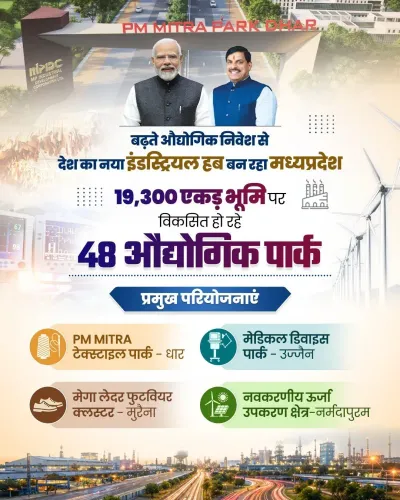
6 major industrial corridors are under development, connecting Malwa, Bundelkhand, Nimar, and Vindhya regions.
The Madhya Pradesh Industrial Development Corporation (MPIDC) is the designated agency for corridor development and industrial promotion.
The model positions industrial growth as a direct delivery mechanism for welfare goals targeting the poor, youth, farmers, and women.
The Chief Minister's Office of Madhya Pradesh, on behalf of Chief Minister Mohan Yadav, on Saturday, 6 June 2026, unveiled what it described as the GYANII development model — an extension of Prime Minister Narendra Modi's GYAN framework that adds infrastructure and industrialisation to the state's growth agenda.
Context
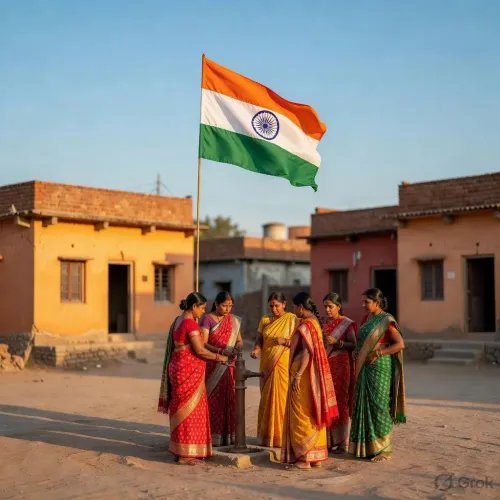
The post, attributed directly to CM Mohan Yadav, states: 'GYANII ka doordarshi vikas model' ('the visionary development model of GYANII') has been presented by Madhya Pradesh by combining infrastructure and industrialisation with PM Modi's GYAN resolve — which targets the poor (Garib), youth (Yuva), farmers (Annadata), and women (Nari Shakti). The acronym GYANII appends 'Infrastructure' and 'Industrialisation' to that national framework.
The statement positions the state as an active translator of central welfare priorities into on-ground economic infrastructure, framing industrialisation not as a separate agenda but as a delivery mechanism for social goals.
Policy Backdrop
According to the post, Madhya Pradesh has a ready-to-use land bank of more than 1.25 lakh acres, a road network exceeding 5 lakh kilometres, and advanced rail and air connectivity. The state claims 6 major industrial corridors are under development, stretching connectivity from Malwa to Bundelkhand and Nimar to Vindhya.
India's national industrial corridor programme, initiated from 2006 onward with the Delhi-Mumbai Industrial Corridor as its founding project, has since expanded to multiple corridors across states. Madhya Pradesh's positioning aligns with this broader national framework, presenting state-level land and logistics assets as feeders into the national corridor network.
The Madhya Pradesh Industrial Development Corporation (MPIDC) is the state agency responsible for industrial promotion and corridor development. The mention of @MPIDC in the official post signals that the corporation is the institutional vehicle for operationalising the GYANII model.
Stakeholders and Impact
The primary audience for this communication is the investor community — domestic and international industrial units that evaluate land availability, logistics infrastructure, and policy stability before committing capital. A ready-to-use land bank of over 1.25 lakh acres is a direct pitch to such investors.
At the grassroots level, the GYAN framework's four constituents — the poor, youth, farmers, and women — are positioned as the ultimate beneficiaries of industrial growth. The GYANII formulation argues that infrastructure investment is not separate from welfare but is, in fact, its enabler.
Several other Indian states have adopted similar strategies of aligning state industrial policy with central infrastructure programmes such as Bharatmala and dedicated freight corridors. Madhya Pradesh's GYANII model follows this pattern, using a welfare-anchored acronym to build political and policy legitimacy for industrial investment.
What's Next
The operationalisation of the 6 industrial corridors — connecting Malwa, Bundelkhand, Nimar, and Vindhya — will be the key test of the GYANII model's ambitions. State budget allocations and investor summits will be the clearest indicators of whether this framework moves beyond communication into committed capital expenditure.
With @MPIDC tagged in the official post, the corporation is likely to be the nodal body for any forthcoming investor outreach or corridor-specific announcements. Madhya Pradesh's ability to convert its stated land bank and connectivity assets into signed investment commitments will determine how the GYANII model is received by the broader industrial community.
Point of View
Making it harder to critique on equity grounds while simultaneously targeting the investor community. By anchoring the model to PM Modi's GYAN acronym, CM Mohan Yadav's office signals ideological alignment with the Centre, which is strategically useful for securing national corridor funding and central approvals. The enumeration of specific assets — land bank acreage, road network length, corridor count — gives the communication an unusual degree of specificity for a state-level social media post, suggesting it is aimed as much at investment desks as at domestic voters. Whether the GYANII model produces measurable outcomes will depend on whether MPIDC can convert these stated assets into binding investment agreements at the next major investor summit.
NationPress
21 Oct 2026
Frequently Asked Questions
What is the GYANII model in Madhya Pradesh?
The GYANII model is Madhya Pradesh's development framework that extends PM Modi's GYAN initiative — focused on the poor, youth, farmers, and women — by adding Infrastructure and Industrialisation as two additional pillars, positioning industrial growth as a vehicle for welfare delivery.
What is the size of Madhya Pradesh's industrial land bank?
According to the Chief Minister's Office, Madhya Pradesh has a ready-to-use land bank of more than 1.25 lakh acres available for industrial investment.
How many industrial corridors are being developed in Madhya Pradesh?
The state is developing 6 major industrial corridors that will connect regions including Malwa, Bundelkhand, Nimar, and Vindhya.
What does GYAN stand for in PM Modi's framework?
GYAN stands for Garib (poor), Yuva (youth), Annadata (farmers), and Nari Shakti (women's empowerment) — the four priority groups in PM Modi's stated governance agenda.
What is MPIDC and what role does it play?
The Madhya Pradesh Industrial Development Corporation (MPIDC) is the state agency responsible for industrial promotion and the development of industrial corridors under the GYANII model.