CM Mohan Yadav Honours Soya Industry Leaders at Indore Conclave
Synopsis
At the 9th International Soya Conclave in Indore, MP Chief Minister Dr. Mohan Yadav felicitated soybean industry leaders, spotlighted the state's 45% share of national soybean output, and reaffirmed the Soyabean Bhavantar Yojana as a price safety net for farmers during Kisan Kalyan Varsh 2026.
Key Takeaways
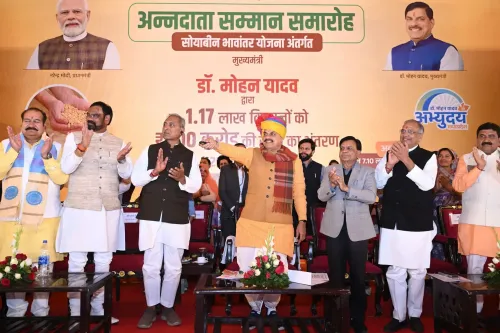
Mohan Yadav felicitated outstanding entrepreneurs in soybean-based industries at the 9th International Soya Conclave in Indore on 16 October 2026 .
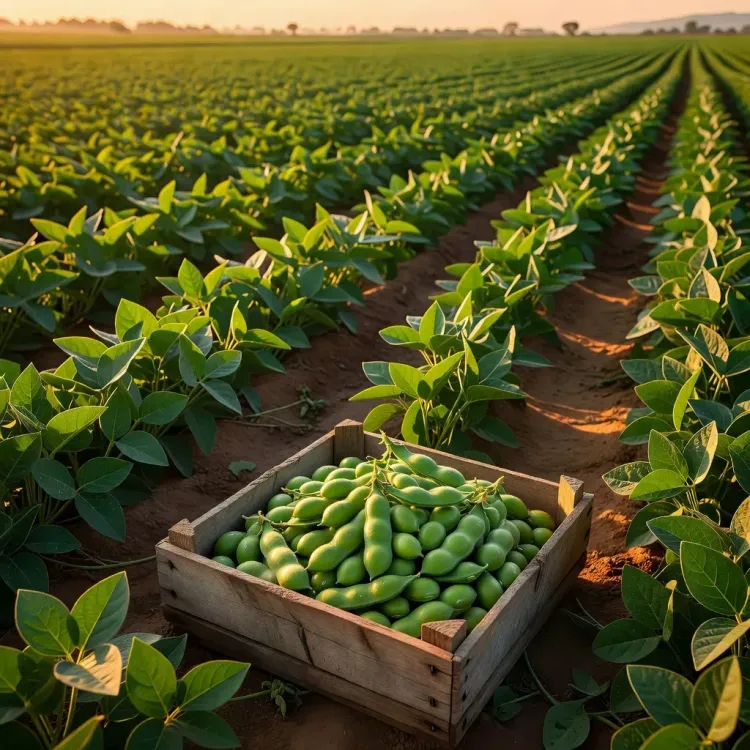
Madhya Pradesh produces 45 per cent of India's total soybean output, making it the country's leading oilseed state.
The conclave is being held during Kisan Kalyan Varsh 2026 , the state government's declared year of farmer welfare.
The Soyabean Bhavantar Yojana is in force to compensate farmers when market prices fall below reference levels.
Current season soybean yield data has been described as 'encouraging' by the Chief Minister.
The state's approach aligns with the national policy goal of boosting domestic oilseed production to reduce edible oil import dependence.
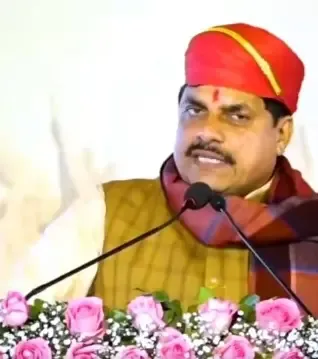
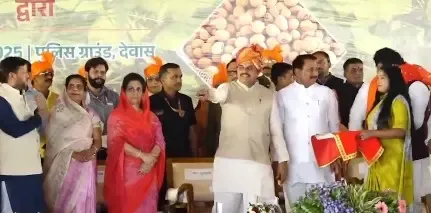
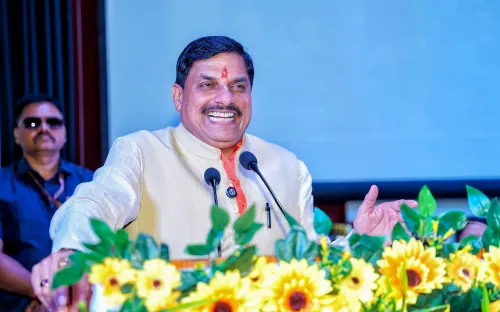
Soybean — the crop that quietly anchors Madhya Pradesh's farm economy — took centre stage in Indore on Friday, 16 October 2026, as Madhya Pradesh Chief Minister Dr. Mohan Yadav felicitated outstanding entrepreneurs from soybean-based industries at the 9th International Soya Conclave, calling the oilseed far more than an agricultural commodity.
Addressing the conclave, Dr. Yadav declared: 'Soybean keval krishi upaj nahin' — 'Soybean is not merely an agricultural produce' — framing it instead as a pillar of farmer income, the edible oil industry, and protein-based nutrition. The state currently accounts for 45 per cent of India's total soybean output, making Madhya Pradesh the undisputed engine of the country's oilseed economy.
Kisan Kalyan Varsh 2026 and the Soya Conclave's timing
The Chief Minister underscored that the conclave carries special weight this year, coinciding with what his government has designated Kisan Kalyan Varsh 2026 — a year dedicated to farmer welfare. He noted that soybean yield data for the current season has been 'encouraging,' signalling a healthy harvest outlook for growers across the state's soybean belt.
The International Soya Conclave is a recurring forum that brings together processors, value-addition enterprises, and policymakers to deepen industry linkages around soybean. Holding this edition in Indore — central India's commercial nerve centre — reinforces the city's role as a hub for agro-industrial dialogue.
Soybean Bhavantar Yojana: the price-gap safety net
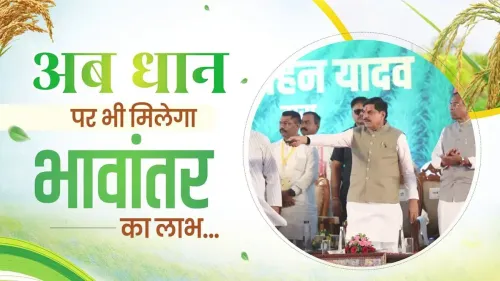
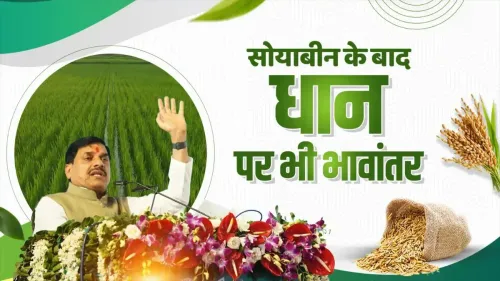
At the heart of the state's farmer-protection agenda is the Soyabean Bhavantar Yojana, a price-deficiency payment scheme that compensates growers whenever market prices fall below a reference level. The mechanism traces its lineage to Madhya Pradesh's pioneering Bhavantar Bhugtan Yojana, launched in 2017, which was among the first state-level attempts in India to systematically shield oilseed farmers from market volatility without direct procurement.
By applying the model specifically to soybean, the government is targeting the crop's notorious price swings — a perennial grievance for farmers in districts like Ujjain, Dewas, and Sehore where soybean cultivation dominates.
National oilseed ambitions, one state at a time
The conclave sits inside a much larger policy story. India imports a substantial share of its edible oil needs, making domestic oilseed expansion a strategic economic priority. The central government's National Mission on Oilseeds and Oil Palm — scaled up after 2014 — identified soybean as a key lever for narrowing that import gap. Madhya Pradesh's combination of production dominance, price-support architecture, and industry promotion through events like this conclave makes it a test case for whether agro-processing clusters in central India can meaningfully move the national needle.
Minister Tulsi Silawat, tagged by the Chief Minister in his post, is associated with farmer-welfare portfolios in the state government and was part of the conclave proceedings.
The real measure of intent, though, will come in the months ahead — in the payout figures under the Soyabean Bhavantar Yojana for the 2026-27 marketing season, and in whether the conclave translates into new processing investments on the ground. A state that grows nearly half the country's soybean cannot afford to let the value-addition story stop at the farm gate.
Point of View
A revival of the 2017 price-deficiency model, signals an acknowledgement that minimum support price procurement alone is insufficient for oilseed farmers. Framing soybean as a nutrition and energy-security asset — not just a farm commodity — also dovetails with the Centre's push to cut edible oil imports. Whether the conclave generates measurable investment or the Bhavantar payouts reach scale will determine if the messaging translates into ground-level impact.
NationPress
17 Oct 2026
Frequently Asked Questions
What is the Soyabean Bhavantar Yojana in Madhya Pradesh?
The Soyabean Bhavantar Yojana is a state government price-deficiency payment scheme that compensates soybean farmers in Madhya Pradesh when market prices fall below a government-set reference price, ensuring they receive a remunerative return on their crop.
How much soybean does Madhya Pradesh produce compared to the rest of India?
According to Chief Minister Dr. Mohan Yadav, Madhya Pradesh accounts for 45 per cent of India's total soybean production, making it the dominant oilseed-producing state in the country.
What is Kisan Kalyan Varsh 2026?
Kisan Kalyan Varsh 2026 is the Madhya Pradesh government's designated year of farmer welfare, during which events like the International Soya Conclave are being held to promote agricultural development and farmer income.
What is the International Soya Conclave and where is it held?
The International Soya Conclave is a recurring forum that brings together soybean processors, value-addition enterprises and policymakers to strengthen industry linkages. Its 9th edition was held in Indore, Madhya Pradesh in October 2026.
Who is Tulsi Silawat and what is his role in MP's farm sector?
Tulsi Silawat is a Madhya Pradesh minister associated with farmer-welfare portfolios in the state government and was part of the 9th International Soya Conclave proceedings in Indore.