CM Mohan Yadav launches CM Fellow training programme in Bhopal
Synopsis
Madhya Pradesh CM Dr. Mohan Yadav on 14 October launched a five-day training for CM Fellows — young professionals drawn from all 55 state districts — at Bhopal's Atal Institute of Good Governance, empowering them to independently evaluate and improve welfare scheme delivery.
Key Takeaways
Mohan Yadav inaugurated a five-day training programme for CM Fellows at the Atal Bihari Vajpayee Institute of Good Governance and Policy Analysis, Bhopal on 14 October 2026 .
The fellows are recruited under the Chief Minister Young Professional for Development Programme (CMYPDP) , an MP government initiative.
Young professionals have been selected from all 55 districts of Madhya Pradesh to ensure statewide coverage.
Their mandate is to monitor, evaluate and suggest improvements to the state's welfare and development schemes.
The programme reflects a broader national trend of deploying short-tenure professional cohorts as independent evaluation layers alongside permanent bureaucracy.
The institute hosting the training is MP's dedicated state-level governance think tank, underlining the programme's institutional ambitions.
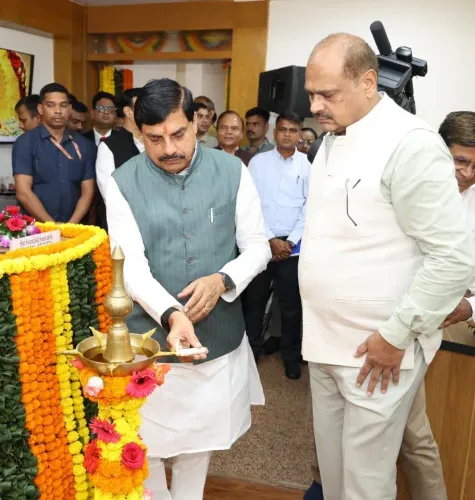
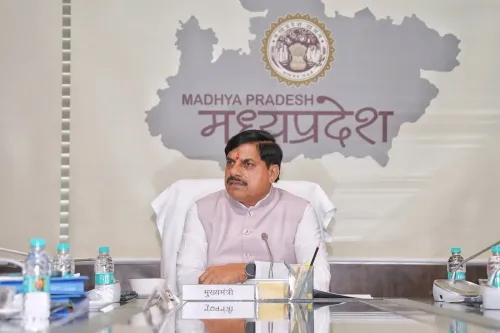
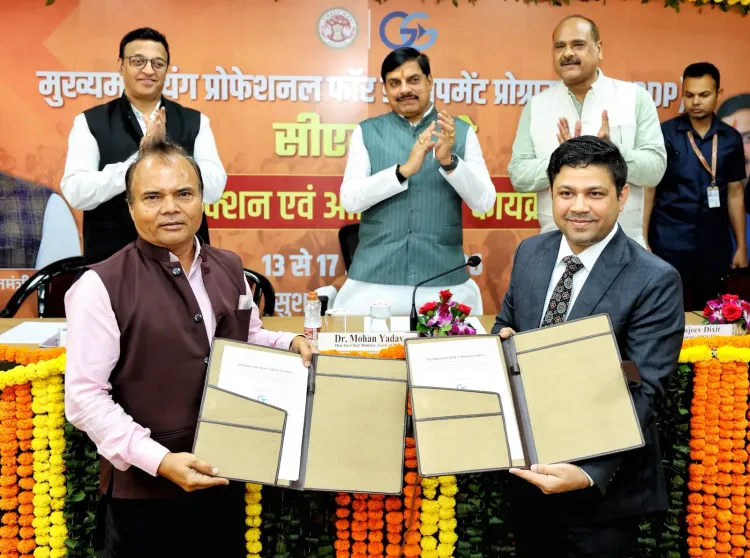
Young professionals drawn from all 55 districts of Madhya Pradesh gathered at the Atal Bihari Vajpayee Institute of Good Governance and Policy Analysis, Bhopal, on Wednesday, 14 October 2026, as Madhya Pradesh Chief Minister Dr. Mohan Yadav personally inaugurated a five-day residential training programme for the latest cohort of CM Fellows — signalling the state's sharpest push yet to put young eyes on the ground floor of government delivery.
What the CM Fellows are actually being trained to do
The fellows are recruits under the Chief Minister Young Professional for Development Programme (CMYPDP), a Madhya Pradesh government initiative designed to place trained young professionals as independent evaluators inside the state's welfare and development machinery. The five-day curriculum at the Bhopal institute is intended to equip them with tools for monitoring scheme implementation, identifying gaps in delivery, and feeding unfiltered, district-specific assessments back to the administration.
Dr. Yadav, addressing the cohort at the inauguration, said he was confident that youth selected from across the state's districts would play a 'significant role in removing deficiencies, improving systems, and making schemes more effective through their suggestions and impartial evaluation' — framing the fellows not as cheerleaders for policy but as a structured audit layer sitting outside the permanent bureaucracy.
The Atal institute as Madhya Pradesh's governance laboratory
The venue itself carries weight. The Atal Bihari Vajpayee Institute of Good Governance and Policy Analysis is Madhya Pradesh's dedicated state-level think tank, set up to drive research, training, and evidence-based policy analysis. Hosting the CMYPDP induction here aligns the fellowship — conceptually and institutionally — with the state's longer-term ambition of professionalising its governance feedback architecture, rather than treating the programme as a short-term optics exercise.
A wider trend: states betting on professional cohorts over permanent cadres
Madhya Pradesh is not alone. Across India, several state governments — cutting across political affiliations — have experimented with short-tenure professional cohorts to plug evaluation blind spots that routine bureaucratic channels tend to miss. The underlying premise is consistent: permanent civil servants, stretched across portfolios and constrained by hierarchy, often cannot generate the granular, scheme-specific data that administrators actually need to course-correct mid-implementation. Young professionals, deployed narrowly and temporarily, can.
What distinguishes the CMYPDP's current iteration is the explicit district-level coverage — 55 districts, one for every administrative unit in the state — suggesting the aim is comprehensive mapping rather than selective sampling. Whether the cohort's eventual evaluation reports translate into concrete administrative orders will be the real test of whether this programme is a governance instrument or a visibility exercise.
Point of View
Young evaluators deployed across every district can surface implementation failures faster than routine bureaucratic reporting. For Chief Minister Yadav, the optics of personally inaugurating the induction — and grounding it at an institution named after a BJP founder-figure — ties governance credibility to political legacy. The wider significance is structural: if the fellows' reports meaningfully shape administrative orders, the programme could become a replicable model for other states grappling with last-mile delivery gaps. The real test arrives when their findings challenge entrenched district-level interests.
NationPress
14 Oct 2026
Frequently Asked Questions
What is the CM Fellow programme in Madhya Pradesh?
The CM Fellow programme is part of the Chief Minister Young Professional for Development Programme (CMYPDP), a Madhya Pradesh government initiative that recruits and trains young professionals to independently monitor and evaluate the state's welfare and development schemes at the district level.
Where was the CM Fellow training programme launched?
The five-day training programme was inaugurated at the Atal Bihari Vajpayee Institute of Good Governance and Policy Analysis in Bhopal, Madhya Pradesh, on 14 October 2026.
How many districts are covered under the CMYPDP cohort?
Young professionals have been selected from all 55 districts of Madhya Pradesh, ensuring comprehensive statewide coverage for scheme evaluation.
What will CM Fellows actually do in Madhya Pradesh?
CM Fellows are tasked with monitoring the implementation of government welfare schemes, identifying gaps and deficiencies in delivery, and submitting impartial evaluations and suggestions to help improve how schemes function on the ground.
What is the Atal Bihari Vajpayee Institute of Good Governance in Bhopal?
It is a state-level policy think tank established in Madhya Pradesh to support research, training and analysis on governance and public policy — the institutional home for the CM Fellow programme's inaugural training.