CM Mohan Yadav Calls on Union Law Minister Meghwal in Delhi
Synopsis
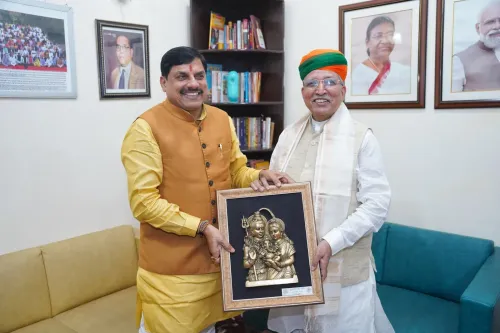
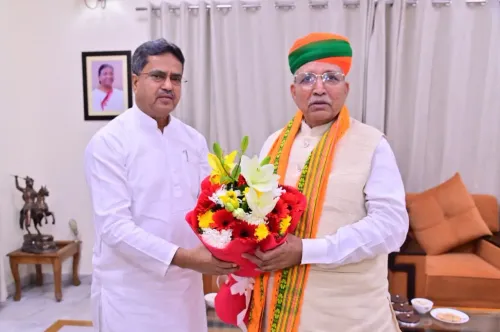
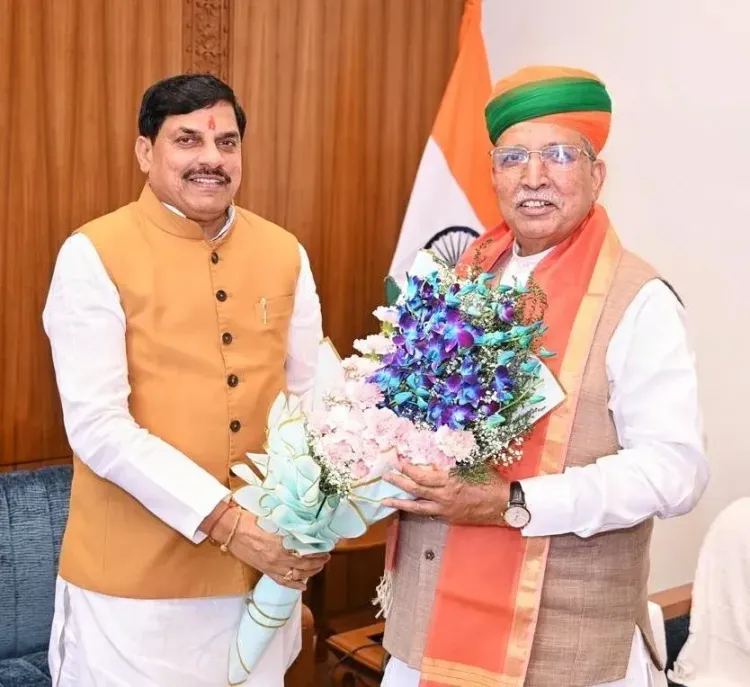
Madhya Pradesh Chief Minister Dr. Mohan Yadav called on Union Law and Justice Minister Arjun Ram Meghwal in New Delhi on 29 May 2026, continuing the pattern of centre-state coordination on legislative and judicial affairs under NDA governance.
Key Takeaways
Mohan Yadav , Chief Minister of Madhya Pradesh , met Union Minister Arjun Ram Meghwal in New Delhi on 29 May 2026 .
Arjun Ram Meghwal holds independent charge of the Ministry of Law and Justice and also manages Parliamentary Affairs .
The meeting was described as a courtesy visit ( saujanay bhet ), consistent with routine federal coordination between BJP -governed states and the Centre.
Such centre-state interactions have been a regular feature of NDA governance since 2014 , aimed at aligning legislative and judicial priorities.
No specific agenda or outcomes were publicly announced following the meeting.
Madhya Pradesh Chief Minister Dr. Mohan Yadav paid a courtesy call on Union Minister of State for Law and Justice (Independent Charge) and Parliamentary Affairs Arjun Ram Meghwal in New Delhi on Thursday, 29 May 2026, as part of ongoing centre-state federal coordination.
Context
Posting on X, Dr. Yadav wrote: 'आज नई दिल्ली में माननीय केंद्रीय विधि और न्याय (स्वतंत्र प्रभार) एवं संसदीय कार्य राज्य मंत्री श्री अर्जुन राम मेघवाल जी से सौजन्य भेंट की' ['Today in New Delhi, I paid a courtesy visit to the honourable Union Minister of State for Law and Justice (Independent Charge) and Parliamentary Affairs, Shri Arjun Ram Meghwal ji']. The meeting underscores the routine but significant channel of communication that state governments maintain with central ministries overseeing legal and legislative affairs.
Arjun Ram Meghwal, a senior BJP leader representing Bikaner in Rajasthan, holds independent charge of the Ministry of Law and Justice alongside his responsibilities for Parliamentary Affairs. His portfolio places him at the intersection of judicial administration and legislative scheduling — both areas of direct relevance to state governments.
Policy Backdrop
Courtesy meetings between chief ministers of BJP-governed states and Union ministers handling law and parliamentary affairs have been a consistent feature of NDA governance since 2014. These interactions serve to align state-level legislative priorities with the Centre's parliamentary calendar and to coordinate on judicial infrastructure, pending bills, and procedural reforms.
Madhya Pradesh, a BJP-ruled state, has been actively engaged with central ministries on governance and development initiatives since Dr. Yadav assumed office in December 2023. Regular engagement with the Ministry of Law and Justice is particularly relevant given ongoing efforts across states to modernise judicial processes and address pendency in courts.
Stakeholders and Impact
The meeting is of direct relevance to Madhya Pradesh's administrative and legislative agenda, particularly in areas where central legislation or procedural guidance shapes state-level action. State governments frequently use such meetings to flag concerns about pending bills, seek clarity on legislative timelines, or raise matters related to the functioning of subordinate courts.
For the broader federal structure, such interactions reflect the cooperative federalism model that the NDA government has promoted, where state and central functionaries maintain open lines of communication outside formal inter-governmental forums.
What's Next
With the next parliamentary session on the horizon, discussions at meetings of this nature often feed into the legislative agenda and procedural preparations that states undertake in advance. Whether any specific outcomes emerge from this courtesy call — such as follow-up on pending state legislation or judicial infrastructure proposals — is yet to be publicly confirmed. The meeting signals continued engagement between Madhya Pradesh and the Union government on matters of law and parliamentary business.
Point of View
Where BJP chief ministers maintain active back-channel engagement with Union ministries ahead of parliamentary sessions. The choice of the Law and Justice portfolio is notable: with judicial pendency and court modernisation high on the national agenda, state governments have strong incentives to stay closely aligned with the Centre's legislative calendar. For Dr. Yadav, now over two years into his tenure as Chief Minister, such Delhi visits also serve a political signalling function — demonstrating proximity to central leadership and active participation in the broader BJP governance ecosystem.
NationPress
19 Sept 2026
Frequently Asked Questions
Why did Madhya Pradesh CM Mohan Yadav meet Arjun Ram Meghwal?
The meeting was a courtesy call, part of routine centre-state coordination between the Madhya Pradesh government and the Union Ministry of Law and Justice and Parliamentary Affairs.
Who is Arjun Ram Meghwal?
Arjun Ram Meghwal is the Union Minister of State for Law and Justice (Independent Charge) and Parliamentary Affairs, representing the Bikaner constituency in Rajasthan.
What is the significance of a CM meeting the Law Minister?
Such meetings typically address legislative priorities, judicial infrastructure, pending bills, and procedural alignment ahead of parliamentary sessions, making them an important part of federal governance.
When did Mohan Yadav become Chief Minister of Madhya Pradesh?
Dr. Mohan Yadav assumed office as Chief Minister of Madhya Pradesh in December 2023 after the BJP's victory in the state assembly elections.
What is cooperative federalism in India?
Cooperative federalism refers to the model where the central and state governments work collaboratively on policy and governance; the NDA government has promoted regular ministerial interactions between the Centre and BJP-ruled states as part of this approach since 2014.