CM Mohan Yadav Engages Girls at NTPC Singrauli Empowerment Drive
Synopsis
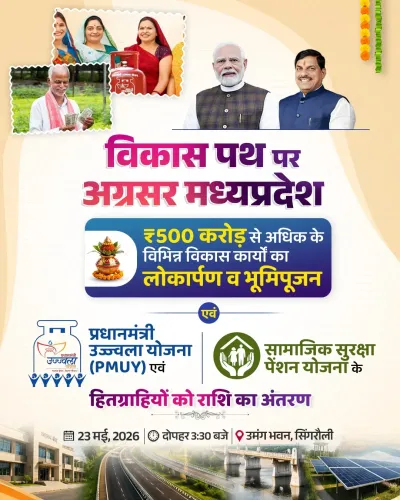
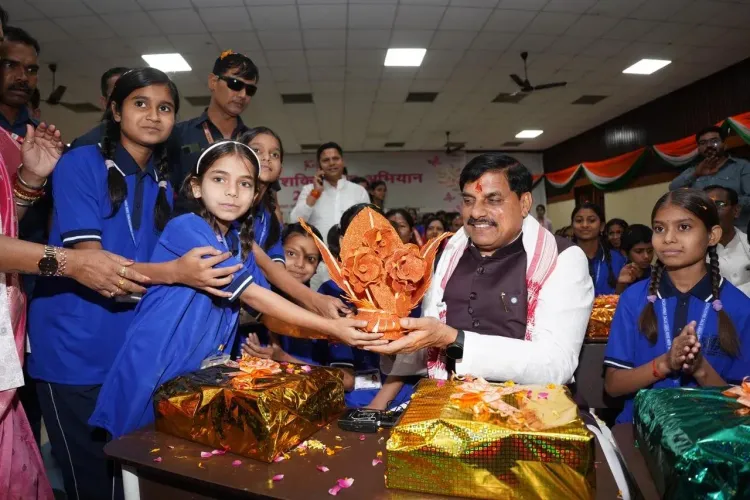
Chief Minister Dr. Mohan Yadav visited NTPC's Umang Bhavan in Singrauli on 23 May 2026 to interact with rural girl students under the Balika Sashaktikaran Abhiyan 2026, a campaign run by NTPC Vindhyachal to provide education, confidence-building, and personality development training to girls from rural areas.
Key Takeaways
Mohan Yadav addressed girl students at NTPC's Umang Bhavan, Singrauli on 23 May 2026 .
The event was held under the Balika Sashaktikaran Abhiyan 2026 , a campaign run by NTPC Vindhyachal as part of its CSR mandate.
The campaign provides rural girls with training in education, self-confidence, and holistic personality development .
Singrauli , primarily known for coal mining and power generation, is the focus district for this targeted girls' empowerment intervention.
Madhya Pradesh has a long policy history on girls' welfare, anchored by schemes such as the Ladli Laxmi Yojana launched in 2007 .
The campaign may be expanded to other Madhya Pradesh districts where PSU presence can support community-level girls' education initiatives.
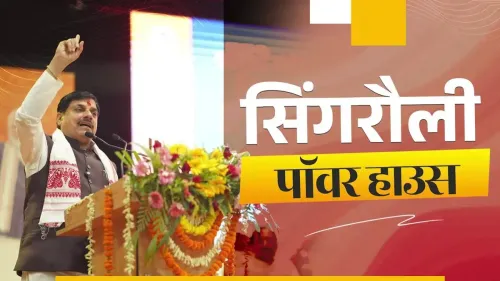
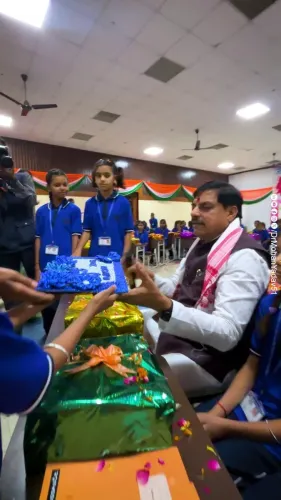
The Chief Minister's Office of Madhya Pradesh announced on Saturday, 23 May 2026 that Chief Minister Dr. Mohan Yadav addressed girl students at NTPC's Umang Bhavan in Singrauli as part of the 'Balika Sashaktikaran Abhiyan 2026' (Girl Empowerment Campaign 2026), urging them to embrace education, self-reliance, and confidence as foundations for their future.
Context
The event was held at Umang Bhavan, the community facility of NTPC Vindhyachal, one of India's largest thermal power stations located in Singrauli district in eastern Madhya Pradesh. Dr. Mohan Yadav, who has served as Chief Minister since December 2023, interacted directly with students, motivating them on the importance of shiksha, aatmanirbharta evam aatmavishwas (education, self-reliance, and self-confidence) and wishing them a bright future.
The campaign is being run by NTPC Vindhyachal as part of its corporate social responsibility mandate and targets girls from rural areas (gramin anchalon ki balikaen) in and around the Singrauli industrial cluster.
Policy Backdrop
Madhya Pradesh has maintained a sustained policy focus on girls' education and empowerment, most notably through the Ladli Laxmi Yojana, introduced in 2007, which promotes education and financial security for girl children. The current campaign extends this tradition into industrial districts where human development gaps persist alongside economic activity.
NTPC has conducted district-level education and skill development programmes in Singrauli since the 1980s as part of its community development obligations. The Balika Sashaktikaran Abhiyan 2026 combines education, confidence-building, and holistic personality development training specifically for rural girls — a targeted intervention in a region better known for coal mining and power generation than for social infrastructure.
Stakeholders and Impact
The primary beneficiaries are rural girl students from villages in and around Singrauli, a district where industrial growth has historically outpaced investment in girls' education. The campaign's design — blending academic motivation with personality development — reflects a broader national push for female literacy and self-reliance.
The participation of a sitting Chief Minister in a PSU-led CSR event signals state-level political endorsement of the programme, potentially raising its visibility and encouraging further institutional support. Local schools and community organisations in Singrauli stand to benefit from the heightened attention to the region's girl-child education deficit.
What's Next
The Balika Sashaktikaran Abhiyan 2026 is expected to continue its rollout across rural pockets of Singrauli, with observers watching whether the model will be extended to other industrial districts of Madhya Pradesh where PSU presence could similarly anchor community-level girls' empowerment efforts. A possible linkage with state education budget allocations or annual welfare reviews could give the campaign a more durable institutional footing beyond its current CSR framework.
Point of View
And the Balika Sashaktikaran Abhiyan 2026 fits squarely within that playbook. The choice of Singrauli — a high-revenue energy district with persistent human development gaps — underscores the government's awareness that economic output and social equity do not automatically move together. If the campaign is scaled and formally linked to state budget lines, it could evolve from a CSR initiative into a replicable public-private model for girls' empowerment in India's industrial corridors.
NationPress
19 Sept 2026
Frequently Asked Questions
What is the Balika Sashaktikaran Abhiyan 2026?
The Balika Sashaktikaran Abhiyan 2026 is a campaign run by NTPC Vindhyachal in Singrauli, Madhya Pradesh, that provides rural girl students with training in education, self-confidence, and personality development as part of NTPC's corporate social responsibility activities.
Why did CM Mohan Yadav visit Singrauli on 23 May 2026?
Chief Minister Dr. Mohan Yadav visited Singrauli to interact with girl students at NTPC's Umang Bhavan as part of the Balika Sashaktikaran Abhiyan 2026, motivating them on the importance of education and self-reliance.
What is NTPC Vindhyachal's role in girls' education in Singrauli?
NTPC Vindhyachal, one of India's largest thermal power stations, has conducted community education and skill programmes in Singrauli since the 1980s under its CSR mandate; the Balika Sashaktikaran Abhiyan 2026 is its current initiative focused specifically on rural girls.
What schemes does Madhya Pradesh have for girl child welfare?
Madhya Pradesh introduced the Ladli Laxmi Yojana in 2007 to promote education and financial security for girl children; this has been supplemented by PSU-led CSR campaigns such as the Balika Sashaktikaran Abhiyan 2026 in industrial districts like Singrauli.
Will the Balika Sashaktikaran Abhiyan 2026 expand to other districts?
As of 23 May 2026, the campaign is focused on Singrauli, but observers expect it could be extended to other Madhya Pradesh districts where PSU presence can anchor similar girls' empowerment efforts, particularly if it is linked to state education budget allocations.