CM Mohan Yadav Pays Tribute to RSS Chief Balasaheb Deoras
Synopsis
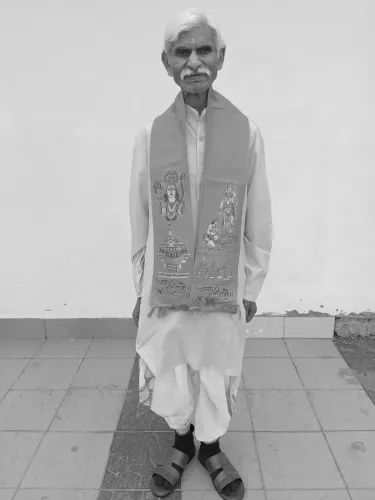
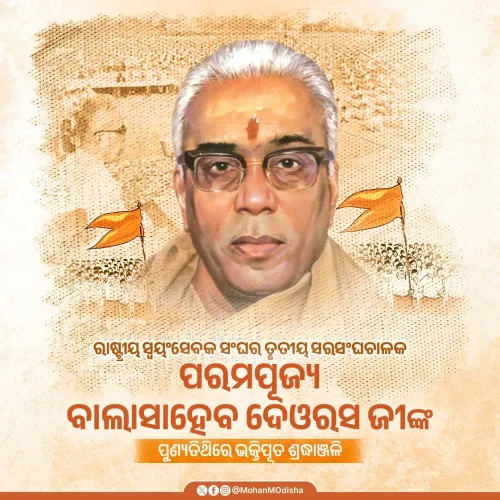
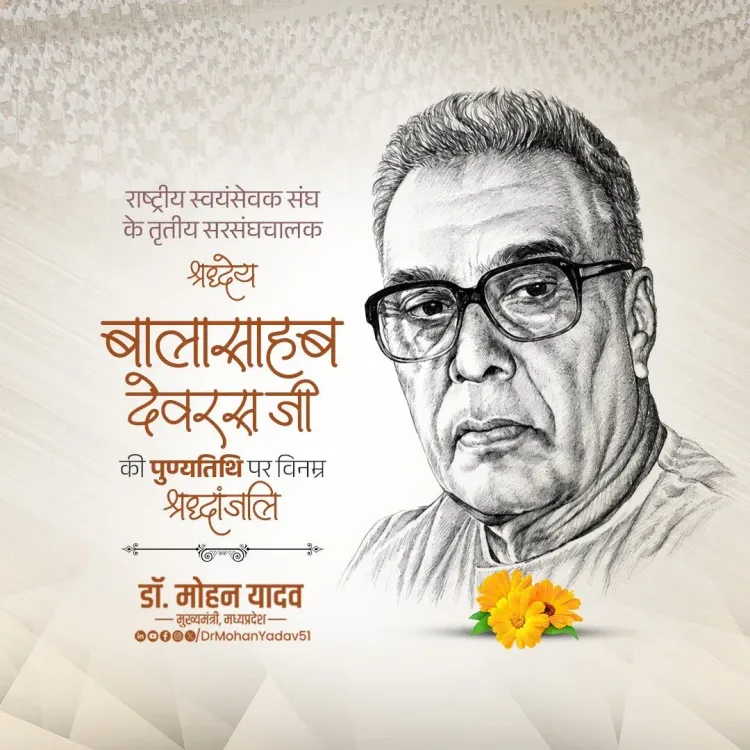
Madhya Pradesh Chief Minister Dr. Mohan Yadav paid tribute to Balasaheb Deoras, the RSS's third Sarsanghchalak, on his death anniversary, praising his unprecedented expansion of the organisation, his commitment to social harmony, and his promotion of Sanatana culture.
Key Takeaways
Madhya Pradesh CM Dr.
Mohan Yadav paid tribute to Balasaheb Deoras on his death anniversary on 17 June 2026 .
Deoras was the third Sarsanghchalak of the RSS , serving from 1973 to 1994 after succeeding M.
Yadav credited Deoras with the 'unprecedented expansion' of the RSS and guiding countless workers toward national service.
The tribute highlighted Deoras's role in promoting Sanatana culture and social harmony .
The post was directed at the RSS's official handle @RSSorg , underscoring the institutional link between the BJP government in Madhya Pradesh and the Sangh.
Public tributes to past RSS chiefs by BJP leaders form a recurring pattern in Indian political discourse.
Madhya Pradesh Chief Minister Dr. Mohan Yadav on Wednesday, 17 June 2026 paid tribute to Balasaheb Deoras, the third Sarsanghchalak of the Rashtriya Swayamsevak Sangh (RSS), on his death anniversary, hailing his role in expanding the organisation and advancing social harmony.
Context
In his post addressed to @RSSorg, Dr. Yadav offered what he called a humble tribute — 'विनम्र श्रद्धांजलि' ['a humble homage'] — to Deoras, describing his life as a 'lamp of inspiration' that would continue to illuminate the path of duty for all. He credited Deoras with leading an 'unprecedented expansion' of the Sangh and guiding 'countless workers' towards the path of national service.
The Chief Minister further noted Deoras's lifelong commitment to the 'upliftment of Sanatana culture' and the cause of 'सामाजिक समरसता' ['social harmony'], framing his legacy as a living guide for present-day public life.
Policy Backdrop
Balasaheb Deoras served as the third Sarsanghchalak of the RSS from 1973, succeeding M. S. Golwalkar, and led the organisation until 1994. Under his tenure, the RSS undertook significant organisational outreach across India, deepening its network of shakhas and affiliated bodies.
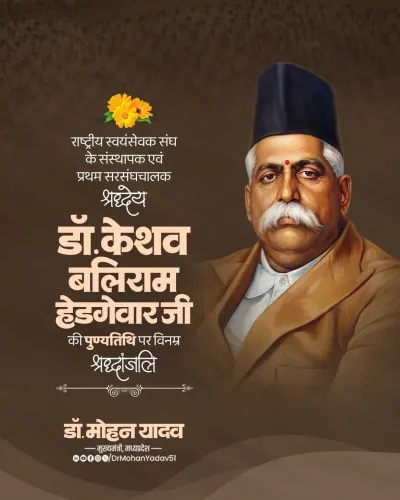
The RSS itself was founded by K. B. Hedgewar in 1925 as a Hindu nationalist volunteer organisation. Its hierarchical structure, headed by the Sarsanghchalak, has made successive chiefs central figures in the cultural-nationalist discourse that has shaped modern Indian politics.
Stakeholders and Impact
Public tributes by BJP office-bearers to past RSS chiefs are a well-established pattern, serving to reinforce the ideological continuity between the Sangh's organisational legacy and the party's governance agenda. For the RSS's vast network of volunteers and swayamsevaks, such acknowledgements carry symbolic weight, affirming that their foundational figures remain central to mainstream political memory.
Dr. Yadav's post, directed at the RSS's official handle, also signals the sustained institutional relationship between the Madhya Pradesh government and the Sangh's leadership ecosystem — a relationship that has historically shaped the state's cultural and social policy priorities.
What's Next
The RSS's flagship annual event, the Vijayadashami address by the incumbent Sarsanghchalak, is expected to draw fresh attention to the organisation's ideological direction in the months ahead. State-level commemorations by BJP leaders, including in Madhya Pradesh, are likely to continue as part of the broader calendar of Sangh-affiliated observances. Dr. Yadav's tribute underscores how the legacy of figures like Deoras remains a touchstone for BJP leaders seeking to articulate a vision of cultural nationalism rooted in the RSS's century-long history.
Point of View
Particularly on death anniversaries of past Sarsanghchalaks. By tagging @RSSorg directly, the post moves beyond personal sentiment into institutional signalling — reinforcing the BJP-Sangh relationship at the level of state governance. The emphasis on 'social harmony' alongside 'Sanatana culture' reflects a dual-register messaging strategy: projecting cultural-nationalist credentials while maintaining a broader, inclusive framing. This positions Deoras's legacy as a policy-relevant touchstone, not merely a historical footnote.
NationPress
16 Sept 2026
Frequently Asked Questions
Who was Balasaheb Deoras?
Balasaheb Deoras was the third Sarsanghchalak of the Rashtriya Swayamsevak Sangh (RSS), serving from 1973 to 1994 after succeeding M. S. Golwalkar. He is credited with significantly expanding the RSS's organisational reach across India.
Why did CM Mohan Yadav pay tribute to Balasaheb Deoras?
Madhya Pradesh Chief Minister Dr. Mohan Yadav paid tribute on Deoras's death anniversary, praising his role in expanding the RSS, promoting Sanatana culture, and working for social harmony.
What is the RSS and who leads it?
The Rashtriya Swayamsevak Sangh (RSS) is a Hindu nationalist volunteer organisation founded in 1925 by K. B. Hedgewar. It is led by the Sarsanghchalak, its highest organisational authority.
What did Mohan Yadav say about Balasaheb Deoras?
Dr. Yadav described Deoras's life as a 'lamp of inspiration,' crediting him with the unprecedented expansion of the RSS, guiding countless workers toward national service, and his dedication to Sanatana culture and social harmony.
What is the relationship between the BJP and the RSS?
The BJP and RSS share deep ideological and organisational ties rooted in the broader Hindu nationalist movement. BJP leaders regularly pay public tribute to past RSS chiefs as part of acknowledging the Sangh's foundational role in shaping their political and cultural vision.