CM Mohan Yadav pays tribute to warrior Jhalkari Bai on her birth anniversary
Synopsis
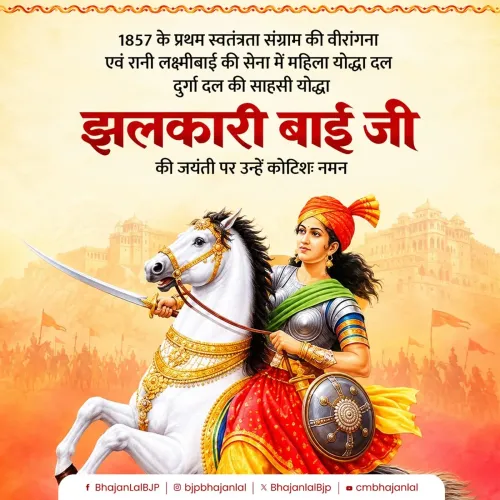
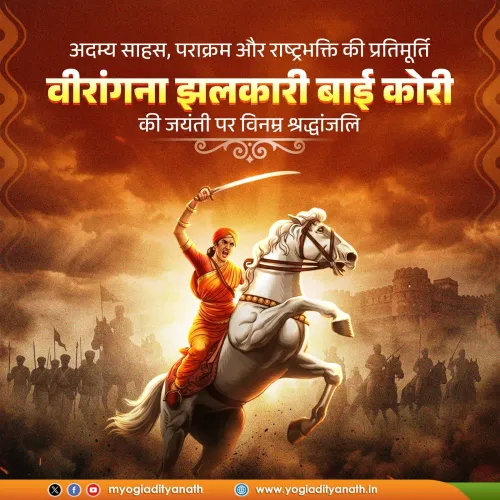
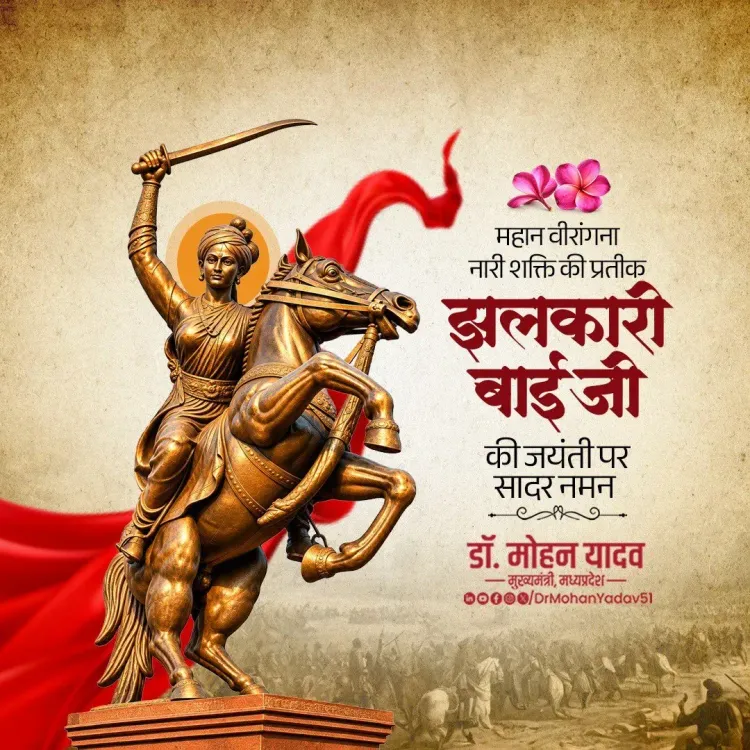
Madhya Pradesh Chief Minister Dr. Mohan Yadav marked the birth anniversary of Jhalkari Bai on 22 November 2026, paying tribute to the Bundela warrior who fought alongside Rani Lakshmibai against British forces in the 1857 First War of Independence, calling her gallantry eternally memorable.
Key Takeaways
Madhya Pradesh CM Dr.
Mohan Yadav posted a birth anniversary tribute to warrior Jhalkari Bai on 22 November 2026 .
Jhalkari Bai was a fighter from the Bundela community who served in Rani Lakshmibai's force during the 1857 First War of Independence .
She is remembered for her courage inside the besieged fort of Jhansi , fighting British colonial forces alongside the queen.
CM Yadav described her contribution as 'unparalleled gallantry' that will 'always be remembered in the history of Indian freedom.' The tribute reflects a broader national effort to restore the contributions of regional, community and women fighters from 1857 to mainstream historical memory.
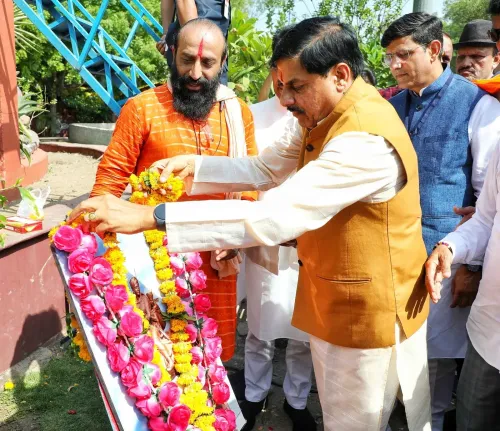
She stood shoulder to shoulder with Rani Lakshmibai when the guns of 1857 roared — and her name deserves to be spoken just as loudly. On Sunday, 22 November 2026, Madhya Pradesh Chief Minister Dr. Mohan Yadav paid solemn homage to Jhalkari Bai on her birth anniversary, honouring the warrior whose defiance of British colonial power remains one of the defining acts of India's first independence struggle.
Posting on X, Chief Minister Yadav wrote: '1857 के प्रथम स्वतंत्रता संग्राम में अदम्य साहस, शौर्य और वीरता का परिचय देने वाली वीरांगना झलकारी बाई जी की जयंती पर सादर नमन करता हूं' — 'On the birth anniversary of the brave Jhalkari Bai, who displayed indomitable courage, valour and heroism in the First War of Independence of 1857, I bow in respectful tribute.' He added that her 'unparalleled gallantry' in fighting the British alongside Rani Lakshmibai 'will always be remembered in the history of Indian freedom.'
Who was Jhalkari Bai — and why her story still matters
Jhalkari Bai was a warrior from the Bundela community who rose to serve in the women's auxiliary force of Jhansi under Rani Lakshmibai. During the 1857 uprising — the event Indians recognise as the First War of Independence against British colonial rule — she fought directly alongside the queen, reportedly disguising herself as Lakshmibai at a critical moment to allow the queen to escape the besieged fort. That act of sacrifice, performed under fire, is the detail that has made Jhalkari Bai a figure of enduring reverence, particularly among communities whose contributions to the freedom struggle were long overshadowed in mainstream historical accounts.1857 and the women history almost forgot
The 1857 uprising convulsed British India from Meerut to Jhansi, drawing in soldiers, zamindars, queens — and ordinary women who picked up arms. For generations, the standard retelling foregrounded male commanders and royal figureheads. The quiet reclamation of figures like Jhalkari Bai by state leaders, scholars and civil society over recent decades reflects a broader effort to restore the full texture of that resistance — its regional depth, its caste diversity, its women at the front. Indian chief ministers across party lines now mark such anniversaries publicly, using social media to anchor historical memory to a living civic conversation. For Madhya Pradesh — the state that contains Jhansi's neighbouring districts and much of the Bundelkhand belt where the 1857 revolt burned fiercest — the tribute carries particular geographic and cultural weight. Jhalkari Bai's story is not a footnote. It is the kind of courage that an entire uprising was built on — and Chief Minister Yadav's tribute is a reminder that the full ledger of 1857 is still being written.Point of View
Caste and regional identity in the Bundelkhand belt, making such tributes politically and culturally layered rather than purely ceremonial. For a BJP government in Madhya Pradesh, invoking a Bundela community warrior connects the party to subaltern freedom-struggle narratives that cut across traditional social hierarchies. The broader pattern — reclaiming women fighters of 1857 — reflects a nationwide historiographical shift that state leaders across parties have been keen to associate themselves with.
NationPress
22 Nov 2026
Frequently Asked Questions
Who was Jhalkari Bai?
Jhalkari Bai was a warrior from the Bundela community who fought alongside Rani Lakshmibai of Jhansi during the 1857 First War of Independence against British colonial forces. She is celebrated for her extraordinary bravery inside the besieged Jhansi fort.
When is Jhalkari Bai's birth anniversary?
Jhalkari Bai's birth anniversary falls on 22 November. In 2026, Madhya Pradesh Chief Minister Dr. Mohan Yadav marked the occasion with a public tribute on social media.
What was the connection between Jhalkari Bai and Rani Lakshmibai?
Jhalkari Bai served in the women's auxiliary force of Rani Lakshmibai, the queen of Jhansi. She fought directly alongside the queen during the 1857 uprising and is credited with acts of personal sacrifice that aided Lakshmibai during the British siege of Jhansi.
What did Mohan Yadav say about Jhalkari Bai?
Madhya Pradesh Chief Minister Dr. Mohan Yadav described Jhalkari Bai as displaying 'indomitable courage, valour and heroism' in the 1857 First War of Independence, saying her 'unparalleled gallantry' in fighting the British shoulder-to-shoulder with Rani Lakshmibai will always be remembered in the history of Indian freedom.
Why is Jhalkari Bai significant in Indian history?
Jhalkari Bai represents the contribution of women and marginalised communities to India's first major uprising against British rule in 1857. Her story, long underrepresented in mainstream histories, has gained renewed prominence as scholars and political leaders work to restore a fuller picture of the independence struggle.