CM Yogi Positions Lucknow as Multi-Sector National Hub

Synopsis
Chief Minister Yogi Adityanath declares Lucknow is positioning itself as India's new multi-sector hub, covering education, healthcare, infrastructure, modern technology, and manufacturing — the latest articulation of a development strategy built since 2017.
Key Takeaways
CM Yogi Adityanath declared Lucknow is establishing itself as a hub for education, healthcare, world-class infrastructure, modern technology, and manufacturing in India.
The statement was posted by the Chief Minister's Office of Uttar Pradesh on September 24, 2026 .
The UP Defence Industrial Corridor (2018) lists Lucknow as a primary node for aerospace and defense manufacturing.
The UP Industrial Investment and Employment Promotion Policy (2017, updated 2022) formalised Lucknow's priority status for tech and manufacturing clusters.
AIIMS Lucknow and the expansion of SGPGIMS underpin the city's growing healthcare credentials.
The next major test of the hub ambition will be the upcoming UP Global Investors Summit announcements and Lucknow Metro extension timelines.
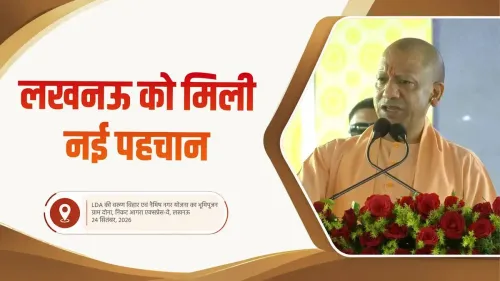
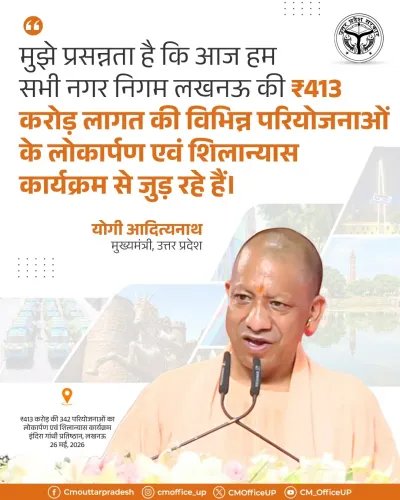
Lucknow is no longer just a capital city — it is being recast as one of India's most ambitious growth experiments. The Chief Minister's Office of Uttar Pradesh posted on Thursday, September 24, 2026, quoting Chief Minister Yogi Adityanath declaring that Lucknow is now establishing itself as a new hub of education, healthcare, world-class infrastructure, modern technology, and manufacturing for the country.
The original quote in Hindi reads: 'लखनऊ अब भारत में Education, Healthcare, World-Class Infrastructure, Modern Technology और Manufacturing के एक नए Hub के रूप में स्वयं को स्थापित कर रहा है।' — translated: 'Lucknow is now establishing itself as a new hub of Education, Healthcare, World-Class Infrastructure, Modern Technology, and Manufacturing in India.'
From State Capital to Multi-Sector Powerhouse
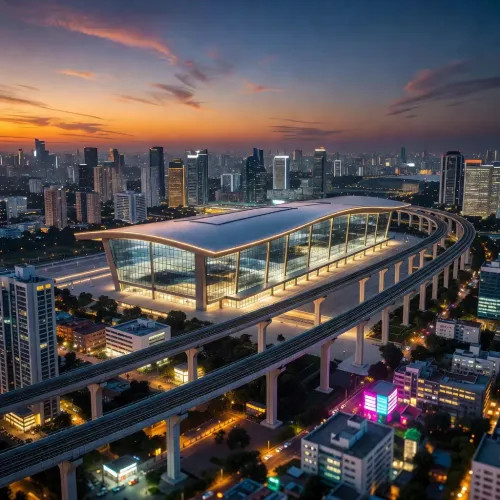
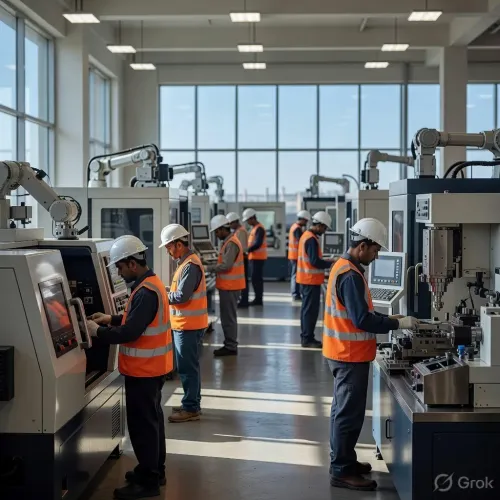
The statement is not rhetoric in a vacuum. Since 2017, the Uttar Pradesh government has systematically layered investments across Lucknow — defense manufacturing corridors, IT parks, medical institutions, and expanded urban transport — building the case for exactly the kind of multi-sector identity CM Yogi is now publicly claiming. The Uttar Pradesh Defence Industrial Corridor, announced in 2018 with Lucknow as a primary node, anchors the manufacturing piece of this ambition, targeting aerospace and defense production at a national scale.
On healthcare, the expansion of SGPGIMS and the establishment of AIIMS Lucknow have steadily elevated the city's medical profile since the early 2010s, drawing patients from across the Hindi heartland. Together, these moves reflect a deliberate strategy: position Lucknow as a credible alternative to the Delhi-NCR and Mumbai concentration that has long dominated India's economic geography.
The Larger Blueprint: UP's Bid to Rewrite Its Economic Story
What makes this moment significant is the accumulation of policy layers underneath it. The Uttar Pradesh Industrial Investment and Employment Promotion Policy of 2017, updated in 2022, explicitly prioritised Lucknow for manufacturing and technology clusters — meaning today's claim of hub status is the political articulation of a long-run institutional bet, not a single scheme announcement.
The pattern mirrors what states like Telangana and Karnataka pursued with Hyderabad and Bengaluru — but with a far larger population base and a historically lower industrial baseline, making the ambition both bolder and harder to execute. Every investor summit cycle, every metro extension, every new tech park moves the needle — or fails to. The next phase of UP Global Investors Summit announcements and Lucknow Metro completion timelines will test whether the hub narrative translates into measurable economic mass.
India's largest state is making a very public bet on its capital city. Whether Lucknow delivers the full quintet — education, healthcare, infrastructure, technology, and manufacturing — will define Uttar Pradesh's economic identity for a generation.
Point of View
Health infrastructure, and tech parks. The messaging is timed to consolidate UP's investor-friendly image ahead of the next Global Investors Summit cycle, where tangible commitment numbers will either validate or complicate the narrative. For BJP governance optics, a rising Lucknow also serves as a counter-argument to critics who question UP's industrial trajectory relative to southern states. The real scrutiny will come from ground-level delivery: job creation data, private capital actually deployed, and whether Lucknow's infrastructure pace can absorb the ambition being signalled.
NationPress
24 Sept 2026
Frequently Asked Questions
What sectors is Lucknow developing as a hub according to CM Yogi?
According to Chief Minister Yogi Adityanath, Lucknow is establishing itself as a hub across five sectors: education, healthcare, world-class infrastructure, modern technology, and manufacturing.
What is the UP Defence Industrial Corridor and how does Lucknow fit in?
The Uttar Pradesh Defence Industrial Corridor was announced in 2018 to promote aerospace and defense manufacturing in the state, with Lucknow designated as one of its key nodes.
What healthcare institutions make Lucknow a medical hub?
AIIMS Lucknow and the expanded SGPGI (Sanjay Gandhi Post Graduate Institute of Medical Sciences) are the primary institutions that have built Lucknow's reputation as a healthcare destination.
What is the UP Industrial Investment and Employment Promotion Policy?
It is a state policy first introduced in 2017 and updated in 2022 that prioritises Lucknow and other cities for manufacturing and technology cluster development to attract private investment.
What should we watch next regarding Lucknow's development plans?
Key milestones to track include the next round of UP Global Investors Summit announcements, Lucknow Metro extension completion timelines, and new tech park launches that will test the hub ambition.