CM Yogi Launches Two Deep Tech Hubs in UP with IIT, IIM, IIIT

Synopsis
Chief Minister Yogi Adityanath announces two Deep Tech Hubs for Uttar Pradesh — one in Noida with IIT Kanpur and one in Lucknow with IIIT Lucknow and IIM Lucknow — positioning the state for the future economy.
Key Takeaways
Two Deep Tech Hubs are being established in Uttar Pradesh, announced on October 26, 2026 .
The Noida hub is being set up in partnership with IIT Kanpur , leveraging its research and engineering strength.
The Lucknow hub is a joint initiative with IIIT Lucknow and IIM Lucknow , combining technology and management expertise.
The announcement builds on the Uttar Pradesh Startup Policy 2018 , which first established the state's innovation ecosystem framework.
Operational timelines, budget allocations and industry tie-ups have not yet been publicly disclosed.
The initiative aligns with India's national priority of building domestic capability in AI, semiconductors and advanced technologies.
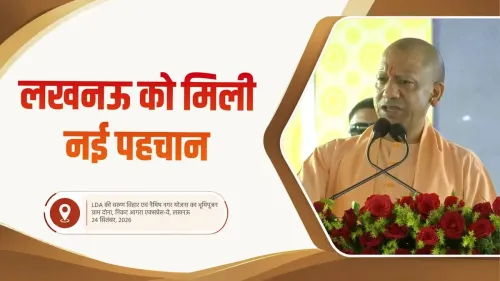
Uttar Pradesh is placing a serious bet on the future economy — and it is betting on deep technology. Chief Minister Yogi Adityanath, through the Chief Minister's Office of Uttar Pradesh, announced on Monday, October 26, 2026 that two Deep Tech Hubs are being established in the state: one in Noida in partnership with IIT Kanpur, and one in Lucknow jointly with IIIT Lucknow and IIM Lucknow.
The Chief Minister's statement, posted in Hindi, reads: 'Bhavishy ki arthavyavastha ko dhyan mein rakhte hue hamne apni taiyari ki hai' — 'We have prepared ourselves with the future economy in mind.' The framing is deliberate: this is not reactive policy. It is, the office says, forward-positioned.
Noida and Lucknow: Two cities, one strategic vision
The choice of locations is telling. Noida, a dense IT and industrial corridor on Delhi's eastern edge, gives the hub immediate proximity to capital-region investors, multinational technology firms, and a deep talent pool. Anchoring it with IIT Kanpur — one of India's most research-intensive engineering institutions — adds credibility and R&D muscle from day one.
Lucknow, the state capital, gets the second hub with a dual academic backbone: IIIT Lucknow for information-technology depth and IIM Lucknow for management and commercialisation expertise. That pairing is significant — it signals an intention to bridge the gap between lab-built technology and market-ready ventures, a gap that has historically hobbled Indian deep-tech startups.
Building on a policy arc that started in 2017
These hubs do not emerge from nowhere. Uttar Pradesh has been reorienting its economy toward high-value sectors since the Uttar Pradesh Startup Policy of 2018, which laid the initial framework for innovation ecosystems across the state. Multiple partnerships with national institutes have followed, each one incrementally building the state's capability in fields like artificial intelligence, semiconductors, and advanced manufacturing.
The deep-tech push mirrors a broader national priority: reducing import dependence in critical technologies and generating domestic intellectual property. By routing that ambition through established academic institutions rather than standalone government agencies, Uttar Pradesh is borrowing institutional credibility rather than building it from scratch. Smart leverage.
What the hubs could mean for UP's tech startup scene
For engineering students, researchers, and early-stage founders in the state, the announcement opens a concrete question: what exactly will these hubs offer? Operational timelines, funding allocations, and industry partnership details have not yet been made public. Those specifics — expected in official state budget or IT department releases — will determine whether these become genuine launch-pads or well-branded buildings.
What is already clear is the ambition. Two premier technical institutions, two premier management and IT institutions, two of UP's most economically strategic cities. Uttar Pradesh is not just watching the deep-tech decade unfold. It is trying to write part of it.
Point of View
IIIT Lucknow, and IIM Lucknow rather than standalone agencies, the Yogi government is effectively outsourcing credibility to institutions that already command national and global respect. The move fits a recognisable pattern in India's state-level technology race, where large northern states are increasingly competing with Karnataka and Telangana for deep-tech investment and talent. The critical variable — and the one that will define the initiative's legacy — is execution: whether industry partnerships and funding commitments materialise before the next election cycle.
NationPress
26 Oct 2026
Frequently Asked Questions
What are the Deep Tech Hubs announced by CM Yogi Adityanath?
Two Deep Tech Hubs are being established in Uttar Pradesh — one in Noida in collaboration with IIT Kanpur, and one in Lucknow jointly with IIIT Lucknow and IIM Lucknow, aimed at building advanced technology capabilities in the state.
Where will the UP Deep Tech Hubs be located?
One hub will be in Noida, a major IT and industrial corridor adjacent to Delhi, and the second hub will be in Lucknow, the state capital of Uttar Pradesh.
Which institutions are partnering for the UP Deep Tech Hubs?
IIT Kanpur is partnering for the Noida hub, while IIIT Lucknow and IIM Lucknow are jointly partnering for the Lucknow hub.
What is Uttar Pradesh's Deep Tech Hub policy about?
The initiative is designed to prepare Uttar Pradesh for a future technology-driven economy by creating research and innovation centres anchored to premier academic institutions, focusing on areas like AI, semiconductors, and advanced technology development.
When will the Uttar Pradesh Deep Tech Hubs become operational?
Exact operational timelines and funding details have not yet been officially disclosed; further specifics are expected to emerge in state budget or IT department announcements.