Goa CM's Office: Officials Must Ease Citizens' Lives

Synopsis
The Chief Minister's Office of Goa has directed government officials to prioritise citizen welfare, resolve grievances promptly, and ensure rules facilitate rather than obstruct public service — a sharp accountability signal to the state's bureaucracy.
Key Takeaways
The Chief Minister's Office of Goa issued a governance directive on 26 October 2026 .
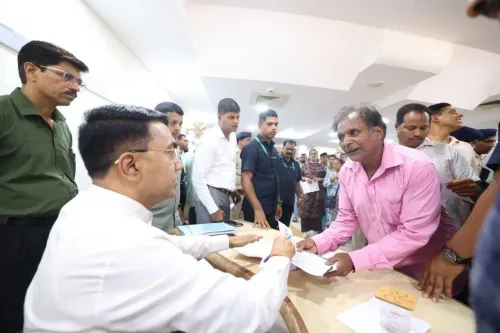
Officials are instructed to make citizens' lives easier and resolve grievances promptly .
Rules and procedures must facilitate public service, not create unnecessary hurdles.
The statement signals a push for citizen-centric administration across Goa's departments.
No specific scheme or official was named; the message applies broadly to the state bureaucracy.
A clear directive from the top — and a reminder that government exists to serve, not to obstruct. The Chief Minister's Office of Goa issued a pointed call to action on Monday, 26 October 2026, telling officials across the state that their primary duty is to make citizens' lives easier, not harder.
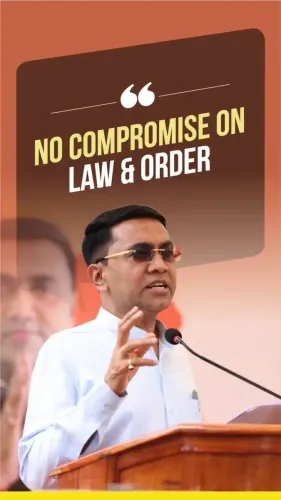
The message was unambiguous: 'Government officials must strive to make citizens' lives easier, resolve grievances promptly and ensure that rules and procedures facilitate public service rather than create unnecessary hurdles.' In an era where bureaucratic red tape remains a daily frustration for ordinary Indians, the statement cuts straight to the problem.
The hurdle problem: why this message matters in Goa
Goa's administration, like those across India, has long grappled with the gap between policy intent and ground-level delivery. Citizens filing applications — for land records, licences, welfare benefits, or basic certificates — routinely encounter delays, repeated documentation demands, and opaque procedures. The CMO's directive names that pattern directly, signalling that senior leadership is watching. Indian state governments have increasingly used such high-visibility directives to recalibrate bureaucratic culture — particularly after citizen grievance portals reveal bottlenecks. The emphasis on 'rules and procedures' as enablers rather than barriers echoes a broader national push to reduce compliance friction in public service delivery.Grievance redressal as a governance benchmark
Prompt grievance resolution has become a key performance indicator for state governments. When citizens' complaints linger unaddressed, trust in institutions erodes — and that erosion compounds. By publicly framing grievance resolution as an official duty rather than a discretionary act, the Goa CMO is, in effect, raising the accountability bar. The statement also carries a practical signal to departmental heads: procedural design must serve the public, not the convenience of the system. Simplification of rules — reducing steps, cutting redundant approvals, digitising interfaces — is no longer optional optics. It is a stated expectation. Whether this translates into specific circulars, departmental training drives, or revised standard operating procedures will determine its real-world weight. The words are firm. The follow-through is what citizens will be watching.Point of View
Especially ahead of electoral cycles. The real test, however, lies downstream: without follow-up circulars, measurable grievance timelines, or departmental accountability frameworks, such directives risk remaining aspirational. The signal is right; the system change is what matters.
NationPress
26 Oct 2026
Frequently Asked Questions
What did the Goa Chief Minister's Office say about government officials?
The Goa CMO directed government officials to make citizens' lives easier, resolve grievances promptly, and ensure that rules and procedures enable public service rather than create unnecessary obstacles.
Why is the Goa CMO issuing directives on grievance redressal?
Bureaucratic delays and procedural hurdles remain a persistent challenge for citizens in Goa. The directive is aimed at recalibrating official priorities towards citizen-centric service delivery.
What does 'citizen-centric administration' mean for Goa?
It means government officials are expected to design and follow procedures that prioritise ease and speed for citizens, including faster resolution of complaints and simpler documentation requirements.
Will there be specific orders following the Goa CMO's governance statement?
No specific orders have been announced yet. Observers are watching for follow-up circulars, training programmes, or revised standard operating procedures from Goa's departments.
How does Goa's governance directive fit the national picture?
Indian state governments regularly issue such directives as part of a national emphasis on simplifying procedures and improving public service efficiency, reflecting a broad shift towards accountable, citizen-first administration.