Piyush Goyal Meets ASML EVP to Deepen India Chip Ties
Synopsis
Commerce Minister Piyush Goyal met ASML Executive Vice President Wayne Allan to explore deeper semiconductor collaboration for India, covering advanced technology, innovation, and skilling — anchored by India's Rs 76,000 crore Semicon India programme and the India Semiconductor Mission.
Key Takeaways
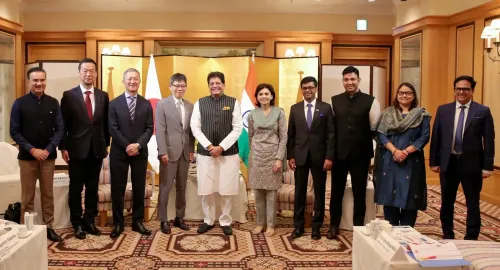
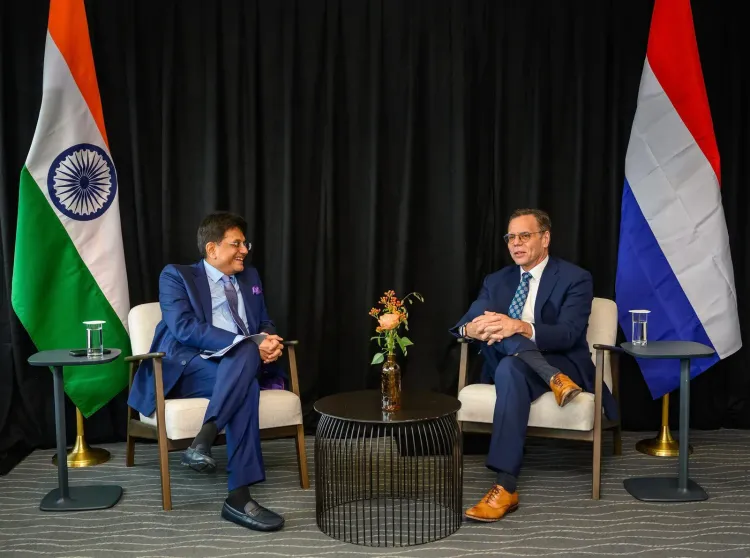
Piyush Goyal held a high-level meeting with Wayne Allan , EVP and Board Member of ASML , the world's dominant semiconductor lithography equipment maker.
Discussions covered collaboration in cutting-edge semiconductor technologies , innovation, and skilling to strengthen India's position in the global chip value chain.
India's Semicon India programme , approved in December 2021 , carries incentives of Rs 76,000 crore for domestic semiconductor manufacturing — the policy backbone cited in the meeting.
The India Semiconductor Mission is the operational arm executing these incentives and driving project approvals in fabrication, design, and display manufacturing.
ASML's lithography machines are critical to advanced chip production globally, making its engagement a strategic priority for any nation building a serious semiconductor ecosystem.
The meeting reflects India's broader push to move up the chip value chain — from packaging toward advanced fab, equipment partnerships, and engineering talent development.
The global semiconductor supply chain runs through one company's machines more than almost any other — and Union Commerce and Industry Minister Piyush Goyal sat down with its senior leadership on Monday, 26 October 2026 to make the case for India. Goyal met Mr. Wayne Allan, Executive Vice President and Member of the Board of Management at ASML, the Netherlands-based giant whose lithography systems are indispensable to virtually every advanced chip made on earth.
What Was On the Table
The minister described the conversation as 'engaging', with both sides exploring 'opportunities to deepen ASML's engagement with India.' The agenda spanned three interlocking pillars: collaboration in cutting-edge semiconductor technologies, innovation partnerships, and skilling — the last of which speaks directly to India's most compelling pitch to the world's chip industry, its engineering talent base.
Goyal pointed to a 'strong policy push, growing investments, and an expanding talent pool' as the foundation for that pitch. Those are not hollow talking points: in December 2021, India approved the Semicon India programme with a headline incentive package of Rs 76,000 crore to attract semiconductor fabrication, design, and equipment players — one of the largest single-sector industrial bets in the country's post-liberalisation history.
Why ASML Matters to India's Chip Ambitions
ASML occupies a singular position in the global chip value chain: its extreme ultraviolet (EUV) lithography machines are the only tools capable of printing the most advanced transistor geometries, making it a chokepoint no serious semiconductor nation can ignore. For India, which is building capacity from the ground up under the India Semiconductor Mission, a relationship with ASML is less about buying machines today and more about embedding India in the equipment ecosystem — through maintenance hubs, engineering partnerships, and eventually, local talent pipelines that ASML can draw on.
The India Semiconductor Mission, the operational arm of the Semicon India programme, has already seen approvals for several fabrication and display projects. The next frontier is moving up the value chain: from assembly and packaging toward design, equipment, and advanced fab processes. That is precisely the territory Monday's meeting was mapped on.
India's Place in the Global Chip Race
The timing is not accidental. Geopolitical fragmentation of the semiconductor supply chain — accelerated by US-China technology restrictions — has pushed equipment makers and chip manufacturers alike to diversify their footprint. India, with its democratic governance, large engineering graduate output, and now a serious policy architecture, is positioning itself as a credible alternative hub. The conversation with ASML's board-level leadership signals that this positioning is being taken seriously at the highest levels of the industry.
The real test will come in the specifics: which segments of ASML's India engagement get formalised, how quickly skilling tie-ups translate into certified engineers, and whether any of the approved Semicon India projects require ASML's equipment at scale. Those follow-through details will determine whether this meeting becomes a footnote or a founding moment.
Point of View
Whose customer base is concentrated in East Asia and the US, India represents a long-term hedge as geopolitical risk reshapes supply chains. Goyal's framing of the conversation around skilling alongside technology is strategically astute: it offers ASML a talent dividend, not just a market, which is a more durable basis for partnership. The real indicator to watch is whether this board-level engagement translates into concrete programme announcements under the India Semiconductor Mission, or remains part of the ongoing diplomatic courtship that has so far outpaced on-the-ground investment in advanced segments.
NationPress
27 Oct 2026
Frequently Asked Questions
What is ASML and why does it matter for India's semiconductor plans?
ASML is a Netherlands-based company and the world's leading maker of semiconductor lithography equipment, including the extreme ultraviolet machines essential to producing advanced chips. For India, building a relationship with ASML is critical to moving up the global chip value chain beyond assembly and packaging.
What is the India Semiconductor Mission?
The India Semiconductor Mission is a central government initiative under the Semicon India programme, launched to build domestic semiconductor manufacturing and design capabilities. It operationalises the Rs 76,000 crore incentive package approved in December 2021.
What did Piyush Goyal discuss with ASML's Wayne Allan?
According to Goyal's post, the meeting covered opportunities to deepen ASML's engagement with India, including collaboration in cutting-edge semiconductor technologies, innovation, and skilling to strengthen India's position in the global chip value chain.
How much has India committed to semiconductor manufacturing incentives?
India approved the Semicon India programme with Rs 76,000 crore in incentives for semiconductor manufacturing in December 2021, one of the country's largest single-sector industrial investment commitments.
What is India's strategy for becoming a global semiconductor hub?
India is pursuing a combination of production-linked incentives, the India Semiconductor Mission, and international partnerships with equipment makers, chip designers, and fabricators to reduce import dependence and build a full-spectrum domestic semiconductor ecosystem.