Kishan Reddy Calls Diaspora India's Voice Abroad

Synopsis
Union Minister G. Kishan Reddy invoked the Ramayana's Angad to call on the Indian diaspora — and India's missions in Australia — to actively counter misinformation and project India's achievements on the global stage with courage and conviction.
Key Takeaways
Kishan Reddy called on the Indian diaspora to counter misinformation and false narratives about India on the global stage.
He drew on the Ramayana metaphor of Angad to frame diaspora advocacy as a mission requiring resolve in unfriendly terrain.
The post tagged @MEAIndia and @HCICanberra , indicating coordinated public-diplomacy messaging aimed specifically at the Indian-Australian community .
The government has run Pravasi Bharatiya Divas conventions since 2003 to institutionalise ties between overseas Indians and New Delhi.
The appeal is part of a broader, sustained push by the Indian government to shape international perceptions and rebut critical foreign coverage.
At a moment when India's global footprint is expanding rapidly, Union Coal and Mines Minister G. Kishan Reddy has issued a stirring call to the Indian diaspora — urging overseas Indians to become active champions of India's story and front-line counters to what he describes as misinformation and false narratives about the nation.
The Angad Invocation: What the Mythological Metaphor Signals
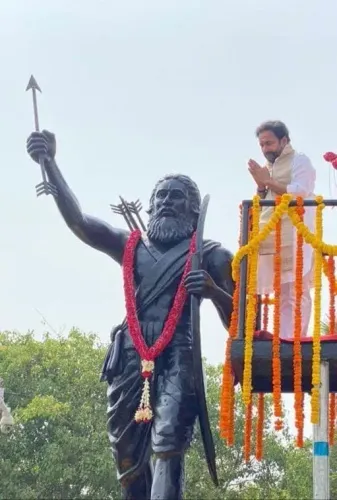
Reddy's message leans on a potent image drawn from the Ramayana — the warrior Angad, sent by Lord Ram as an emissary to Lanka, who stood resolute before an adversarial court and refused to be broken. 'Just as Angad carried Lord Ram's message to Lanka and stood unwavering in his resolve,' Reddy wrote, 'let us carry India's story with the same courage, conviction and clarity.' The choice of metaphor is deliberate: it frames diaspora advocacy not as soft public relations, but as a mission requiring personal resolve in unfriendly terrain.
Diaspora as a Pillar of Public Diplomacy
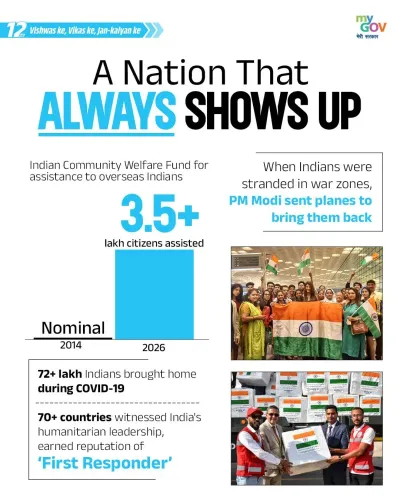
The post was addressed directly to @MEAIndia and @HCICanberra — the Ministry of External Affairs and the High Commission of India in Canberra — signalling that this is coordinated public-diplomacy messaging rather than a solo political statement. Indian missions worldwide have long encouraged diaspora members to project a positive national image and rebut critical coverage abroad, work that is formally anchored through the MEA's diaspora engagement frameworks. The government has held Pravasi Bharatiya Divas conventions every year since 2003 for precisely this purpose — binding the roughly 32-million-strong Indian diaspora into a structured relationship with the home government.
Why Canberra, Why Now
The specific tagging of the Canberra High Commission points the message firmly at the Indian-Australian community, one of Australia's fastest-growing migrant populations and a community that has periodically navigated both warm bilateral ties and friction points in coverage of India abroad. Australia has seen a surge in Indian students, skilled workers, and permanent residents, making it a key node in India's diaspora diplomacy calculus. Reddy's call asks these communities to move beyond passive pride and into active, confident advocacy — 'uphold its achievements and share its aspirations,' as he put it.
The Broader Counter-Narrative Push
The post is the latest data point in a sustained government effort to shape how India is perceived internationally. From high-level ministerial outreach to cultural and student organisations abroad, New Delhi has consistently argued that critical international coverage — on issues ranging from press freedom indices to democratic backsliding assessments — does not reflect ground reality. Diaspora members, the thinking goes, carry a lived credibility that no official communiqué can replicate. Reddy's appeal to 'counter misinformation' and 'challenge false narratives' repeats a phrase pattern that has become a staple of government communication on global image management. The kicker is the framing: this is not a defensive crouch. It is, as the Angad metaphor suggests, a call to walk into the court of the world and hold the line.
Point of View
The call acquires semi-official weight without a formal government circular. The Angad metaphor is notable: it reframes what could be read as defensive spin into a heroic, duty-bound mission, making compliance feel like patriotic courage rather than PR work. Longer-term, the pattern raises questions about the line between genuine diaspora pride and organised counter-narrative campaigns — a tension that foreign governments and civil-society groups abroad are watching closely.
NationPress
27 Oct 2026
Frequently Asked Questions
Why did G. Kishan Reddy use the Angad metaphor in his message?
Reddy invoked Angad — Lord Ram's envoy who stood firm in Lanka — to frame diaspora advocacy as a mission requiring personal resolve and courage, elevating it beyond routine public-relations work into a duty-bound national calling.
What is the role of the Indian diaspora in India's public diplomacy?
The Indian government views the roughly 32-million-strong diaspora as credible, grassroots ambassadors who can project India's achievements and rebut critical international narratives more effectively than official communiqués.
Why did Kishan Reddy tag the High Commission in Canberra specifically?
The tagging of @HCICanberra points the message at the Indian-Australian community, one of Australia's fastest-growing migrant populations and a key node in India's diaspora diplomacy outreach.
What is Pravasi Bharatiya Divas and how does it relate to this call?
Pravasi Bharatiya Divas is an annual government convention held since 2003 to strengthen ties between overseas Indians and the home government; it is the formal institutional backbone of exactly the kind of diaspora engagement Reddy is calling for.
What misinformation about India is G. Kishan Reddy referring to?
Reddy does not cite specific incidents; the reference reflects a broader government concern about critical international coverage — on issues such as press freedom rankings, democratic assessments, and bilateral disputes — which New Delhi argues does not accurately represent conditions on the ground.