Nadda Launches Drug De-Addiction Training Drive for 10,000 Healthcare Workers
Synopsis
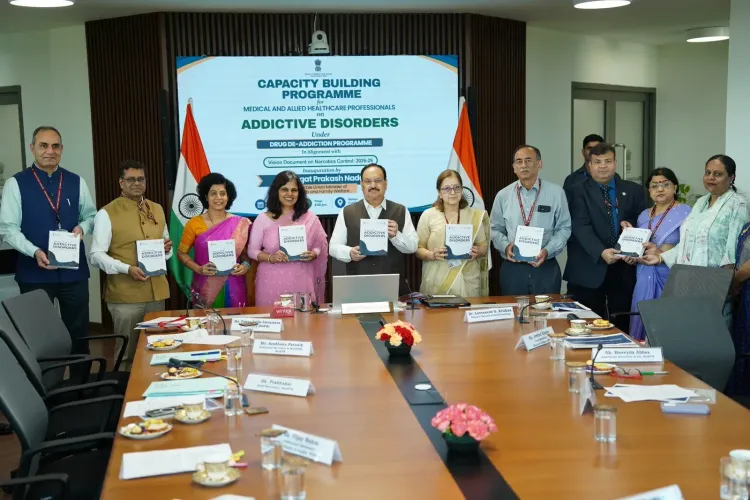
Union Health Minister J. P. Nadda launched a capacity-building programme to train 10,000 medical and allied healthcare professionals in drug de-addiction services by March 2029, alongside online training modules and the second edition of a clinical manual for physicians.
Key Takeaways
10,000 service providers are targeted for training under the new Capacity Building Programme by March 2029 .
Both online live and self-paced training programmes for doctors, nurses, and frontline workers were inaugurated simultaneously.
The second edition of 'Substance Use Disorder: Manual for Physicians' was released to standardise evidence-based treatment.
The programme is implemented through six premier institutions and covers prevention, early identification, treatment, and rehabilitation.
The initiative operates under the Nasha Mukt Bharat campaign, originally launched in August 2020, and is linked to the broader Viksit Bharat development agenda.
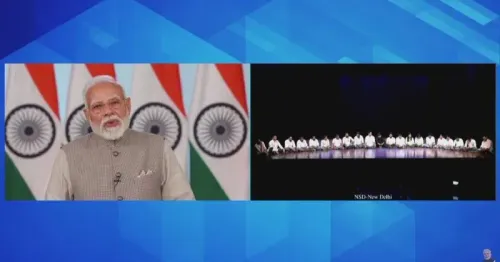
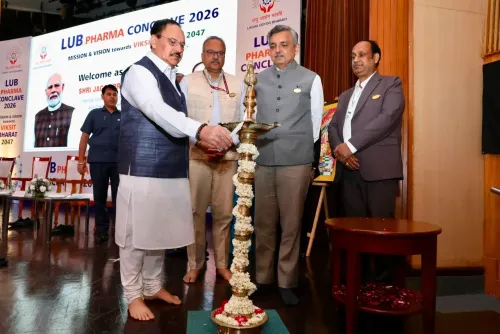
India's war on substance abuse just got a new frontline — and it runs through hospitals, clinics, and the professionals who staff them. Union Health Minister J. P. Nadda on Monday, October 26, 2026 launched a Capacity Building Programme for Medical and Allied Healthcare Professionals engaged in drug de-addiction services, setting an ambitious target of training 10,000 service providers by March 2029.
The launch, framed under Prime Minister Narendra Modi's vision of a Nasha Mukt Bharat (drug-free India) by 2029, marked a deliberate pivot: rather than targeting only users, the government is now investing heavily in the people who treat them. Nadda also inaugurated online live and self-paced training programmes for doctors, nurses, and frontline healthcare workers on the same occasion — widening the reach well beyond classroom-based learning.
A Manual, a Milestone, and Six Premier Institutions
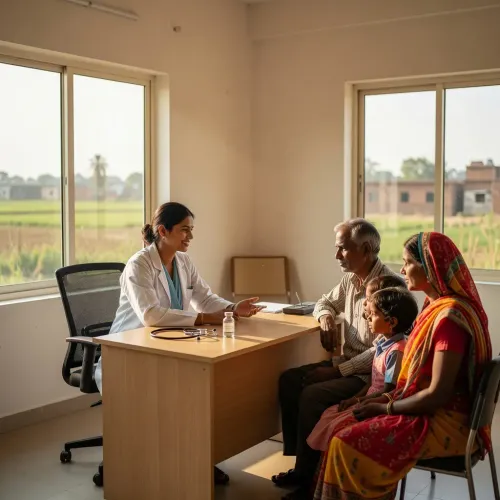
Alongside the training launches, Nadda released the second edition of 'Substance Use Disorder: Manual for Physicians' — a clinical reference that signals the government's push toward evidence-based, standardised care for addiction across the country. The entire initiative will be implemented through six premier institutions, creating a network of expertise from which trained providers can cascade knowledge into district and sub-district health systems.
The programme targets prevention, early identification, evidence-based treatment, and rehabilitation — a full continuum-of-care model rather than a single-point intervention. That design matters: addiction specialists have long argued that fragmented responses fail because they treat only one stage of a complex, relapsing condition.
Nasha Mukt Bharat and the Viksit Bharat Link
The Nasha Mukt Bharat Abhiyaan, originally launched in August 2020 by the Ministry of Social Justice and Empowerment, was built on demand-reduction among youth. Monday's announcements represent a maturation of that campaign — layering a public-health workforce strategy on top of awareness drives. Nadda explicitly connected the effort to the broader Viksit Bharat development framework, positioning a drug-free youth population as a prerequisite for the nation's human capital goals.
The minister described the approach as a 'whole-of-government' effort — a phrase that signals coordination across Health, Social Justice, and potentially Education and Home Affairs. Whether that inter-ministerial architecture translates into measurable outcomes on the ground will depend on how swiftly the six nodal institutions roll out modules and how consistently state governments adopt the trained workforce.
Ten thousand trained service providers by March 2029 is a concrete, time-bound number — the kind that invites scrutiny at the finish line. The clock is ticking.
Point of View
Which is a more durable, systems-level intervention. By setting a numerically specific target of 10,000 trained providers with a hard deadline of March 2029, the Health Ministry has created a performance benchmark that will be measurable and politically visible. The 'whole-of-government' framing also suggests Nadda is positioning Health as a co-owner of the Nasha Mukt Bharat agenda, which has historically been led by Social Justice — a move that could either boost coordination or generate turf tensions. The Viksit Bharat linkage is significant: it embeds drug-free youth not as a welfare goal but as an economic-productivity imperative, giving the programme cross-ministerial political salience.
NationPress
27 Oct 2026
Frequently Asked Questions
What is the Nasha Mukt Bharat campaign?
The Nasha Mukt Bharat Abhiyaan is a national programme launched in August 2020 to reduce drug demand and promote rehabilitation, particularly among youth, through a coordinated government-wide approach.
What did J. P. Nadda launch on October 26, 2026?
Union Health Minister J. P. Nadda launched a Capacity Building Programme to train 10,000 medical and allied healthcare professionals in drug de-addiction services by March 2029, along with online training modules and a revised clinical manual for physicians.
What is the 'Substance Use Disorder: Manual for Physicians'?
It is a clinical reference guide published by the Health Ministry for physicians treating substance use disorders; the second edition was released on October 26, 2026, as part of the push for evidence-based addiction care.
How will the drug de-addiction training programme be implemented?
The programme is implemented through six premier institutions and offers both online live and self-paced modules covering prevention, early identification, evidence-based treatment, and rehabilitation across the country.
What is Viksit Bharat and how does it relate to drug-free India?
Viksit Bharat is PM Modi's overarching vision of a developed, prosperous India; the Health Ministry has linked the Nasha Mukt Bharat goal to this framework, arguing that a drug-free youth population is foundational to India's human capital and development ambitions.