CM Yogi: Bundelkhand Expressway Transforms Jalaun's Identity
Synopsis
Chief Minister Yogi Adityanath says the 296-km Bundelkhand Expressway is reshaping Jalaun's identity — from ravine dacoit country to a pilgrimage tourism corridor — as UP's infrastructure push targets historically underserved southern districts.
Key Takeaways
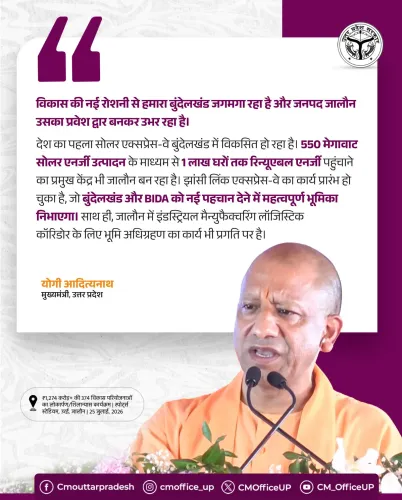
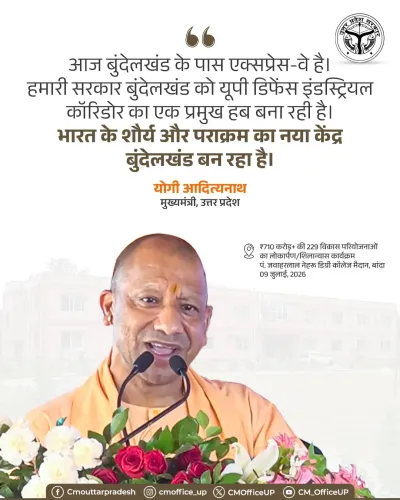
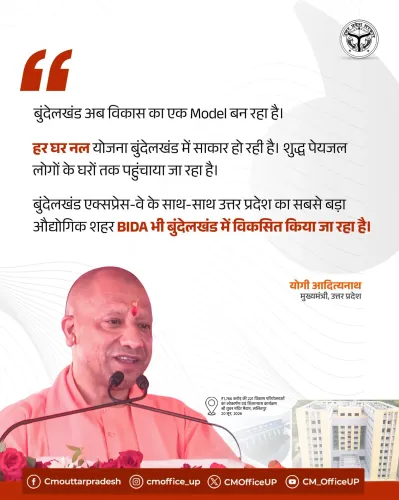
The Chief Minister's Office of Uttar Pradesh quoted CM Yogi Adityanath on 25 July 2026 crediting the Bundelkhand Expressway with transforming Jalaun's regional identity.
The Bundelkhand Expressway spans approximately 296 km , connecting Agra to Chitrakoot through Bundelkhand districts; its foundation stone was laid in 2018 with a partial inauguration in 2022 .
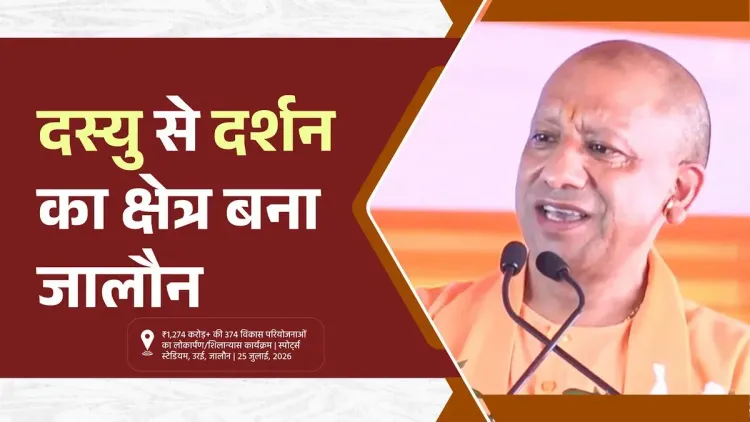
CM Yogi framed the shift as moving from dasyus (dacoits) to darshan (pilgrimage tourism), highlighting the social transformation the expressway is meant to enable.
Jalaun and surrounding Bundelkhand districts contain religious and heritage sites, including proximity to Chitrakoot , whose tourism potential was long suppressed by poor road access.
The expressway is part of UP's wider corridor strategy that also includes the Agra-Lucknow and Purvanchal expressways targeting backward and remote regions.
Future indicators include tourist arrivals, hotel investments, and possible state tourism or skill-development schemes along the Bundelkhand corridor.
The Chief Minister's Office of Uttar Pradesh, citing Chief Minister Yogi Adityanath, on Saturday, 25 July 2026, declared that the Bundelkhand Expressway is giving Jalaun a new identity — shifting the district's image from a land of dacoits to a destination for pilgrimage and tourism.
Context
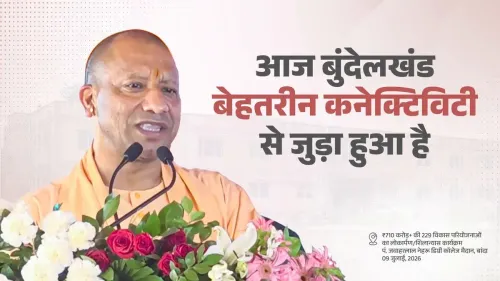
The Chief Minister's Office quoted CM Yogi Adityanath as saying: 'Aaj Bundelkhand Expressway Jalaun ko nayi pehchaan pradan kar raha hai' — 'Today, the Bundelkhand Expressway is giving Jalaun a new identity. Through excellent connectivity, this region is no longer the land of the dasyus [dacoits] of the ravines, but has become a land of darshan [pilgrimage and spiritual tourism].' The statement was accompanied by a video post on the official CMOfficeUP account.
Policy Backdrop
The Bundelkhand Expressway is an approximately 296-kilometre, six-lane access-controlled highway linking Agra to Chitrakoot through the historically underserved Bundelkhand districts. Its foundation stone was laid in 2018, with a partial inauguration completed in 2022. Jalaun, one of the districts the expressway passes through, sits in a region long associated with ravine terrain that once sheltered dacoit gangs — a legacy that suppressed investment and tourism for decades.
The expressway is part of a broader infrastructure push by the Uttar Pradesh government, which has also executed the Agra-Lucknow Expressway and the Purvanchal Expressway to stitch together the state's eastern and southern districts. The stated rationale across all these corridors has been economic integration: faster road links that reduce logistics costs, attract private investment, and unlock latent tourism potential.
Stakeholders and Impact
Residents of Jalaun and the wider Bundelkhand belt stand to benefit most directly. The region contains several religious and heritage sites — including proximity to Chitrakoot, a major pilgrimage centre associated with the Ramayana — whose visitor numbers have historically been constrained by poor road access. Tourism operators and hospitality businesses along the corridor are now positioned to capitalise on reduced travel times from major urban centres.
CM Yogi's framing of the shift — from dasyus (dacoits) to darshan (pilgrimage) — is a pointed political narrative that contrasts the region's troubled past with a government-led transformation. It signals that the administration intends to market Bundelkhand's connectivity upgrade not just as an infrastructure achievement, but as a social and economic turnaround story.
What's Next
Observers will watch whether the expressway's improved access translates into measurable upticks in tourist arrivals and hotel investments in Jalaun and surrounding districts. The government's next steps may include dedicated tourism or skill-development schemes targeting the Bundelkhand corridor, aimed at converting infrastructure gains into sustained local employment. Any follow-up state announcements on pilgrim circuits or industrial clusters along the expressway will be a key indicator of how comprehensively the administration intends to leverage the connectivity dividend.
Point of View
Using infrastructure as both a policy instrument and a political narrative. By anchoring Jalaun's transformation to the Bundelkhand Expressway, the BJP government is framing connectivity as the single lever that unlocks social change — a message calibrated for a region with a historically charged reputation. This fits a broader UP pattern of using expressway inaugurations and milestones as high-visibility political moments in districts that were long neglected. The real test will come in measurable outcomes: whether tourist footfall, private investment, and local incomes in Jalaun visibly rise in the coming electoral cycle.
NationPress
25 Jul 2026
Frequently Asked Questions
What is the Bundelkhand Expressway and where does it go?
The Bundelkhand Expressway is an approximately 296-km, six-lane access-controlled highway in Uttar Pradesh connecting Agra to Chitrakoot through the Bundelkhand region, passing through districts including Jalaun.
When was the Bundelkhand Expressway inaugurated?
The foundation stone was laid in 2018 and the expressway was partially inaugurated in 2022 as part of the Uttar Pradesh government's infrastructure expansion programme.
Why did CM Yogi say Jalaun changed from 'dacoits' to 'darshan'?
CM Yogi Adityanath used the phrase to highlight that better road connectivity through the Bundelkhand Expressway is shifting Jalaun's image from a ravine region historically associated with dacoit activity to a destination for pilgrimage and tourism.
Which pilgrimage sites are near the Bundelkhand Expressway corridor?
Chitrakoot, a major Hindu pilgrimage site associated with the Ramayana, is one of the key religious destinations near the expressway's southern terminus and stands to benefit from improved access.
What other expressways has UP built under CM Yogi Adityanath?
Under CM Yogi Adityanath, Uttar Pradesh has built or expanded several corridors including the Agra-Lucknow Expressway and the Purvanchal Expressway, targeting connectivity in the state's eastern and southern districts.