Anurag Thakur Hails Dharmendra Pradhan's Education Legacy
Synopsis
BJP MP Anurag Thakur praised Education Minister Dharmendra Pradhan on 25 July 2026, crediting him with NEP2020 implementation, university expansion, Kendriya Vidyalaya growth, and skill development, while lauding his decision to accept moral responsibility as a model of public accountability.
Key Takeaways
Anurag Thakur , BJP Lok Sabha MP from Hamirpur, Himachal Pradesh , posted a tribute to Education Minister Dharmendra Pradhan on 25 July 2026 .
Thakur credited Pradhan with effective implementation of NEP2020 , which replaced the 1986 National Education Policy after Cabinet approval in July 2020 .
The tribute highlighted expansion of universities, growth of Kendriya Vidyalayas , and increased budgetary support for education as key achievements.
Thakur praised Pradhan's focus on innovation, skill development, and digital learning as foundational to youth empowerment.
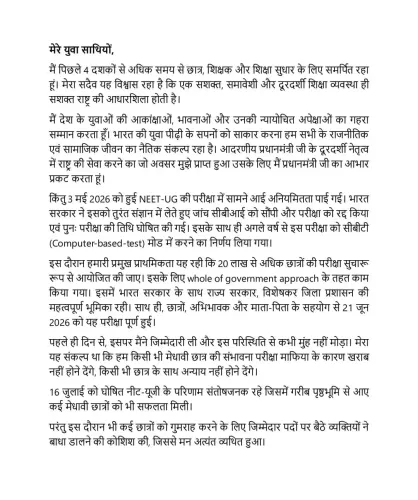
Pradhan's decision to accept moral responsibility was described by Thakur as reflecting the 'highest standards of public service, accountability, and democratic values.' Continuity of NEP2020 milestones and the next Union Budget's education allocation remain key areas to watch.
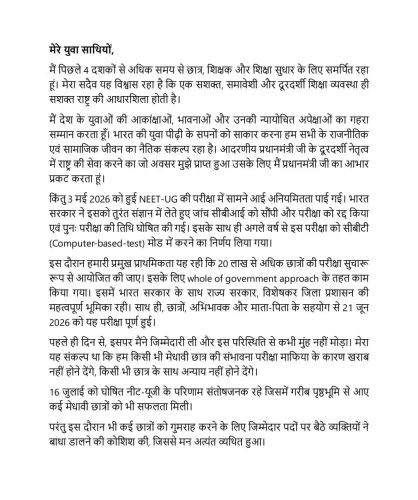
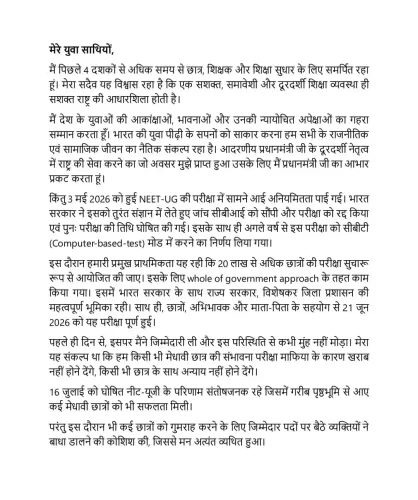
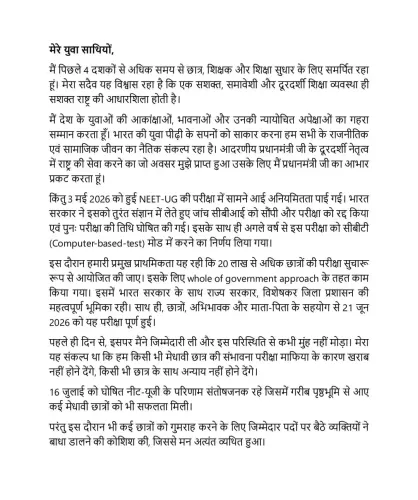
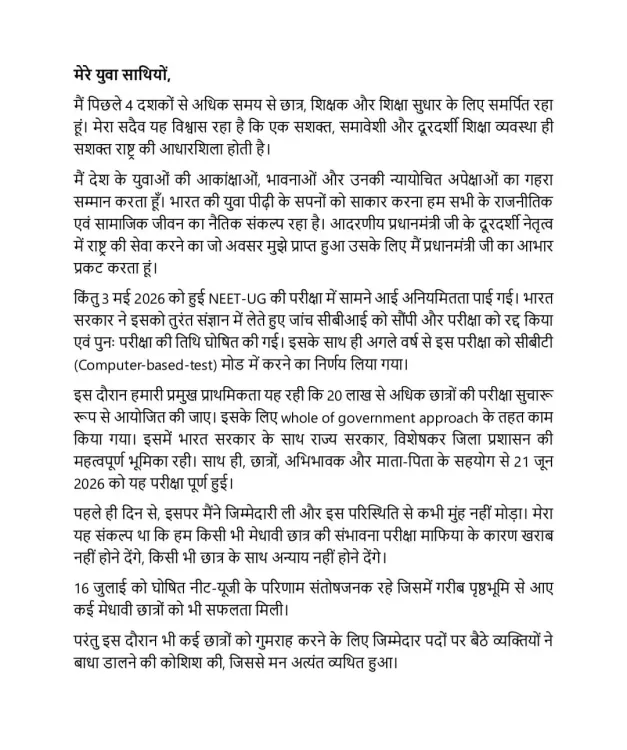
BJP MP Anurag Thakur on Saturday, 25 July 2026 took to X to express gratitude to Union Minister of Education Dharmendra Pradhan, lauding his leadership in advancing India's education reforms and acknowledging his decision to accept moral responsibility — a gesture Thakur described as reflecting the highest standards of public service.
Context
In his post, Thakur credited Pradhan with the effective implementation of the National Education Policy 2020 (#NEP2020), the expansion of universities, unprecedented budgetary support for education, and the growth of Kendriya Vidyalayas. He also highlighted a renewed focus on innovation, skill development, and digital learning as pillars of the minister's tenure. Thakur wrote that Pradhan's decision to 'accept moral responsibility, placing the interests of students and the nation above all else, reflects the highest standards of public service, accountability, and democratic values.'
Policy Backdrop
The National Education Policy 2020 was approved by the Union Cabinet in July 2020 as a comprehensive overhaul of the 1986 National Education Policy, introducing multidisciplinary learning, vocational integration, and an emphasis on digital tools across school and higher education. Dharmendra Pradhan, as Union Minister of Education, has been the principal face of NEP2020's rollout, overseeing institutional expansions and increased budget allocations. The Kendriya Vidyalaya Sangathan, which operates one of the country's largest chains of central government schools, saw expansion drives during this period as part of the broader push for standardised, accessible schooling nationwide.
The BJP government has consistently positioned education reform as a cornerstone of its governance agenda since 2014, with NEP2020 representing the most sweeping policy shift in over three decades. Budgetary allocations for education have been a recurring talking point in successive Union Budgets, with the government emphasising skill development and digital infrastructure as enablers of youth empowerment.
Stakeholders and Impact
The primary beneficiaries of the reforms cited by Thakur are millions of young Indians — students at school and university levels who stand to gain from expanded institutional access, digital learning platforms, and skill-linked curricula. Kendriya Vidyalaya students, drawn largely from families of central government employees and defence personnel, represent a significant constituency directly affected by administrative and budgetary decisions at the ministry level. The reference to 'moral responsibility' signals a moment of political transition or accountability at the ministry, the specifics of which carry implications for continuity of NEP2020 implementation.
What's Next
Attention will now turn to the continuity of NEP2020's implementation milestones, including targets for university expansion and digital learning infrastructure, under whatever leadership configuration follows. The next Union Budget education allocation will be a key indicator of whether the reform momentum Thakur attributed to Pradhan is sustained. Parliamentary updates on NEP2020 progress and any new ministerial appointments at the Education Ministry will be closely watched by educators, students, and policy observers across the country.
Point of View
Kendriya Vidyalaya expansion, and budgetary commitment, Thakur anchors Pradhan's legacy to measurable institutional outcomes rather than political optics. The explicit praise for 'accepting moral responsibility' is notable: it frames accountability not as political failure but as democratic virtue, a framing that serves both the departing minister's image and the party's governance brand. This pattern of senior BJP leaders publicly valorising ministerial accountability signals an attempt to normalise graceful transitions as a feature, not a bug, of the party's internal culture.
NationPress
24 Oct 2026
Frequently Asked Questions
Why did Anurag Thakur praise Dharmendra Pradhan on 25 July 2026?
Anurag Thakur praised Dharmendra Pradhan for his leadership in implementing NEP2020, expanding universities and Kendriya Vidyalayas, increasing education budgets, and for his decision to accept moral responsibility, which Thakur described as reflecting the highest standards of public service.
What is NEP2020 and what did Dharmendra Pradhan do for it?
NEP2020, or the National Education Policy 2020, was approved by the Union Cabinet in July 2020 to replace the 1986 policy. Dharmendra Pradhan, as Union Minister of Education, led its rollout, overseeing university expansion, digital learning integration, and skill development initiatives.
What does 'accepting moral responsibility' mean in the context of Dharmendra Pradhan?
Anurag Thakur's post references Pradhan's decision to accept moral responsibility, framing it as placing the interests of students and the nation above personal considerations — a gesture Thakur described as reflecting accountability and democratic values. The specific circumstances were not detailed in the post.
What are Kendriya Vidyalayas and how are they linked to education reforms?
Kendriya Vidyalayas are central government schools that provide standardised education primarily to children of government employees and defence personnel. Their expansion has been a stated priority under the BJP government's broader education reform agenda, including under NEP2020.
What happens to NEP2020 implementation after Dharmendra Pradhan?
The continuity of NEP2020 milestones — including university expansion targets, digital learning infrastructure, and skill development programmes — will depend on the incoming leadership at the Education Ministry and the allocations made in the next Union Budget.