CM Yogi Calls for Discipline in Education to Guide UP's Future
Synopsis
Chief Minister Yogi Adityanath of Uttar Pradesh has called for instilling discipline and self-discipline in students, stating that guiding both the present and future in the right direction requires this foundational value. The remark reinforces UP's NEP 2020 push for holistic, character-based schooling.
Key Takeaways
CM Yogi Adityanath stated on 26 July 2026 that students must be educated about the importance of discipline and self-discipline to steer the present and future correctly.
The statement was shared by the official Chief Minister's Office of Uttar Pradesh account on X.
Uttar Pradesh has been implementing the National Education Policy 2020 since 2021 , which mandates value education and character-building in schools.
The Chief Minister has consistently extended his governance philosophy of discipline from policing and administration into the education sector since 2017 .
Crores of school students across Uttar Pradesh could be affected by any curriculum or policy directives stemming from this emphasis.
State-level curriculum revisions or new directives on value education are anticipated in forthcoming academic sessions or budget presentations.
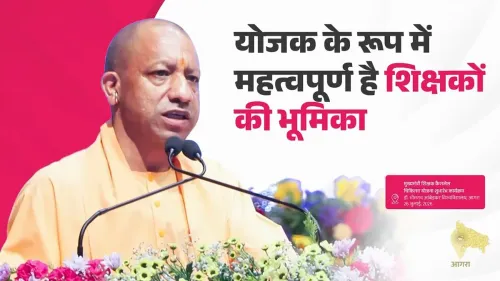
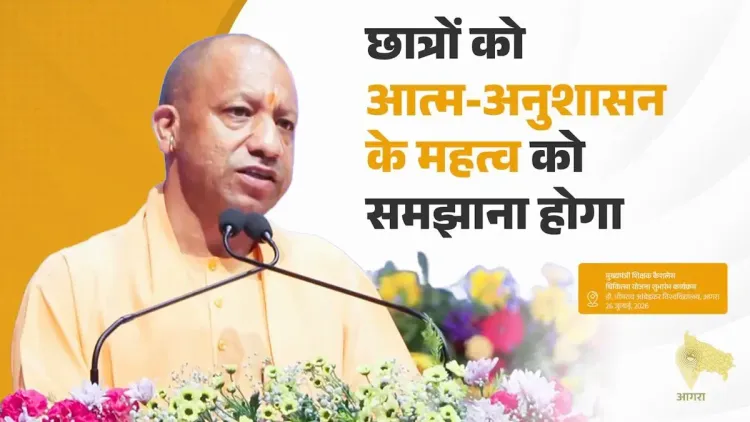
The Chief Minister's Office of Uttar Pradesh on Sunday, 26 July 2026 shared a statement by Chief Minister Yogi Adityanath underscoring the role of discipline and self-discipline in shaping the present and future of the state's students.
Addressing the importance of value-based education, CM Yogi Adityanath stated: 'Humein agar vartaman aur bhavishy dono ko sahi disha mein lekar chalna hai, to chhatron ko anushasan aur aatm-anushasan ke mahatva ke baare mein bhi batana padega' — 'If we want to take both the present and the future in the right direction, we will also have to educate students about the importance of discipline and self-discipline.'
Context
The statement reflects CM Yogi Adityanath's consistent emphasis on discipline as a foundational pillar of governance in Uttar Pradesh. Since assuming office in 2017, he has extended this administrative philosophy beyond law enforcement into social and educational institutions. The remark positions disciplined youth as central to the state's long-term development.
Policy Backdrop
Uttar Pradesh began implementing the National Education Policy (NEP) 2020 from 2021 onward, with a mandate to integrate moral values, ethics, and character-building alongside academic learning in schools. The NEP framework explicitly calls for holistic development of students, making CM Yogi's statement a direct reinforcement of that national policy direction at the state level. Value education and self-discipline have been identified as core components of the reformed curriculum.
The state government has progressively aligned its school administration with these priorities, directing teachers and institutions to go beyond rote learning and foster ethical conduct among students. This approach mirrors the broader national push under NEP 2020 to produce well-rounded, responsible citizens.
Stakeholders and Impact
Uttar Pradesh has one of the largest school-going populations in India, with crores of students enrolled across government and aided institutions. Any policy directive flowing from this emphasis on discipline could affect curriculum design, teacher training programmes, and school administration guidelines across the state. Teachers would be at the frontline of implementing such value-education mandates in classrooms.
Parents and civil society groups focused on educational reform have long called for stronger character-building components in public schooling. The Chief Minister's statement signals that the state government views this not as supplementary but as essential to preparing students for the future.
What's Next
Observers and education administrators will watch for concrete follow-through in the form of state-level curriculum revisions, new school directives, or budget allocations targeting value education in upcoming academic sessions. Uttar Pradesh's education department may be expected to translate this political emphasis into operational guidelines for schools. If the government moves ahead with structured programmes on discipline and self-discipline, it could set a template for other large states implementing NEP 2020 reforms.
Point of View
Not just law enforcement. By invoking both 'present and future,' he frames student discipline as a civilisational investment rather than a routine policy measure, lending it political weight. The statement arrives as Uttar Pradesh deepens its NEP 2020 rollout, giving the rhetoric a ready policy vehicle for concrete implementation. Whether this translates into measurable curriculum change or remains aspirational will be the real test of the government's commitment.
NationPress
26 Jul 2026
Frequently Asked Questions
What did CM Yogi Adityanath say about discipline in education?
CM Yogi Adityanath said that if we want to take both the present and the future in the right direction, students must be taught the importance of discipline and self-discipline.
Why is Uttar Pradesh focusing on discipline in schools?
Uttar Pradesh is aligning its education system with the National Education Policy 2020, which mandates holistic development including value education and character-building alongside academic subjects.
What is the National Education Policy 2020 and how does it apply to UP?
The National Education Policy 2020 is a central government framework that UP began implementing from 2021, directing schools to integrate moral values, ethics, and self-discipline into their curricula.
How long has CM Yogi Adityanath been emphasising discipline in governance?
Since becoming Chief Minister of Uttar Pradesh in 2017, Yogi Adityanath has consistently emphasised discipline across state institutions, extending the philosophy from law enforcement to education.
What policy changes can students in UP expect following CM Yogi's statement?
Education observers anticipate possible state-level curriculum revisions, new school directives on value education, or budget allocations targeting character-building programmes in upcoming academic sessions.