CM Yogi Approves 13 Roads Linking Key Religious Sites in Eastern UP
Synopsis
Chief Minister Yogi Adityanath on 19 June 2026 approved 13 PWD roads connecting major religious sites including Maa Pateshwari Devi Shaktipeeth, Swaminarayan Mandir, and Makhauda Dham in Devipatan and Basti mandals, while directing priority completion of rural and industrial connectivity works.
Key Takeaways
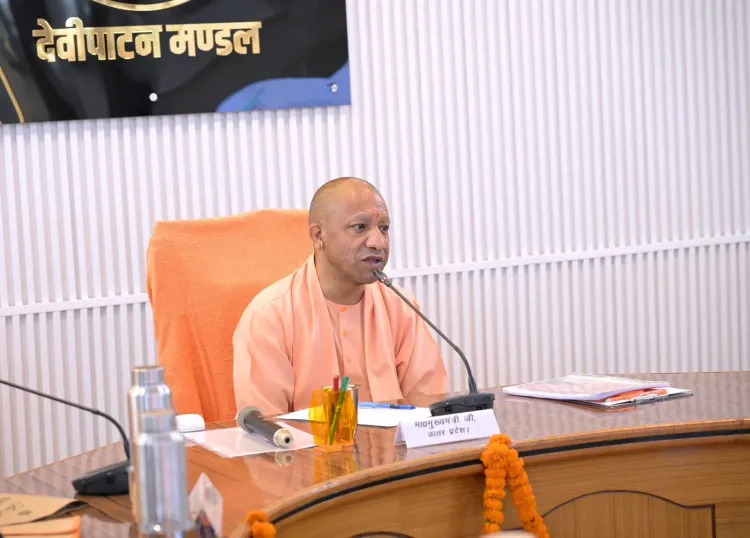
CM Yogi Adityanath held a PWD review meeting in Gonda district on 19 June 2026 covering assembly constituencies of Devipatan and Basti mandals .
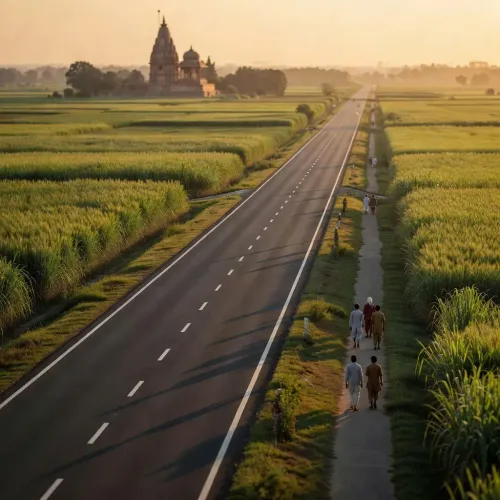
13 major routes connecting Maa Pateshwari Devi Shaktipeeth , Swaminarayan Mandir , Makhauda Dham , and other religious sites received formal approval.
The CM directed that road-quality assurance and industrial and rural connectivity works be completed on a priority basis .
The initiative extends a policy pattern dating to 2017 of upgrading PWD roads to serve both pilgrimage and rural-economic purposes in eastern UP.
Devipatan mandal (Gonda, Balrampur, Shravasti, Bahraich) and Basti mandal (Basti, Sant Kabir Nagar, Siddharthnagar) are the primary beneficiary regions.
Pilgrims, rural households, small traders, and agricultural supply chains across both mandals are the key stakeholders.
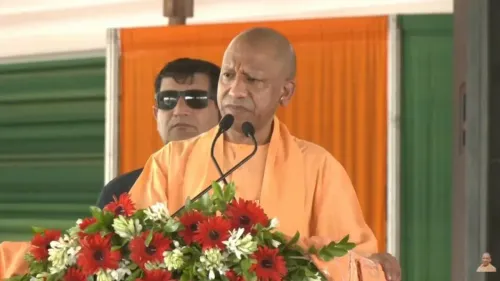
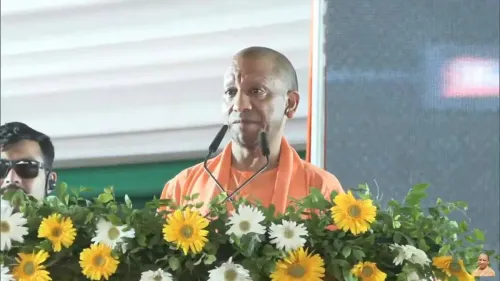
The Chief Minister's Office of Uttar Pradesh announced on Friday, 19 June 2026 that Chief Minister Yogi Adityanath reviewed Public Works Department (PWD) development projects for assembly constituencies under Devipatan and Basti mandals during a visit to Gonda district. The CM approved the development of 13 major roads connecting prominent religious sites and directed that quality and connectivity works be completed on a priority basis.
Context
The Chief Minister's Office stated that Yogi Adityanath 'maa Pateshwari Devi Shaktipeeth, Swaminarayan Mandir, Makhauda Dham evam anya pramukh dharmic sthalon ko jodne wale 13 pramukh margon ke vikas ko sweekriti pradaan ki' — approved the development of 13 major routes connecting Maa Pateshwari Devi Shaktipeeth, Swaminarayan Mandir, Makhauda Dham, and other key religious destinations. The review meeting held in Gonda covered assembly segments across both mandals, signalling a coordinated push for the region's road network.
The CM also directed that roads serving industrial and rural areas be upgraded on a priority basis, broadening the scope of the exercise beyond purely religious-tourism connectivity.
Policy Backdrop
Since 2017, the Uttar Pradesh government under Yogi Adityanath has consistently directed the PWD to prioritise roads linking Shakti Peeths and other pilgrimage sites as part of a wider religious-tourism infrastructure policy. A special package for eastern UP mandals was approved in 2020–21 to upgrade state highways and major district roads, and the 2023–24 state budget reiterated the focus on last-mile connectivity to Shakti Peeths in Devipatan and Basti divisions.
The current approvals follow a well-established corridor-style model previously deployed around Ayodhya and Vindhyachal, where PWD roads were upgraded ahead of major religious events. The emphasis remains on quality audits and time-bound completion within already-mapped mandal networks rather than greenfield construction.
Stakeholders and Impact
Devipatan mandal comprises Gonda, Balrampur, Shravasti, and Bahraich districts, while Basti mandal covers Basti, Sant Kabir Nagar, and Siddharthnagar — together forming a densely populated belt of eastern Uttar Pradesh. Pilgrims visiting Maa Pateshwari Devi Shaktipeeth and Makhauda Dham are among the most direct beneficiaries, as improved road access reduces travel time and enhances safety during peak festival seasons.
Rural households, small traders, and agricultural supply chains across the two mandals stand to gain from the parallel directive on rural and industrial connectivity. PWD contractors and local construction labour are also expected to see increased activity as project execution moves to the priority queue.
What's Next
The CM's directive to complete works 'on a priority basis' (prathamikta ke aadhar par poornn karne) signals that district-level execution timelines will be closely monitored by the CMO. Observers will watch the state budget 2026–27 allocations under the PWD's eastern-UP head for the financial backing that will determine how quickly the 13 approved routes move from sanction to ground-level work.
Further review meetings for remaining mandals in the region are likely, as the government has historically conducted rolling PWD audits ahead of the winter pilgrimage and festival calendar in Uttar Pradesh.
Point of View
Rather than Lucknow, signals a deliberate on-ground posture ahead of what is likely a politically sensitive assembly-constituency cycle in eastern UP. By coupling quality directives with the religious-connectivity announcement, the administration hedges against criticism of incomplete earlier projects while generating fresh goodwill among pilgrims and local traders. The broader arc points toward an intensified PWD audit regime across remaining eastern mandals as the state approaches its next budget cycle.
NationPress
19 Sept 2026
Frequently Asked Questions
Which religious sites will be connected by the 13 roads approved by CM Yogi in Gonda?
CM Yogi Adityanath approved roads linking Maa Pateshwari Devi Shaktipeeth , Swaminarayan Mandir , Makhauda Dham , and other major religious sites in the Devipatan and Basti mandal region.
What is Devipatan mandal and which districts does it cover?
Devipatan mandal is an administrative division of Uttar Pradesh comprising Gonda , Balrampur , Shravasti , and Bahraich districts in the eastern part of the state.
What did CM Yogi direct regarding road quality in the 19 June 2026 review?
CM Yogi instructed the PWD to ensure road quality and to complete works related to industrial and rural connectivity on a priority basis across Devipatan and Basti mandals.
How does this road approval fit into UP's religious tourism policy?
Since 2017 , the Uttar Pradesh government has consistently directed the PWD to upgrade roads connecting Shakti Peeths and pilgrimage sites, mirroring corridor-style developments around Ayodhya and Vindhyachal.
Who benefits from the 13 road projects approved in Gonda?
Primary beneficiaries include pilgrims visiting Maa Pateshwari Devi Shaktipeeth and Makhauda Dham, along with rural households , small traders , and agricultural supply chains across Devipatan and Basti mandals.