CM Yogi Declares UP Met 40 Crore Sapling Target Under 'Ek Ped Maa Ke Naam'
Synopsis
Uttar Pradesh Chief Minister Yogi Adityanath declared on 13 July 2026 that the state has met its target of 40 crore saplings under Vriksharopan Mahayagya-2026 and the 'Ek Ped Maa Ke Naam' campaign, urging citizens to make tree planting a permanent cultural practice.
Key Takeaways
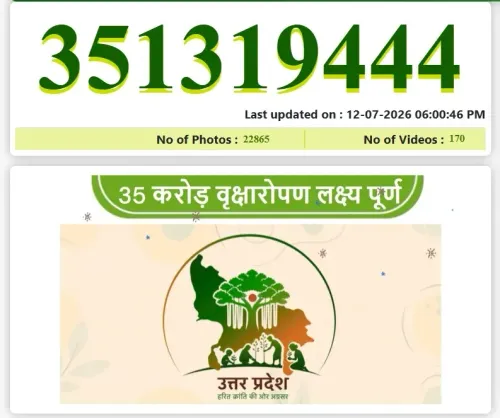
Uttar Pradesh has claimed to meet a target of 40 crore (400 million) saplings under Vriksharopan Mahayagya-2026 .
The drive is anchored by the 'Ek Ped Maa Ke Naam' campaign, which frames planting a tree as a cultural tribute to one's mother.
CM Yogi Adityanath made the announcement on 13 July 2026 and called the milestone a 'new history' for Uttar Pradesh .
The Chief Minister urged citizens to permanently integrate tree planting into auspicious family occasions and festivals.
Uttar Pradesh has run annual mass plantation drives since 2017 , consistently raising numerical targets each year.
Independent verification through the Forest Survey of India and sapling survival-rate audits will be the next critical test of the claim.
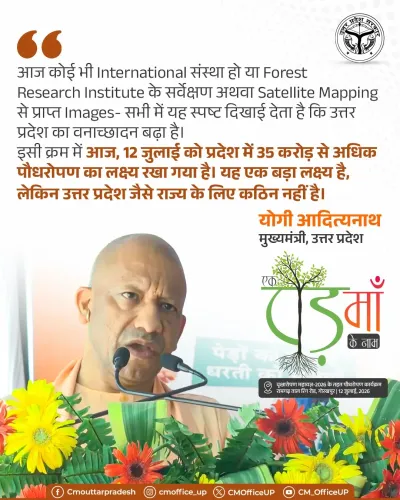
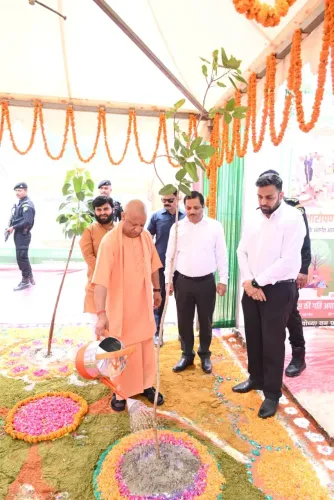
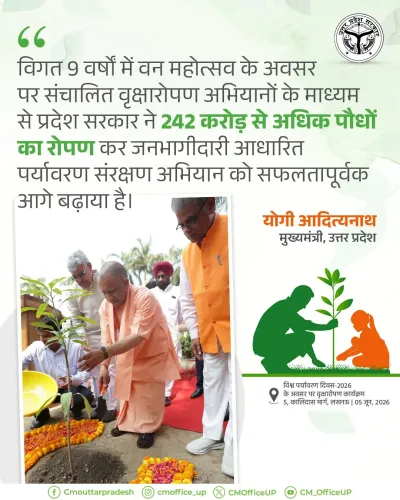
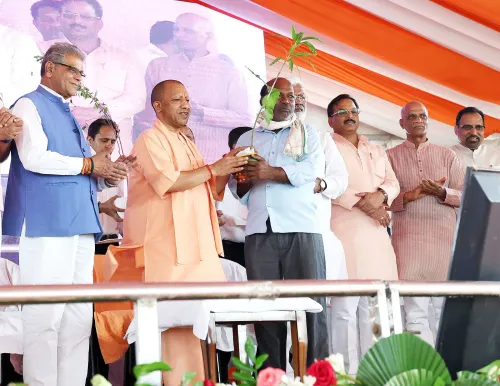
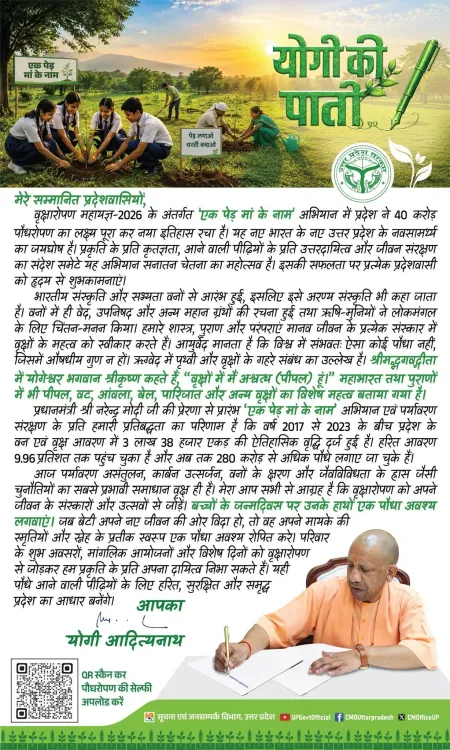
Uttar Pradesh Chief Minister Yogi Adityanath announced on Monday, 13 July 2026 that the state has achieved its target of planting 40 crore saplings under the Vriksharopan Mahayagya-2026 campaign, declaring it a historic milestone for the state's environmental mission. The announcement was made through a post on X, in which he also urged citizens to integrate tree plantation into family celebrations and auspicious occasions.
Context
In his post, CM Yogi Adityanath described the achievement as a proclamation of the new capabilities of 'naye Uttar Pradesh' (new Uttar Pradesh) within the vision of a 'naye Bharat' (new India). He framed the campaign — 'Ek Ped Maa Ke Naam' (One Tree in the Name of Mother) — as an expression of gratitude towards nature, responsibility towards future generations, and a celebration of Sanatan chetna, or eternal consciousness rooted in Hindu tradition.
The Chief Minister called on residents to link tree plantation with life's milestones: 'Connect tree planting with auspicious family occasions, celebrations, and special days so we can fulfil our duty towards nature,' he wrote. He added that these saplings would form the foundation of a green, safe, and prosperous state for generations to come.
Policy Backdrop
Uttar Pradesh has conducted annual mass plantation drives since 2017, consistently raising targets and claiming successive records in sapling numbers. The Vriksharopan Mahayagya is the annual umbrella exercise under which these drives are organised, with the 2026 edition setting a target of 40 crore — roughly 400 million saplings — across the state.
The 'Ek Ped Maa Ke Naam' campaign adds a cultural dimension to the afforestation push, encouraging citizens to plant a sapling as an act of personal tribute to their mothers. At the national level, such state drives align with India's Green India Mission under the National Action Plan on Climate Change, which tasks states with expanding and restoring forest and tree cover as part of the country's commitments under the Paris Agreement.
BJP-governed states have increasingly woven Sanatan cultural framing into environmental campaigns, positioning large-scale plantation as both a civic duty and a spiritual act. Uttar Pradesh, as India's most populous state, carries significant weight in national carbon-sink targets.
Stakeholders and Impact
The primary beneficiaries of sustained afforestation are the 25 crore-plus residents of Uttar Pradesh, particularly in districts with degraded land cover and high air-pollution indices. If survival rates of planted saplings are maintained, the drive could meaningfully improve green cover and contribute to climate resilience over the coming decades.
Environmental experts and civil society groups have in the past distinguished between saplings planted and trees that survive to maturity — a metric the state government has yet to publish for the 2026 cohort. The Forest Survey of India's next biennial assessment will be a key independent check on whether the plantation numbers translate into durable forest cover.
What's Next
The government's immediate ask is behavioural: that citizens embed tree planting into weddings, births, festivals, and other personal milestones, effectively turning the one-time campaign into a sustained cultural practice. CM Yogi Adityanath's appeal signals that the state intends to sustain momentum beyond the formal campaign window.
The next significant data point will be the Forest Survey of India's periodic report on state-wise forest and tree cover, which will offer an independent measure of whether Uttar Pradesh's cumulative plantation drives are producing lasting ecological gains. Mid-term survival audits of the 2026 saplings will be equally critical to validating the headline number.
Point of View
Simultaneously signalling administrative capacity and ideological identity. Framing a plantation drive as a mahayagya and linking it to Sanatan chetna is designed to broaden civic participation by appealing to religious sentiment rather than purely technocratic messaging. The appeal to embed tree planting in family milestones is a low-cost, high-visibility behaviour-change strategy that, if it takes hold, could sustain green cover gains beyond state-organised drives. However, the credibility of the 40-crore headline will ultimately rest on independent survival-rate data — a scrutiny the government has not yet faced for the 2026 cohort.
NationPress
13 Jul 2026
Frequently Asked Questions
What is the 'Ek Ped Maa Ke Naam' campaign in Uttar Pradesh?
'Ek Ped Maa Ke Naam' (One Tree in the Name of Mother) is a Uttar Pradesh government campaign that encourages citizens to plant a sapling as a tribute to their mother, combining environmental duty with cultural sentiment. It runs under the broader Vriksharopan Mahayagya annual plantation drive.
How many trees has Uttar Pradesh planted in 2026?
The Uttar Pradesh government claims to have planted 40 crore (400 million) saplings under the Vriksharopan Mahayagya-2026 campaign, a target Chief Minister Yogi Adityanath declared fulfilled on 13 July 2026. Independent verification of survival rates is pending.
What is Vriksharopan Mahayagya?
Vriksharopan Mahayagya is Uttar Pradesh's annual large-scale tree-plantation exercise, conducted every year since 2017 under the Yogi Adityanath government. The 2026 edition set a target of 40 crore saplings across the state.
How does UP's plantation drive connect to India's climate goals?
State-level afforestation drives like Uttar Pradesh's Vriksharopan Mahayagya contribute to India's Green India Mission under the National Action Plan on Climate Change, which targets expanding forest and tree cover as part of the country's Paris Agreement commitments on carbon sinks.
What did CM Yogi Adityanath say about tree plantation on 13 July 2026?
CM Yogi Adityanath announced that Uttar Pradesh had achieved its 40-crore sapling target and urged residents to link tree planting with family celebrations, births, weddings, and festivals, calling it a duty towards nature and future generations.