CM Yogi Draws Sharp Line Between Past and Present UP Governance
Synopsis
UP Chief Minister Yogi Adityanath posted a sharp contrast on X, stating the previous government created controversies while his administration has delivered solutions — continuing a governance narrative the BJP has built since 2017.
Key Takeaways
UP CM Yogi Adityanath posted on X on 11 November 2026 contrasting the previous government with his own.
His statement — 'The previous government used to create controversies, not solutions' — is a recurring BJP communication pillar since 2017 .
The implicit target is the preceding Samajwadi Party government in Uttar Pradesh.
No specific problem or scheme is named in the post, leaving the claim broad and unverifiable against a single outcome.
A video accompanies the post and may contain the specific detail absent from the text.
The framing signals political confidence ahead of the next UP electoral cycle.
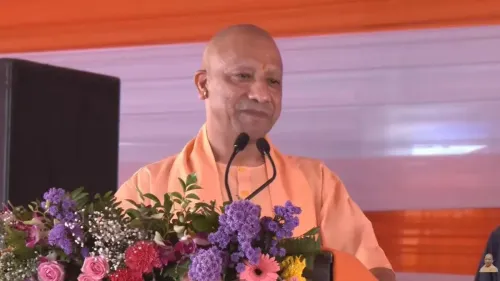
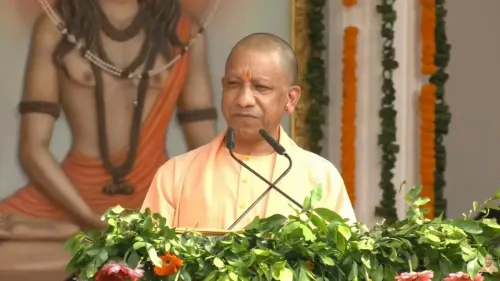
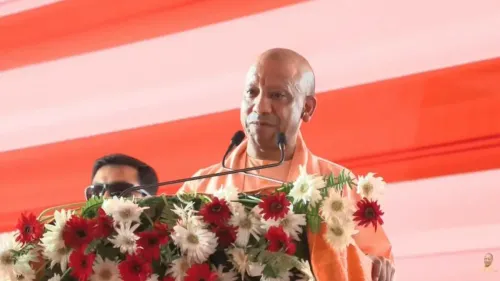
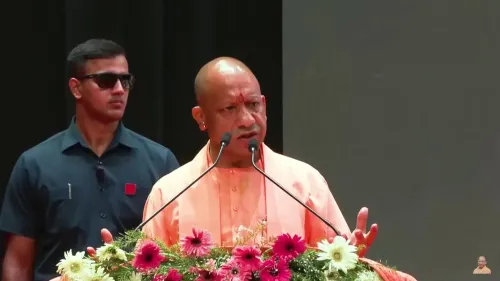
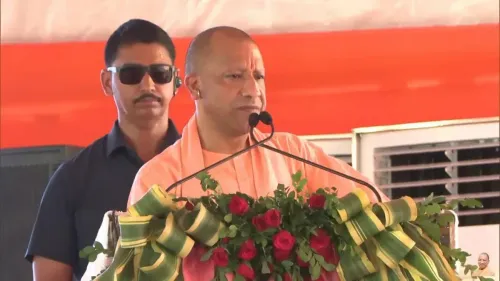
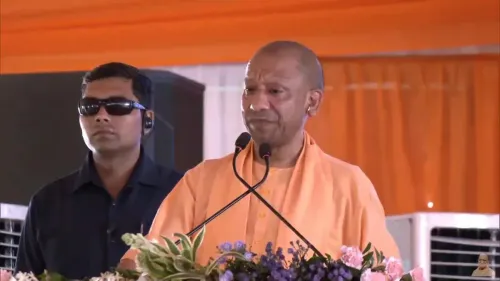
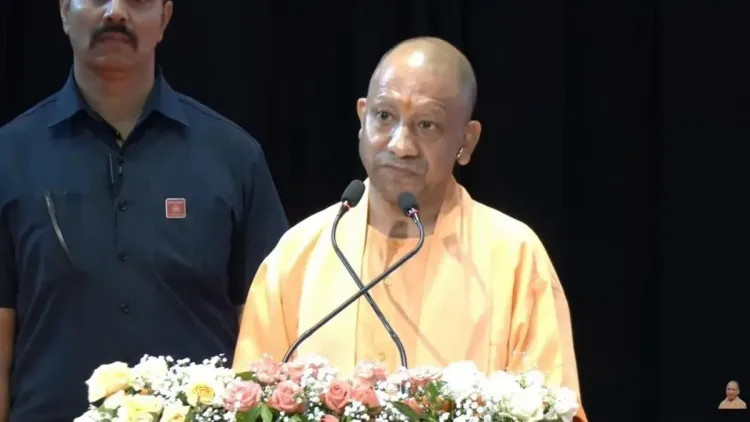
A crisp, combative contrast — that is how Uttar Pradesh Chief Minister Yogi Adityanath opened his message on Wednesday, 11 November 2026, drawing a direct line between what he describes as the dispute-generating habits of the previous government and his administration's problem-solving record.
Posting on X, CM Yogi stated: 'Pichhli sarkar vivaad khade karti thi, samaadhaan nahin nikaalti thi... hamne samasya ka samaadhaan nikaala hai...' — 'The previous government used to create controversies, not solutions... we have found a solution to the problem.'
A Familiar Contrast, Sharpened Over Nine Years
Since 2017, when the BJP under Yogi Adityanath first came to power in Uttar Pradesh, this 'vivaad versus samaadhaan' (controversy versus solution) framing has been a recurring pillar of the government's political communication. The implicit target is the preceding Samajwadi Party administration, which the BJP has consistently characterised as governance defined by community friction, lawlessness, and unresolved disputes. The rhetorical structure is deliberate: position the outgoing era as the problem, the current era as the fix. What makes today's post notable is its brevity and confidence — no policy name, no scheme number, no district cited. The message lands as a verdict, not an announcement. That self-assurance itself is a political signal: after nearly a decade in office, the administration is speaking as though the contrast no longer needs to be argued, only stated.What Remains Unnamed — and Why It Matters
The post does not specify which problem has been solved. No issue, scheme, or locality is named. This ambiguity is not unusual in social-media governance communication — broad framing invites constituents to map their own local grievances onto the claim — but it also means the statement cannot be independently verified or measured against a specific outcome. The accompanying video, shared with the post, may carry that specificity. Until its content is confirmed, the post stands as a statement of political philosophy as much as a policy update: controversies inherited, solutions delivered. For Uttar Pradesh's roughly 240 million residents, the question the CM's words implicitly raise is the same one that will define the next electoral cycle — whether the administration's self-assessed record of resolution matches the experience on the ground in districts, villages, and urban wards across India's most populous state.Point of View
But in what it has supposedly replaced. After nearly a decade in power, deploying this contrast without naming a specific issue is a calculated move: it invites every voter to fill the blank with their own grievance. The absence of a named policy, however, also exposes the statement to the counter-charge that governance by assertion is not the same as governance by outcome. As UP approaches its next political inflection point, the gap between rhetorical confidence and ground-level verification is the space the opposition will contest most aggressively.
NationPress
11 Nov 2026
Frequently Asked Questions
What did Yogi Adityanath post on X on 11 November 2026?
CM Yogi Adityanath posted a statement in Hindi asserting that the previous government in Uttar Pradesh created controversies rather than solutions, and that his administration has resolved the problems it inherited.
Which previous government is Yogi Adityanath referring to?
The statement is widely understood to target the preceding Samajwadi Party government, which held power in Uttar Pradesh before the BJP's victory in 2017 . No party is named explicitly in the post.
What specific problem did CM Yogi say was solved?
The post does not name a specific problem or scheme. A video accompanies the tweet and may contain further detail, but the text itself is intentionally broad.
How long has Yogi Adityanath been Chief Minister of Uttar Pradesh?
Yogi Adityanath has served as Chief Minister of Uttar Pradesh since 2017 , making this his second consecutive term in office by November 2026.
Why does BJP often contrast its governance with the SP era in UP?
Contrasting the current administration with the SP era has been a core BJP communication strategy in Uttar Pradesh since 2017, used to frame law-and-order improvements and development initiatives against a backdrop of alleged misgovernance under the previous regime.