CM Yogi extends 20% Agniveer quota to UP jails, forest dept
Synopsis
Uttar Pradesh CM Yogi Adityanath has extended a 20% horizontal reservation for Agniveers completing four-year military tenures to the state's prison department, forest department, and other key establishments — building on an earlier police quota to broaden post-service employment options.
Key Takeaways
Uttar Pradesh has announced a 20% horizontal reservation for Agniveers across the prison department, forest department, and other state establishments.
The reservation was already in place for UP Police ; the new announcement formally extends it to additional departments.
Horizontal reservation works within existing category quotas, meaning it does not reduce seats for SC, ST, or OBC candidates.
The move responds to concerns raised after the Agnipath scheme was launched in June 2022 about limited post-service opportunities for Agniveers.
Uttar Pradesh is among several states that have created structured re-employment preferences to support returning Agniveers.
Formal notification of revised recruitment rules in the new departments will be the key implementation milestone to watch.
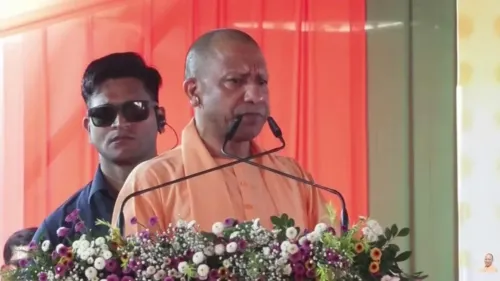
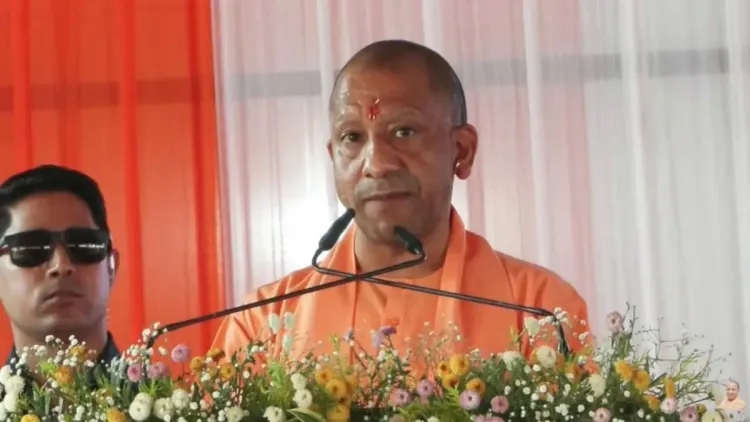
Uttar Pradesh has quietly closed one of the loudest criticisms of India's military recruitment overhaul: what happens when an Agniveer comes home. Uttar Pradesh Chief Minister Yogi Adityanath announced on Saturday, 14 November 2026 that the state has instituted a 20% horizontal reservation for returning Agniveers not just in the police, but now explicitly across the state's prison department, forest department, and other key establishments.
Posting in Hindi on X, CM Yogi stated: 'For Agniveers returning after completing their service, alongside the UP Police, we have made arrangements for 20% horizontal reservation in Uttar Pradesh's prisons, forest department, and other important establishments.'From police gates to forest beats — a widening safety net
The original announcement covering Uttar Pradesh Police was itself a signal — the state was willing to absorb trained, disciplined veterans into its security apparatus. But the expansion to the prison and forest departments broadens the canvas considerably. Forest guards and prison warders are both uniformed, physically demanding roles where the Agniveer's four years of military discipline translates directly into professional readiness.
The 20% horizontal reservation works as a cross-cutting layer: it applies within existing category quotas rather than displacing them, meaning Agniveer veterans compete among themselves for a reserved slice of seats in each recruitment cycle across these departments — a model several other states have watched closely.
The Agnipath pressure that pushed states to act
When the Agnipath scheme was launched by the Government of India in June 2022, it triggered protests in multiple states almost immediately. The core anxiety was straightforward: a soldier who serves four years and exits at around 21-24 years of age re-enters civilian life without a pension, without a guaranteed government job, and in a labour market that may not fully recognise military service. Critics called it precarious; supporters called it modernisation.
States that moved quickly to offer structured re-employment preferences — through police, paramilitary, and civil-services quotas — blunted the sharpest edge of that critique. Uttar Pradesh, which contributes one of the largest pools of military recruits in India, had an especially strong incentive to act. The expansion announced on 14 November deepens that commitment.
What the quota means on the ground
Horizontal reservation is distinct from vertical (category-based) reservation: it does not shrink the pie for SC, ST, or OBC applicants — it carves out a dedicated lane for Agniveers within each of those categories. This design is politically durable and legally cleaner. It also means the quota scales with the size of each recruitment drive: a large forest-department intake in a single cycle could absorb dozens of returning Agniveers statewide.
The practical trigger to watch now is the notification of revised recruitment rules in the prison and forest departments — the bureaucratic step that converts a policy announcement into actual hiring cycles. Until those rules are gazetted and cycles opened, the reservation remains a commitment rather than a placement.
Four years after Agnipath sparked India's most visible military-recruitment debate, Uttar Pradesh is signalling that the state's side of the bargain — the civilian second act for its veterans — is being written in ink, not pencil.
Point of View
Prisons, forests — CM Yogi is building a durable model that other BJP-governed states may replicate ahead of election cycles. The horizontal design is also tactically smart: it avoids the coalition-politics minefield of touching vertical reservations. The real test, however, is execution — how quickly recruitment rules are notified and whether hiring cycles actually absorb Agniveers at scale before the first large cohort finishes its four-year tenure.
NationPress
14 Nov 2026
Frequently Asked Questions
What is the 20% horizontal reservation for Agniveers in Uttar Pradesh?
Uttar Pradesh has reserved 20% of seats horizontally — meaning within existing category quotas — for Agniveers who have completed their four-year military service, across departments including the state police, prison department, and forest department.
Which UP departments now have Agniveer reservation?
As announced by CM Yogi Adityanath, the reservation covers the UP Police, the state prison department (karagaar), the forest department (van vibhag), and other important state establishments.
What is horizontal reservation and how is it different from vertical reservation?
Horizontal reservation is a cross-cutting quota that applies within each vertical category (General, OBC, SC, ST). Agniveers compete for reserved seats inside their own category, so the quota does not reduce seats available to other communities.
What is the Agnipath scheme?
The Agnipath scheme is a central government military recruitment reform launched in June 2022 that enrolls soldiers — called Agniveers — on a four-year short-service tenure before releasing them back into civilian life, with only a portion retained for permanent service.
Why did states like UP introduce job reservations for Agniveers?
The Agnipath scheme faced protests in 2022 over concerns that four-year veterans would lack pension or guaranteed government employment. States introduced police, prison, and civil-services quotas to provide a structured re-employment pathway and ease those concerns.