CM Himanta visits Kaziranga accident site, orders probe
Synopsis
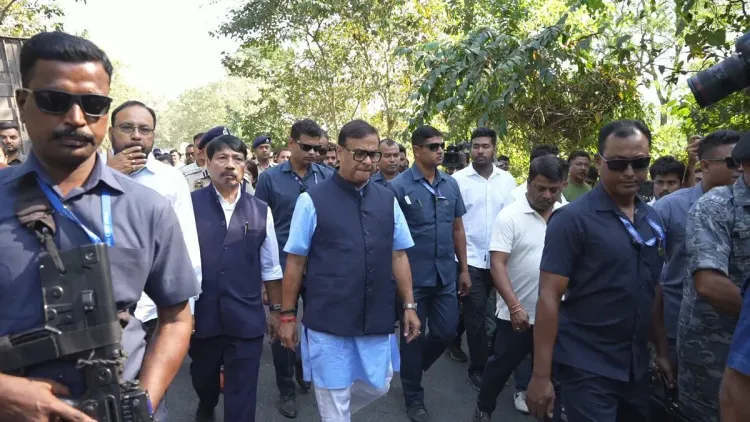
Assam Chief Minister Himanta Biswa Sarma personally visited the site of a serious road accident in Kaziranga on November 14, 2026, ordering a multi-angle probe and promising strict enforcement measures to prevent future tragedies on the highway corridor.
Key Takeaways
Assam CM Himanta Biswa Sarma visited the road accident site in Kaziranga on November 14, 2026 .
Sarma instructed authorities to investigate 'all possible angles' of the accident.
Kaziranga National Park is a UNESCO World Heritage Site bisected by National Highway 37 , a historically accident-prone corridor.
The CM has promised strict enforcement measures to prevent repeat tragedies.
A personal site visit signals direct accountability pressure on district and highway authorities.
Results of the probe and any new highway safety directives from the Assam government are expected to follow.
A horrific road accident on the highway cutting through Kaziranga — one of India's most iconic wildlife corridors — drew Assam Chief Minister Himanta Biswa Sarma to the site in person on Saturday, November 14, 2026, as he announced a full probe and vowed that strict measures would follow to prevent a repeat.
CM at the scene: what Sarma saw and ordered
Sarma confirmed the visit on X, writing: 'Visited the site of the horrific road accident in Kaziranga and instructed authorities to probe all possible angles. Strict measures will be enforced to ensure such tragedies are not repeated.' The language was deliberate — 'all possible angles' signals the probe will look beyond driver error to road design, signage, speed enforcement, and potentially the stretch's proximity to protected forest land.
A personal site visit by a sitting Chief Minister is not routine paperwork. It is a signal to district administration and highway authorities that accountability will be demanded at the top.
Why Kaziranga's highway is a persistent danger zone
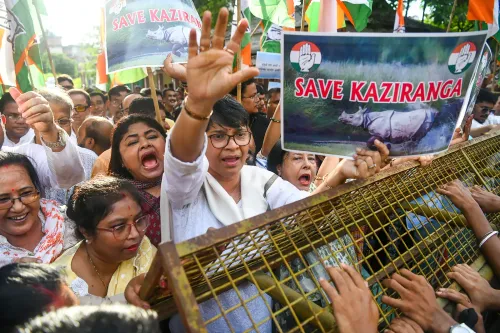
Kaziranga National Park, a UNESCO World Heritage Site and home to the world's largest population of one-horned rhinoceros, is bisected by National Highway 37. The road carries heavy through-traffic — trucks, tourist vehicles, intercity buses — alongside a wildlife zone where animals frequently cross. Speed, poor lighting, and the sheer volume of vehicles have made this corridor the site of periodic fatal accidents over the years, each one prompting official directives that have not always translated into lasting change on the ground.
That pattern — tragedy, probe, directive, slow follow-through — is precisely what Sarma's public statement appears aimed at breaking. Whether enforcement follows the visit is the question that matters.
What comes next: the probe and enforcement timeline
Authorities have been instructed to investigate 'all possible angles,' meaning findings could point toward speed-limit violations, inadequate road infrastructure, or gaps in patrolling. Any subsequent directives from the Assam government are expected to address at least one of those fronts — and given the CM's direct involvement, highway safety orders for the Kaziranga stretch could arrive within days.
India's record on highway safety near protected areas has improved in patches but remains uneven. For Kaziranga — a place the world watches for its rhinos — the stakes extend well beyond local traffic management into the state's conservation credibility.
The probe's findings will tell us whether this visit was a turning point or another entry in a long ledger of unfulfilled pledges on one of Assam's most dangerous roads.
Point of View
Giving the government flexibility in its response. Whether this intervention produces durable policy change or remains a high-visibility gesture depends entirely on what follows the probe.
NationPress
14 Nov 2026
Frequently Asked Questions
What happened at Kaziranga in the road accident?
A serious road accident occurred near Kaziranga, prompting Assam Chief Minister Himanta Biswa Sarma to personally visit the site on November 14, 2026, and order a full investigation. Specific details of casualties and causes are part of the ongoing probe.
Why is the road through Kaziranga considered dangerous?
National Highway 37 runs through Kaziranga National Park, a UNESCO World Heritage Site. High traffic volume, speed, poor lighting, and wildlife crossings make this corridor prone to fatal accidents.
What action has CM Himanta Biswa Sarma taken after the Kaziranga accident?
Sarma visited the accident site and instructed authorities to probe all possible angles. He also announced strict enforcement measures to prevent similar tragedies in the future.
What is Kaziranga National Park known for?
Kaziranga National Park in Assam is a UNESCO World Heritage Site and home to the world's largest population of the Indian one-horned rhinoceros.
What will Assam authorities investigate after the Kaziranga road accident?
Authorities have been directed to probe all possible angles, which is expected to include driver behaviour, road design, speed enforcement, signage, and the stretch's specific challenges near protected forest land.