CM Himanta launches 13 Sectoral Councils for citizen input
Synopsis
Assam Chief Minister Himanta Biswa Sarma has announced 13 State-Level Sectoral Councils to bring citizen and expert feedback directly to his office, targeting gaps in public service delivery across the BJP-led state government.
Key Takeaways
13 State-Level Sectoral Councils announced by Assam CM Himanta Biswa Sarma on November 14, 2026 .
The councils are designed to let experienced individuals identify gaps in government service delivery.
Feedback from the councils will be routed directly to the Chief Minister, bypassing conventional bureaucratic layers.
The initiative fits a broader pattern of participatory governance experiments by state governments across India.
Key details — council composition, sectoral breakdown, and meeting schedules — are yet to be made public.
The BJP-led Assam government has held office since 2021 , with governance reform as a stated priority.
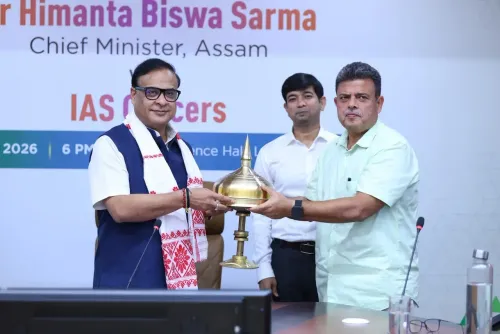
Assam wants to hear from its people — and it has built a formal architecture to make that happen. Assam Chief Minister Himanta Biswa Sarma on Saturday, November 14, 2026, announced the creation of 13 State-Level Sectoral Councils designed to channel citizen and expert feedback directly to his office, targeting gaps in how government services reach the ground.
What the 13 Sectoral Councils are meant to do
The Chief Minister's announcement is direct: 'Your voice deserves a seat at the policy-making table.' The councils are framed not as advisory committees for bureaucrats, but as feedback conduits that will surface delivery failures before they calcify into systemic failures. Experienced individuals — the post's specific description — will sit on these bodies, with a mandate to identify gaps between what the state promises and what citizens actually receive.
The structure matters. By anchoring the feedback loop at the state level across 13 sectors, the initiative signals an attempt at breadth — covering, in principle, the range of departments that touch everyday life, from health and education to infrastructure and welfare. The direct line to the Chief Minister is the design's sharpest feature: it short-circuits the usual chain of officials through which citizen complaints typically dissolve.
Assam's governance push under the BJP-led government
The BJP-led government in Assam, which came to office in 2021 with Sarma taking over as Chief Minister, has repeatedly positioned citizen-centric governance as a defining theme of its administration. This move fits that pattern. Across India, several state governments have experimented with structured participatory mechanisms — sector-specific councils, Jan Samvad programmes, and service delivery audits — in response to chronic last-mile implementation failures.
What sets this announcement apart, at least in intent, is the institutionalisation of the feedback channel rather than a one-off consultation drive. Whether the councils have teeth will depend on composition, meeting cadence, and whether their findings visibly alter policy or budget decisions — details the government is yet to publish.
The question the councils must answer
India's governance challenge has rarely been a shortage of schemes; it has been the distance between announcement and delivery. Assam is no exception. The creation of sectoral councils is an admission, implicit but clear, that the state's existing monitoring machinery does not reliably surface ground-level friction. The real test arrives when a council flags a failure that implicates a powerful department or a politically sensitive programme — and the administration acts on it anyway.
Sarma has staked his credibility on a promise that experienced citizens will have a direct line to him. That promise now has a structure. It still needs a track record.
Point of View
Feedback-driven administrator ahead of Assam's next electoral cycle. The direct-to-CM feedback loop sidesteps mid-level bureaucracy, which is both its political appeal and its institutional risk: without independent mandates and transparent reporting, such councils can become performative rather than corrective. The move echoes a wider trend among BJP-governed states to institutionalise citizen touchpoints, though measurable service-delivery improvements remain the harder, unfinished part of that promise.
NationPress
14 Nov 2026
Frequently Asked Questions
What are the 13 State-Level Sectoral Councils announced by Assam CM Himanta Biswa Sarma?
They are bodies announced by Chief Minister Himanta Biswa Sarma on November 14, 2026, through which experienced individuals can identify gaps in public service delivery and send feedback directly to the Chief Minister. The specific sectors each council covers have not yet been made public.
What is the purpose of Assam's Sectoral Councils?
The councils are designed to create a structured channel between citizens — particularly those with domain experience — and the state government, ensuring that ground-level problems in service delivery reach policymakers rather than being filtered out by bureaucratic layers.
Who will be part of the 13 Sectoral Councils in Assam?
CM Sarma has described the participants as 'experienced individuals,' but detailed criteria for membership, appointment processes, and council composition have not yet been announced.
Is this the first time Assam has created citizen feedback councils?
The specific architecture of 13 state-level sectoral councils is a new initiative under the current BJP-led government. Similar participatory governance mechanisms have been tried in various forms across Indian states, but this formalised multi-sector structure is new for Assam.
How does Himanta Biswa Sarma's Sectoral Council plan affect Assam's governance?
If implemented effectively, the councils could shorten the feedback loop between citizens and policy decisions, helping flag persistent delivery failures in areas like health, education, and welfare. Their real impact will depend on whether findings lead to concrete administrative or budgetary changes.