CM Himanta Allocates Portfolios to Assam Ministers
Synopsis
Assam Chief Minister Himanta Biswa Sarma announced on 8 June 2026 that portfolios would be allocated to the newly sworn-in council of ministers, formally launching the BJP-led government's administrative operations for the new term.
Key Takeaways
CM Himanta Biswa Sarma announced portfolio allocation to the Assam Council of Ministers on 8 June 2026 .
The allocation marks the formal shift from government formation to active, department-wise governance in Assam .
Portfolio distribution is a standard constitutional step in Indian state governance, enabling ministers to assume departmental charge.
CM Sarma framed the move as the beginning of collective work 'for the progress and prosperity of Assam.' The first cabinet meeting and early policy announcements will be the next key milestones to watch.
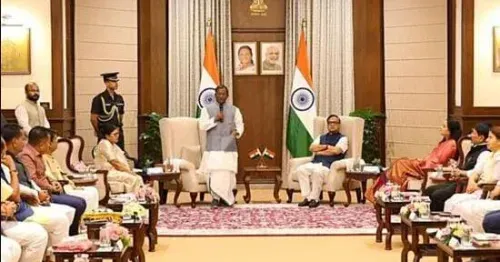
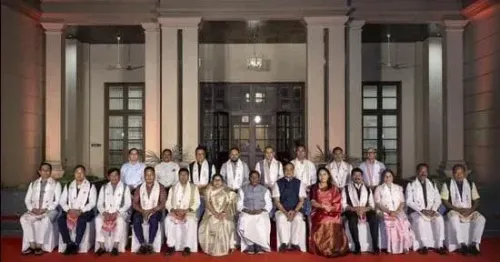
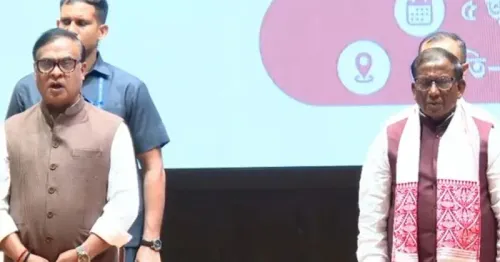
Assam Chief Minister Himanta Biswa Sarma announced on Monday, 8 June 2026, that his government would allocate portfolios to the newly sworn-in council of ministers, marking the formal transition from election mode to active governance in the state.
Context
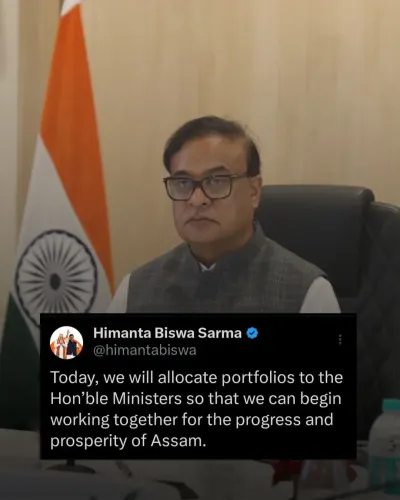
In his post on X, CM Sarma stated: 'Today, we will allocate portfolios to the Hon'ble Ministers so that we can begin working together for the progress and prosperity of Assam.' The announcement signals the completion of the government-formation process and the beginning of structured administrative functioning under the new cabinet.
Portfolio allocation is a constitutionally significant step in Indian parliamentary democracy at the state level. It formally assigns departmental responsibility to each minister, enabling them to assume charge of their respective ministries and begin policy implementation.
Policy Backdrop
In Indian states, portfolio distribution typically occurs within days of a new council of ministers being sworn in. The process allows the elected government to move from ceremonial formation to functional governance, with each minister accountable for specific departments ranging from finance and home to health and agriculture.
CM Sarma has previously overseen this process after the 2021 Assam Legislative Assembly elections, when he was sworn in as Chief Minister on 10 May 2021 and portfolios were distributed to BJP-led cabinet members shortly thereafter. The current exercise follows a similar institutional pattern, reflecting the state's established administrative rhythm.
Stakeholders and Impact
The immediate stakeholders are the newly appointed ministers of the Assam Council of Ministers, who will now formally assume charge of their assigned departments. For citizens and civil servants alike, the allocation ends any administrative uncertainty and allows government machinery to function at full capacity.
The BJP-led government in Assam has historically prioritised portfolios related to infrastructure, border management, and social welfare. How the new cabinet lineup is structured — particularly which ministers receive key economic and home portfolios — will signal the government's immediate priorities for the term ahead.
What's Next
Following portfolio allocation, the first formal cabinet meeting is expected to set the legislative and budgetary agenda for the new term. Early decisions on flagship schemes, departmental budgets, and administrative appointments will offer the clearest indication of the government's policy direction under CM Sarma's continued leadership.
Observers will watch whether the new ministerial lineup reflects continuity with the previous term's priorities or signals a recalibration toward new policy areas, particularly in the context of Assam's ongoing development agenda and its role as a gateway state for the broader North-East region.
Point of View
Who has consolidated significant personal authority within the Assam BJP since 2021, the new cabinet structure will indicate whether he is broadening his coalition or tightening his inner circle. Coming at the start of a fresh term, the choices will set the tone for governance in a state that is central to the BJP's North-East strategy. Analysts will particularly watch who receives the finance, home, and revenue portfolios as proxies for the government's fiscal and security agenda.
NationPress
23 Oct 2026
Frequently Asked Questions
Why is Himanta Biswa Sarma allocating portfolios to ministers today?
Following the formation of a new government in Assam, CM Himanta Biswa Sarma is allocating portfolios to the newly sworn-in ministers on 8 June 2026 so that each minister can assume formal charge of their department and governance can begin in earnest.
What is portfolio allocation in an Indian state government?
Portfolio allocation is the process by which a Chief Minister assigns specific government departments — such as finance, health, or home — to individual cabinet ministers, giving them executive responsibility over those areas.
Who is Himanta Biswa Sarma?
Himanta Biswa Sarma is the Chief Minister of Assam and a senior BJP leader. He has served as Chief Minister since May 2021 and also serves as the convenor of the North-East Democratic Alliance (NEDA).
What happens after portfolio allocation in Assam?
After portfolios are allocated, ministers formally assume charge of their departments. The cabinet then typically holds its first formal meeting to set the legislative agenda, budgetary priorities, and key policy decisions for the new term.
What is the North-East Democratic Alliance (NEDA)?
The North-East Democratic Alliance (NEDA) is a BJP-led political alliance of parties in India's north-eastern states. CM Himanta Biswa Sarma serves as its convenor and uses the platform to coordinate governance and electoral strategy across the region.