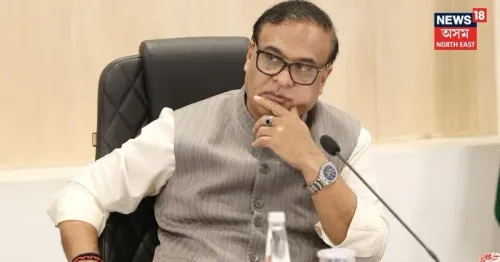
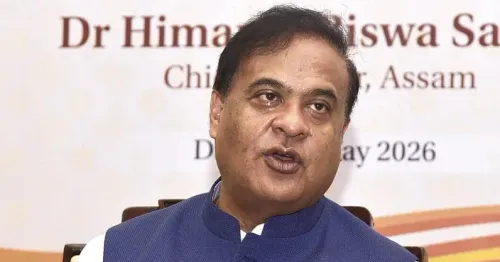
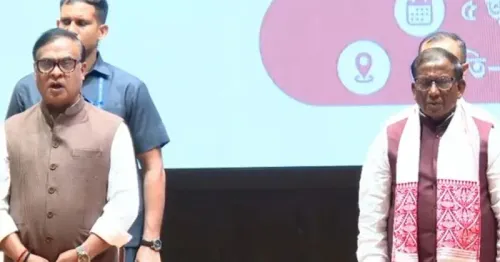
CM Himanta Allocates Guardian Districts to Assam Cabinet

Synopsis
The Chief Minister's Office of Assam has allocated Guardian Districts to Cabinet Ministers to strengthen governance and development monitoring across the state's 35 districts, continuing CM Himanta Biswa Sarma's post-2021 push for administrative accountability at the district level.
Key Takeaways
The Chief Minister's Office of Assam announced Guardian District allocations to Cabinet Ministers on June 8, 2026 .
The Guardian District model assigns each minister responsibility for governance and development monitoring in specific districts.
Assam has 35 districts , all subject to ongoing administrative reform efforts under the BJP -led government.
The initiative mirrors the Guardian Minister system used in Maharashtra for over two decades.
CM Himanta Biswa Sarma has pursued district-level administrative restructuring since taking office in May 2021 .
Future monitoring mechanisms and formal government orders will determine the long-term effectiveness of the framework.
The Chief Minister's Office of Assam announced on Monday, June 8, 2026, that Guardian Districts have been allocated to Cabinet Ministers across the state to strengthen governance and development monitoring. The move formally assigns ministerial oversight responsibility to specific districts, deepening accountability in the delivery of welfare and infrastructure schemes.
Context
The Guardian District model is an administrative mechanism under which a cabinet minister is made responsible for overseeing governance, scheme implementation, and development outcomes in one or more assigned districts. The Chief Minister's Office of Assam confirmed the allocations through an official post, describing the initiative as a step to 'strengthen governance and development monitoring across the State.'
The announcement comes under the administration of Chief Minister Himanta Biswa Sarma, who has led the BJP-led Assam government since May 2021. His tenure has been marked by a series of administrative restructuring efforts aimed at improving district-level execution of both central and state government programmes.
Policy Backdrop
Assam is divided into 35 districts, each with varying levels of administrative capacity and development need. The post-2021 government introduced multiple measures to bridge the gap between state-level policy decisions and field-level implementation, and the Guardian District framework fits squarely within that reform arc.
The model is not new to India. Maharashtra has operated a Guardian Minister system for over two decades, assigning a cabinet minister to each district as a senior point of contact for administration and coordination. Assam's adoption of a comparable structure signals a broader convergence toward this accountability model among Indian states seeking to accelerate development outcomes at the grassroots level.
Stakeholders and Impact
The primary beneficiaries of the arrangement are district administrations, which gain a direct ministerial interface for escalating issues, securing resources, and coordinating inter-departmental work. Citizens in districts where scheme delivery has historically lagged stand to benefit if the oversight mechanism translates into faster resolution of administrative bottlenecks.
Cabinet ministers assigned as guardians take on an additional layer of accountability, with their performance now tied to measurable development indicators in their designated districts. This dual responsibility — departmental and territorial — is designed to sharpen focus on on-ground outcomes rather than purely legislative or secretariat functions.
What's Next
Attention will now turn to how the government structures progress reporting under this framework — whether through periodic review meetings chaired by Chief Minister Sarma, cabinet-level presentations, or district development scorecards. The effectiveness of the model will largely depend on the frequency and rigour of these monitoring mechanisms.
Any future expansion of the cabinet or reorganisation of districts could trigger a revision of the allocations. Observers will also watch whether the Guardian District framework is institutionalised through a formal government order, giving it durability beyond the current political term.
Point of View
The government creates a visible chain of responsibility that can be invoked during both successes and failures at the district level. The model has a proven track record in Maharashtra, lending it administrative legitimacy, but its real test in Assam will be whether monitoring is enforced with rigour or remains ceremonial. For a state with significant developmental disparities across its 35 districts, the framework's durability and teeth will matter more than its announcement.
NationPress
22 Oct 2026
Frequently Asked Questions
What is the Guardian District system in Assam?
The Guardian District system assigns a Cabinet Minister to oversee governance, scheme implementation, and development monitoring in specific districts of Assam, creating direct ministerial accountability at the district level.
How many districts does Assam have?
Assam has 35 districts . The Guardian District allocations cover ministerial oversight responsibilities across these districts to improve administrative coordination.
Who announced the Guardian District allocations in Assam?
The Chief Minister's Office of Assam announced the allocations on June 8, 2026 , under the administration of Chief Minister Himanta Biswa Sarma .
Which other Indian state uses a Guardian Minister model?
Maharashtra has operated a Guardian Minister system for over two decades, assigning a cabinet minister to each district as a senior administrative and coordination point of contact.
What is the purpose of assigning Guardian Districts to ministers?
The purpose is to strengthen governance monitoring and accelerate the delivery of welfare and infrastructure schemes by giving each minister direct territorial responsibility alongside their departmental duties.