CM Himanta Assigns Guardian Districts to Assam Ministers
Synopsis
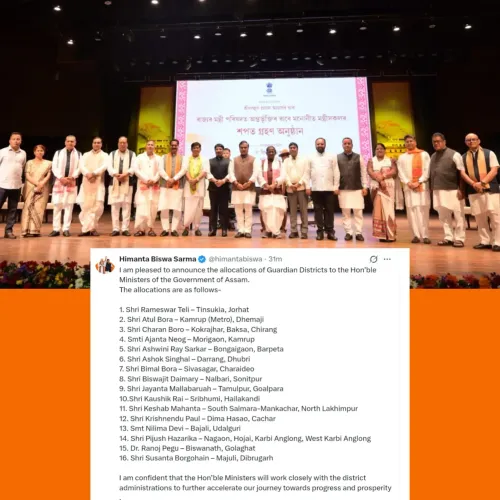
Assam Chief Minister Himanta Biswa Sarma on June 7, 2026 announced Guardian District allocations for three cabinet ministers — Rameswar Teli, Atul Bora, and Charan Boro — covering six districts including Guwahati's Kamrup Metro and the Bodoland districts of Kokrajhar and Baksa.
Key Takeaways
Assam CM Himanta Biswa Sarma announced Guardian District allocations on June 7, 2026 , assigning cabinet ministers oversight of specific districts.
Rameswar Teli has been assigned Tinsukia and Jorhat districts.
Atul Bora has been assigned Kamrup (Metro) and Dhemaji districts.
Charan Boro , associated with the UPPL , has been assigned Kokrajhar and Baksa in the Bodoland Territorial Region .
The Guardian District model is designed to improve scheme implementation and administrative accountability at the district level.
Further allocations covering the remaining cabinet ministers and districts are expected in subsequent phases.
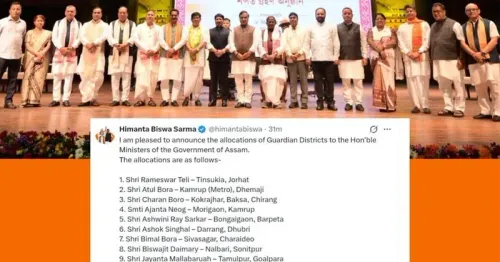
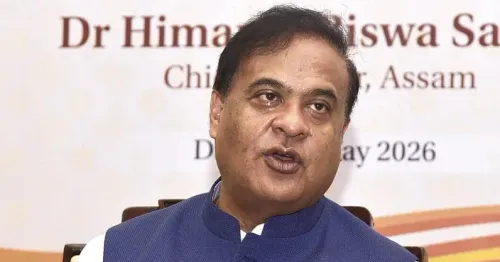
Assam Chief Minister Himanta Biswa Sarma on Sunday, June 7, 2026, announced the allocation of Guardian Districts to members of the Government of Assam cabinet, assigning senior ministers oversight responsibilities across specific districts to strengthen administrative coordination and scheme delivery.
Context
In his post, CM Sarma outlined the first set of allocations: Shri Rameswar Teli has been assigned Tinsukia and Jorhat; Shri Atul Bora has been assigned Kamrup (Metro) and Dhemaji; and Shri Charan Boro has been assigned Kokrajhar and Baksa. The announcement signals the formal roll-out of a structured ministerial oversight framework for the state's districts.
The Guardian District system designates a cabinet minister as a nodal point of contact and accountability for each assigned district, enabling closer monitoring of development programmes and faster resolution of administrative bottlenecks at the ground level.
Policy Backdrop
The guardian minister model has precedent across several Indian states as a mechanism to bridge the gap between state-level policy decisions and district-level implementation. Under the BJP-led government in Assam since May 2021, the administration has periodically used such assignments to address governance challenges across the state's geographically and ethnically diverse districts.
The districts named in this first tranche span a wide cross-section of Assam's socio-economic landscape. Tinsukia and Jorhat are key districts in upper Assam with significant tea and oil industry presence. Kamrup (Metro) encompasses Guwahati, the state's commercial capital, while Dhemaji is a flood-prone, predominantly rural district. Kokrajhar and Baksa fall within the Bodoland Territorial Region, an area with a distinct political and administrative identity.
Stakeholders and Impact
Rameswar Teli, a BJP leader and former Union Minister of State for Petroleum and Natural Gas, brings central government experience to the oversight of Tinsukia and Jorhat. Atul Bora, a senior cabinet minister holding the Agriculture portfolio among others, is positioned to drive rural and urban development across his two assigned districts. Charan Boro, associated with the United People's Party Liberal (UPPL) and representing the Bodoland region, is a natural fit for the oversight of Kokrajhar and Baksa, given his community ties and administrative familiarity with the region.
District administrations and local bodies in all six named districts are expected to work directly with their respective guardian ministers on scheme implementation, grievance redressal, and development project monitoring. Citizens and elected local representatives stand to benefit from a more accountable chain of command linking district concerns to the state cabinet.
What's Next
The announcement explicitly notes these are partial allocations, with the post listing only three ministers and six districts. Subsequent phases covering the remaining Assam cabinet ministers and the state's full complement of districts are expected to follow. Official reviews and periodic performance assessments of guardian ministers against development benchmarks will be the key indicators of whether the mechanism delivers measurable governance improvements across the state.
Point of View
Including coalition partner Charan Boro of the UPPL, directly into district-level administration ahead of any future electoral cycle. Assigning a Bodoland-origin minister to Kokrajhar and Baksa reflects a deliberate sensitivity to the region's distinct identity and the coalition arithmetic that underpins the BJP-led government in Assam. The mechanism mirrors oversight models adopted in other states and signals that the Sarma administration is institutionalising, rather than merely practising, district-level governance. Whether the framework produces measurable development outcomes will depend on the frequency and rigour of ministerial engagement on the ground.
NationPress
22 Oct 2026
Frequently Asked Questions
What is the Guardian District system in Assam?
The Guardian District system assigns a state cabinet minister as a nodal overseer for specific districts, making them accountable for scheme implementation, development projects, and grievance redressal in those areas.
Which districts have been assigned to Rameswar Teli?
Rameswar Teli has been assigned Tinsukia and Jorhat as his Guardian Districts under the June 2026 allocation announced by CM Himanta Biswa Sarma.
Why is Charan Boro assigned to Kokrajhar and Baksa?
Charan Boro is associated with the United People's Party Liberal (UPPL) and represents the Bodoland region, making him a contextually appropriate guardian minister for Kokrajhar and Baksa , both of which fall within the Bodoland Territorial Region .
Are all Assam districts covered in this Guardian District announcement?
No. The June 7 announcement covers only six districts across three ministers and is the first tranche; further allocations for the remaining cabinet ministers and districts are expected to follow.
What is Himanta Biswa Sarma's role in Assam?
Himanta Biswa Sarma has been the Chief Minister of Assam since May 2021 and is a senior BJP leader who also serves as the convenor of the North-East Democratic Alliance (NEDA) .