CM Yogi Calls Jewar's Transformation from 'Jungle Raj' to 'Mangal Raj'
Synopsis
Uttar Pradesh Chief Minister Yogi Adityanath declared on 27 June 2026 that Jewar — once branded a 'Jungle Raj' — has transformed into a 'Mangal Raj', invoking the town's emergence as a major infrastructure hub anchored by the Noida International Airport project.
Key Takeaways
Chief Minister Yogi Adityanath posted on X on 27 June 2026 contrasting Jewar's past as a 'Jungle Raj' with its present as a 'Mangal Raj'.
Jewar , located in Gautam Buddh Nagar, Uttar Pradesh , is the site of the greenfield Noida International Airport project.
The airport project was awarded to Zurich Airport International in 2019 following central government approval in 2017 .
The Adityanath government has used the term 'Jungle Raj' consistently since 2017 to contrast BJP rule with previous administrations in UP.
The Noida International Airport is intended to reduce pressure on Delhi's Indira Gandhi International Airport and boost economic growth in western UP.
Observers are watching for the phased inauguration of the first runway and terminal, along with related industrial-corridor announcements.
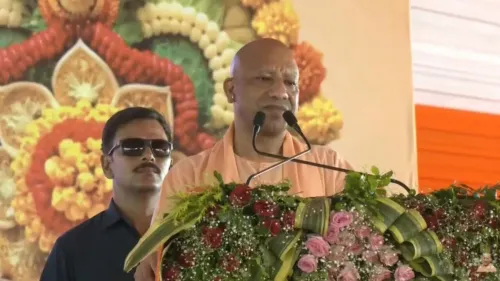
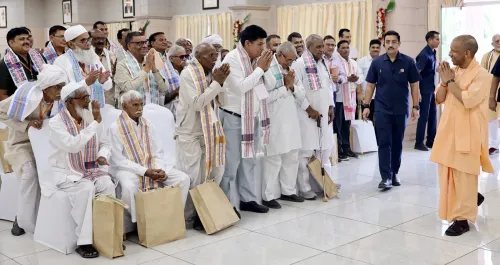
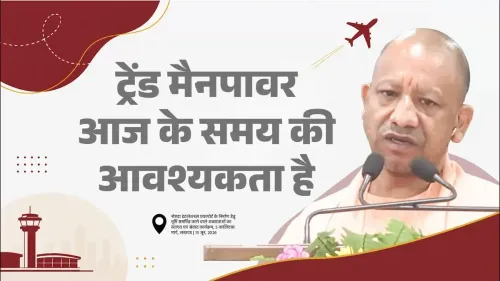
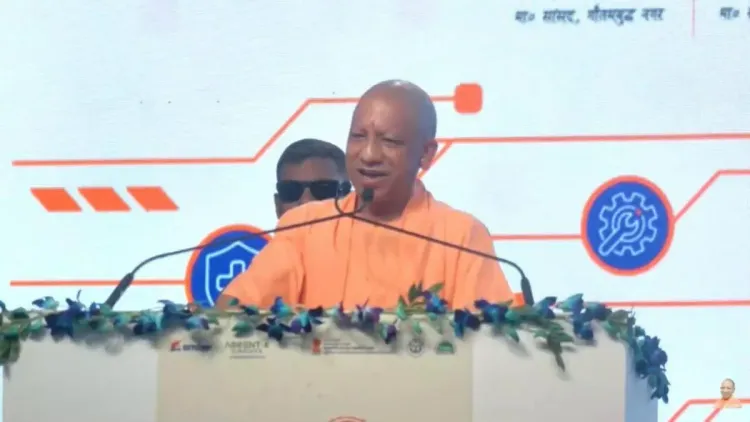
Uttar Pradesh Chief Minister Yogi Adityanath on Saturday, 27 June 2026, invoked a sharp rhetorical contrast to describe the transformation of Jewar in Gautam Buddh Nagar district, declaring that the area once labelled a 'Jungle Raj' had now become a 'Mangal Raj' — a reign of auspiciousness and order.
In his post on X, the Chief Minister wrote: 'Uttar Pradesh ke Jewar ke liye Jungle Raj kaha jaata tha, jo ab Mangal Raj ke roop mein badal gaya hai' — loosely translated as, 'What was once called a Jungle Raj for Jewar in Uttar Pradesh has now transformed into a Mangal Raj.' The remark is a pointed political reference to governance conditions that the Bharatiya Janata Party (BJP) has long attributed to previous administrations in the state.
Context
The term 'Jungle Raj' — literally 'rule of the jungle' — has been a recurring phrase in BJP political vocabulary to describe what the party characterises as lawlessness, poor governance, and administrative neglect under earlier governments in Uttar Pradesh. Jewar, a town in Gautam Buddh Nagar on the outskirts of the National Capital Region, was historically associated with land disputes and governance challenges. Chief Minister Adityanath's use of the contrasting phrase 'Mangal Raj' signals a claim of comprehensive turnaround in the region under his watch since 2017.
Policy Backdrop
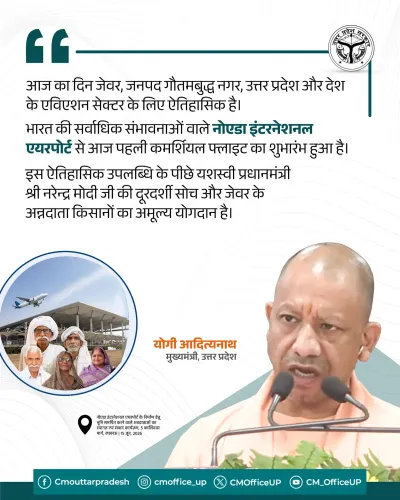
Jewar has emerged as one of the most high-profile infrastructure destinations in western Uttar Pradesh, anchored by the Noida International Airport — a greenfield project awarded to Zurich Airport International in 2019 following land acquisition by the state government. The project received central government in-principle approval in 2017, the same year Adityanath assumed office, and is designed to relieve pressure on Delhi's Indira Gandhi International Airport while catalysing economic growth across the NCR periphery.
Since 2017, the Adityanath administration has pursued an aggressive transport infrastructure agenda across Uttar Pradesh, encompassing expressways, greenfield airports, and industrial corridors. The Jewar airport project sits at the intersection of aviation expansion, real-estate appreciation, and the state's broader pitch to investors positioning UP as a manufacturing and logistics hub.
Stakeholders and Impact
Local residents of Jewar and surrounding villages in Gautam Buddh Nagar are the most directly affected constituency, having navigated years of land acquisition processes tied to the airport project. The aviation sector stands to gain a major new gateway into the NCR, while real-estate developers and industrial investors have already begun positioning assets along the emerging airport corridor.
The Chief Minister's framing of the Jewar story as a governance success is also aimed at a broader political audience ahead of continued electoral cycles in Uttar Pradesh, where development narratives around infrastructure have become central to the BJP's messaging in western UP constituencies.
What's Next
Attention will now focus on the phased inauguration of the first runway and passenger terminal at Noida International Airport, which is expected to mark the most tangible milestone in Jewar's transformation narrative. Associated announcements around industrial corridors, logistics parks, and land-value appreciation in the surrounding region are also being closely watched by investors and policy observers. Chief Minister Adityanath's post suggests the ruling dispensation intends to keep Jewar's development story at the centre of its governance showcase in the run-up to future political milestones.
Point of View
A region of electoral significance, and the airport project is among the most visible proof-points of the BJP's development pitch. By anchoring governance rhetoric to a concrete, internationally backed infrastructure project, the CM is building a narrative that is harder to contest than abstract law-and-order claims. The post also signals that Jewar's transformation will remain a campaign-ready showcase as the state approaches future electoral cycles.
NationPress
26 Sept 2026
Frequently Asked Questions
What is 'Jungle Raj' and 'Mangal Raj' that CM Yogi mentioned about Jewar?
'Jungle Raj' is a phrase the BJP uses to describe lawlessness and poor governance under previous non-BJP administrations in Uttar Pradesh. CM Yogi used 'Mangal Raj' — meaning a reign of auspiciousness and order — to contrast it with what he says is the current state of Jewar under his government.
Where is Jewar and why is it important?
Jewar is a town in Gautam Buddh Nagar district, Uttar Pradesh, located in the National Capital Region periphery. It is the site of the Noida International Airport, a major greenfield project awarded to Zurich Airport International in 2019.
What is the Noida International Airport project?
The Noida International Airport is a greenfield airport at Jewar, Uttar Pradesh, intended to ease congestion at Delhi's Indira Gandhi International Airport and drive economic development in western UP. It received central government approval in 2017 and the construction contract was awarded to Zurich Airport International in 2019.
Why did CM Yogi post about Jewar on 27 June 2026?
CM Yogi Adityanath posted on X on 27 June 2026 to highlight what he described as Jewar's governance and development transformation, framing it as a shift from 'Jungle Raj' to 'Mangal Raj' under the BJP government in Uttar Pradesh.
What is the current status of the Noida International Airport?
The Noida International Airport at Jewar is under development. The phased opening of its first runway and passenger terminal is the key milestone being tracked by the aviation sector, investors, and policy observers.