CM Yogi Eyes Jewar Airport as Agri-Cargo Export Hub
Synopsis
Chief Minister Yogi Adityanath has declared Jewar the future focal point for exporting food grains, fruits, and vegetables to world markets via cargo, linking the upcoming Noida International Airport to Uttar Pradesh's agricultural export ambitions.
Key Takeaways
CM Yogi Adityanath announced on June 15, 2026 that Jewar will serve as a central cargo hub for agricultural exports.
The post specifically names food grains, fruits, and vegetables as the produce to be transported to global markets.
Noida International Airport at Jewar , in Gautam Buddh Nagar district , is a greenfield project serving the National Capital Region .
Land acquisition and project development for the airport advanced after 2018 under the Uttar Pradesh government.
Primary beneficiaries include farmers and agri-exporters in western and central Uttar Pradesh .
Construction milestones for cargo terminals and cold-chain integration remain key metrics to watch.
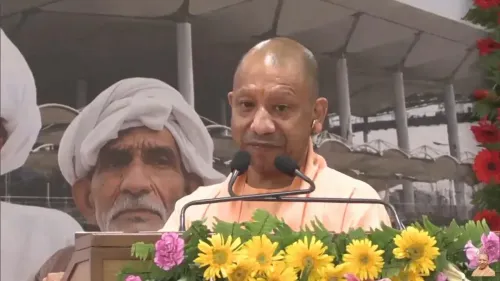
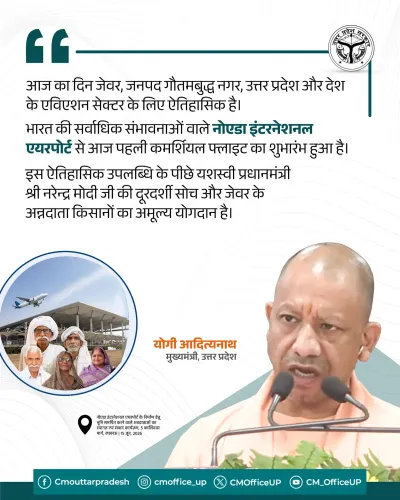
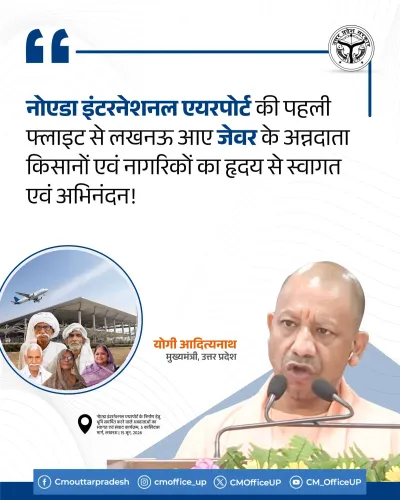
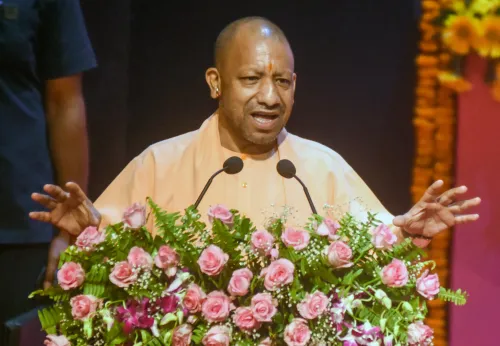
Uttar Pradesh Chief Minister Yogi Adityanath on Monday, June 15, 2026, declared that Jewar will become the focal point for transporting food grains, fruits, and vegetables to global markets via cargo, signalling a push to integrate the upcoming Noida International Airport with agricultural export logistics.
In his post, the Chief Minister wrote: 'अन्न, फल और सब्जी... कार्गो से दुनिया की मार्केट तक पहुंचाने की सुविधा का केंद्र बिंदु बनेगा जेवर...' — translating to: 'Food grains, fruits, and vegetables... Jewar will become the focal point of the facility to reach world markets through cargo.'
Context
Jewar, located in Gautam Buddh Nagar district of Uttar Pradesh, is the site of the greenfield Noida International Airport, one of the most significant aviation infrastructure projects in the National Capital Region. The project has been in development since land acquisition efforts advanced after 2018 under the state government. The airport is designed to serve both passenger and cargo operations, relieving pressure on existing NCR airports.
Chief Minister Adityanath's statement positions Jewar not merely as a passenger transit hub but as a dedicated logistics gateway for perishable agricultural produce — a significant framing that broadens the airport's stated economic mandate.
Policy Backdrop
Uttar Pradesh has made aviation infrastructure a centrepiece of its economic expansion strategy, with new airports and logistics nodes prioritised across the state. The emphasis on moving agricultural produce — grains, fruits, and vegetables — through dedicated cargo channels aligns with national-level goals of boosting perishables exports and reducing post-harvest losses linked to slow logistics chains.
Dedicated cargo infrastructure for farm produce addresses a long-standing bottleneck: perishables exported from Uttar Pradesh, one of India's largest agricultural states, have historically depended on road transport to distant ports or airports, increasing transit time and spoilage risk. A cargo-capable international airport at Jewar could significantly shorten that supply chain for agri-exporters in the region.
Stakeholders and Impact
Farmers and agri-exporters across western and central Uttar Pradesh stand to be the primary beneficiaries if Jewar's cargo infrastructure is developed to handle perishables at scale. Proximity to the airport could allow produce from the fertile Gangetic plain to reach international markets within hours of harvest, improving both price realisation and shelf life.
The announcement also carries significance for logistics companies, cold-chain operators, and freight forwarders who would need to establish operations around the airport. Integration with existing freight corridors — including road and rail links to Jewar — will be a key factor in determining how effectively the hub functions for agricultural exports.
What's Next
Attention will now turn to construction milestones for dedicated cargo terminals at Noida International Airport and any formal policy announcements integrating Jewar with national agricultural export schemes. The operationalisation of cargo-specific infrastructure, including cold storage and handling facilities for perishables, will be the concrete test of the vision outlined by Chief Minister Yogi Adityanath.
As the airport project progresses, the degree to which cargo capacity is built in parallel with passenger infrastructure — rather than as an afterthought — will determine whether Jewar can genuinely serve as the agri-export gateway the Chief Minister has envisioned.
Point of View
Broadening the airport's appeal beyond urban commuters. This fits a consistent pattern in the UP government's messaging: positioning large capital projects as instruments of agrarian uplift, not merely urban convenience. The move also anticipates competitive pressure from other states developing cargo-capable airports, placing Uttar Pradesh in a race to capture a share of India's growing perishables export market. Whether the cargo infrastructure keeps pace with passenger terminal development will be the real measure of this ambition.
NationPress
15 Sept 2026
Frequently Asked Questions
What is the Jewar airport and where is it located?
The Jewar airport, officially called Noida International Airport , is a greenfield aviation project located in Gautam Buddh Nagar district of Uttar Pradesh , designed to serve the National Capital Region with both passenger and cargo operations.
What did CM Yogi Adityanath say about Jewar airport on June 15 2026?
CM Yogi Adityanath stated that Jewar will become the focal point for transporting food grains, fruits, and vegetables to global markets through cargo facilities at the upcoming airport.
How will Jewar airport help UP farmers and agri-exporters?
A cargo-capable international airport at Jewar could allow perishable produce from Uttar Pradesh to reach international markets faster, reducing transit time, cutting spoilage, and improving price realisation for farmers and exporters.
When did land acquisition for Jewar airport begin?
Land acquisition and project development for the Noida International Airport at Jewar advanced after 2018 under the Uttar Pradesh government as part of the state's aviation expansion drive.
What types of agricultural produce will be exported through Jewar airport?
According to CM Yogi Adityanath 's post, the airport's cargo facilities are intended to facilitate the export of food grains, fruits, and vegetables to world markets.