CM Yogi Highlights Carpet Expo Mart, Varanasi TFC on Handloom Day
Synopsis
On National Handloom Day 2026, CM Yogi Adityanath's office spotlighted the Carpet Expo Mart in Bhadohi and a Trade Facilitation Centre in Varanasi, framing both as joint central-state investments to give UP's carpet and silk clusters a global export platform.
Key Takeaways
Carpet Expo Mart has been constructed in Bhadohi , UP's globally recognised hand-knotted carpet hub, with central government support.
A Trade Facilitation Centre (TFC) in Varanasi provides technology, design, packaging, export and marketing support to the local silk cluster.
Both projects are framed as a joint initiative of the UP government and the Government of India , with PM Narendra Modi cited as a driving inspiration.
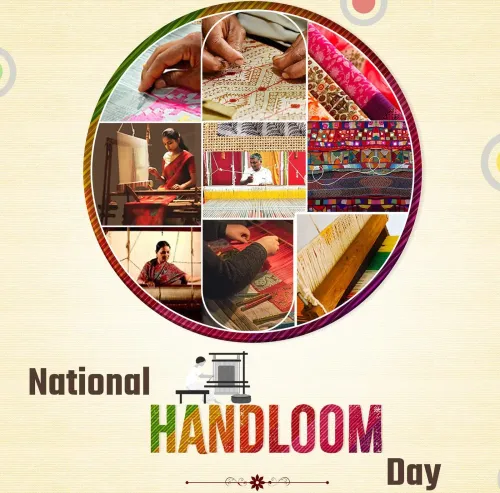
National Handloom Day is observed on 7 August every year since 2015 to mark the anniversary of the Swadeshi Movement of 1905.
CM Yogi described handloom as 'a powerful symbol of India's freedom struggle', linking export modernisation to national heritage.
On National Handloom Day, 7 August 2026, the Chief Minister's Office of Uttar Pradesh put two flagship infrastructure projects in the spotlight — a Carpet Expo Mart in Bhadohi and a Trade Facilitation Centre (TFC) in Varanasi — framing them as the state's most concrete answer to the question of how ancient craft traditions survive a modern global market.
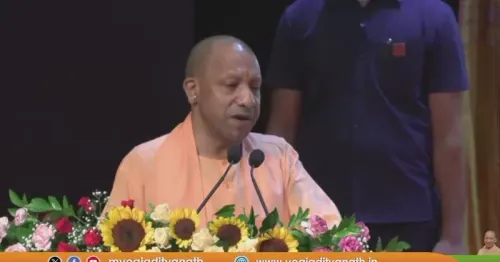
Quoting Chief Minister Yogi Adityanath directly, the post declared: 'We have constructed the Carpet Expo Mart in Bhadohi with the cooperation of the Government of India and the inspiration of respected Prime Minister Shri Narendra Modi ji. The Trade Facilitation Centre has been established in Varanasi, through which local products and the Silk Cluster are gaining global recognition.' The statement closed on a pointed note — 'हथकरघा मात्र एक उद्योग नहीं, बल्कि भारत की आजादी के संघर्ष का एक सशक्त प्रतीक है' ('Handloom is not merely an industry; it is a powerful symbol of India's freedom struggle') — a deliberate echo of the Swadeshi movement that National Handloom Day was created to commemorate.
Bhadohi's Carpet Mart and Varanasi's Silk Hub
Bhadohi, a district in eastern Uttar Pradesh, is one of the world's most recognised centres for hand-knotted carpets, with artisans whose skills have fed export markets for generations. The Carpet Expo Mart is designed to give those artisans a permanent, professional showcase — moving transactions and buyer interactions out of informal settings and into a purpose-built export infrastructure.
Varanasi's Trade Facilitation Centre targets a different but equally storied cluster: Banarasi silk. The TFC bundles technology support, design assistance, packaging upgrades, export documentation and marketing under one roof — the kind of integrated service that small-scale weavers rarely access on their own. Together, the two facilities represent a state-level bet that physical infrastructure can translate craft heritage into sustained foreign exchange earnings.
National Handloom Day and the Swadeshi Thread
National Handloom Day has been observed on 7 August every year since 2015, the date chosen to mark the anniversary of the Swadeshi Movement of 1905 — when the call to boycott British goods and champion Indian-made cloth became a galvanising force in the independence struggle. Invoking that history on the same day as announcing export infrastructure is a deliberate political and cultural move: it positions market-facing modernisation not as a departure from tradition but as its logical continuation.
The announcements align with a broader pattern in which state and central governments have pursued parallel schemes to modernise traditional textile clusters — combining hard infrastructure with soft support in design and marketing — while consistently invoking handloom's role in India's national identity. Prime Minister Narendra Modi's backing, cited explicitly by CM Yogi, underlines the centre-state coordination that has characterised this push in Uttar Pradesh.
The real test, as always, will be in the export numbers that flow from Bhadohi and Varanasi in the seasons ahead — and whether the weavers at the loom feel the difference.
Point of View
However, will only materialise if weaver incomes and export volumes from Bhadohi and Varanasi show measurable improvement — a data point that both governments will be keen to showcase.
NationPress
7 Aug 2026
Frequently Asked Questions
What is the Carpet Expo Mart in Bhadohi?
The Carpet Expo Mart is an export infrastructure facility built in Bhadohi, Uttar Pradesh — a district famous for hand-knotted carpets — to provide artisans and exporters with a professional platform for showcasing and selling their products to global buyers.
What is the Trade Facilitation Centre in Varanasi?
The Trade Facilitation Centre (TFC) in Varanasi is a government-established facility that offers integrated support services — including technology, design, packaging, export documentation and marketing assistance — to help local silk weavers and other artisans reach international markets.
Why is National Handloom Day celebrated on 7 August?
National Handloom Day is observed on 7 August every year since 2015 to commemorate the Swadeshi Movement of 1905, when the call to champion Indian-made cloth became a key moment in the independence struggle.
What did CM Yogi Adityanath say about handloom on National Handloom Day 2026?
CM Yogi Adityanath stated that handloom is not merely an industry but a powerful symbol of India's freedom struggle, and highlighted the Carpet Expo Mart in Bhadohi and the Trade Facilitation Centre in Varanasi as evidence of the government's commitment to the sector.
How is the central government involved in UP's handloom infrastructure?
The Uttar Pradesh government has credited the cooperation of the Government of India and the inspiration of Prime Minister Narendra Modi in constructing the Carpet Expo Mart in Bhadohi and establishing the Trade Facilitation Centre in Varanasi.