Rajasthan CMO calls for swadeshi handloom support on National Handloom Day
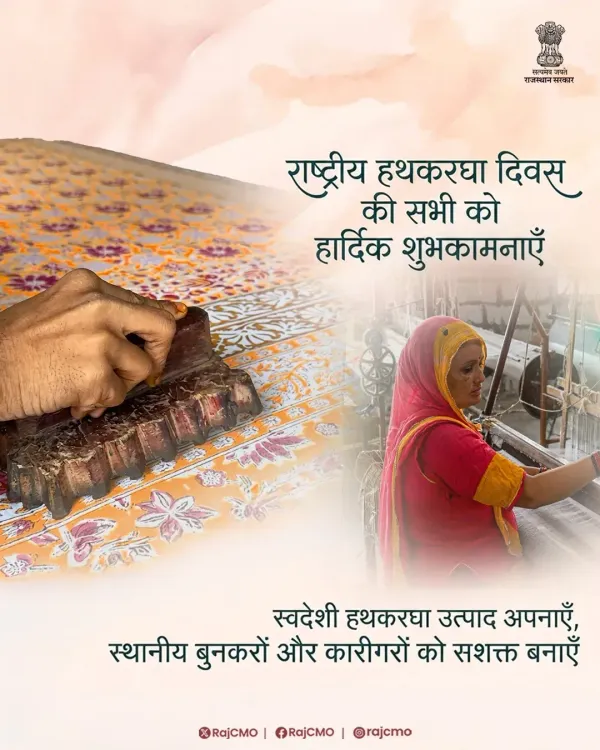
Synopsis
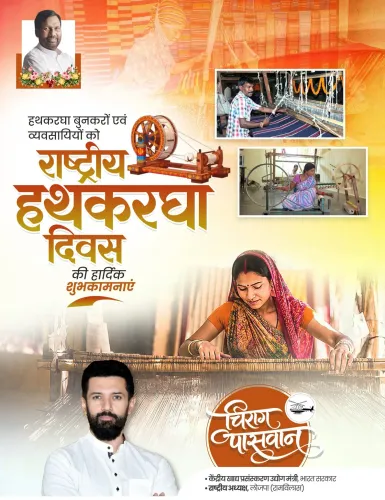
On National Handloom Day 2026, the Chief Minister's Office of Rajasthan called on citizens to adopt indigenous handloom products and strengthen the livelihoods of local weavers and artisans, invoking the spirit of the Swadeshi Movement that the day commemorates.
Key Takeaways
The Chief Minister's Office of Rajasthan posted greetings on National Handloom Day, 7 August 2026 , urging adoption of swadeshi handloom products.
National Handloom Day was instituted by the Government of India in 2015 to mark the anniversary of the Swadeshi Movement of 1905 .
The day is observed annually by the Ministry of Textiles to honour weavers and promote indigenous textiles.
Rajasthan hosts significant handloom clusters, including those producing Kota Doria and other traditional textiles.
The post frames consumer choice — buying handloom — as a direct act of empowering rural artisan livelihoods.
Every year on 7 August, India pauses to honour the hands that keep its oldest textile traditions alive — and this year, the Chief Minister's Office of Rajasthan joined the chorus with a call to action that goes beyond ceremony.
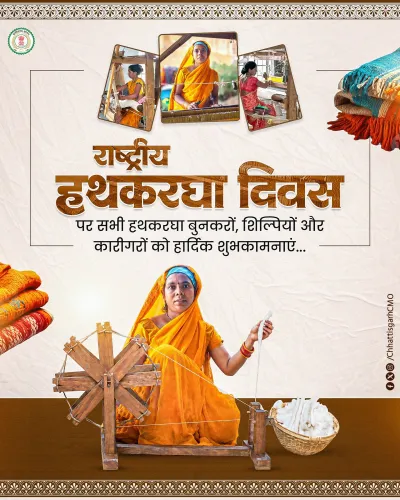
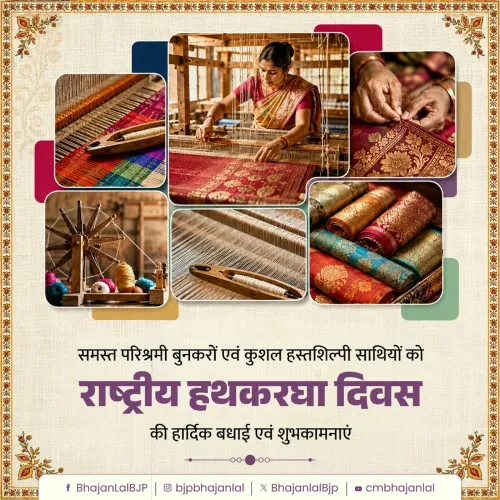
Posting on the occasion of National Handloom Day 2026, the Rajasthan CMO extended warm greetings and urged citizens to embrace indigenous handloom products — framing the choice as an act of empowerment: 'स्वदेशी हथकरघा उत्पादों को अपनाकर, स्थानीय बुनकरों एवं कारीगरों के कौशल और आजीविका को, सशक्त बनाने का संकल्प लें' ('Let us resolve to empower the skills and livelihoods of local weavers and artisans by adopting indigenous handloom products').
Why 7 August carries weight for India's weavers
National Handloom Day is not an arbitrary date. The Government of India instituted it in 2015 to mark the anniversary of the Swadeshi Movement, launched on 7 August 1905 — the mass mobilisation that made homespun cloth a symbol of self-reliance. The Ministry of Textiles has since used the occasion annually to spotlight handloom weavers as custodians of living cultural heritage, not just economic actors. The resonance is deliberate: buying handloom is framed, historically and politically, as the same instinct that once drove a nation to reject imported mill cloth.Rajasthan's weaving communities in the frame
Rajasthan is home to well-established handloom clusters whose output ranges from the delicate, translucent weave of Kota Doria to a range of traditional textiles woven across rural artisan belts. These communities sit at the intersection of cultural preservation and rural livelihood — sectors that state textile policy has repeatedly sought to support through domestic demand promotion. State-level observances like this one form part of a consistent national pattern: governments at every tier using National Handloom Day to reinforce the swadeshi message and nudge consumers toward handcrafted, locally produced textiles over powerloom or imported alternatives. The real test, as always, will come in budget allocations, weaver welfare schemes, and handloom expo calendars — the concrete machinery that turns a day's resolve into a year's livelihood.Point of View
Lending cultural legitimacy to what is essentially a rural employment argument. The real policy signal to watch is whether such ceremonial messaging is followed by concrete weaver welfare allocations or marketing infrastructure in Rajasthan's budget cycle. Without that, the resolve remains aspirational.
NationPress
21 Sept 2026
Frequently Asked Questions
What is National Handloom Day and when is it celebrated?
National Handloom Day is observed on 7 August every year. It was instituted by the Government of India in 2015 to commemorate the launch of the Swadeshi Movement on 7 August 1905 and to honour India's handloom weavers.
Why did the Rajasthan CMO post about National Handloom Day 2026?
The Chief Minister's Office of Rajasthan posted greetings on 7 August 2026 to mark National Handloom Day, calling on citizens to adopt indigenous handloom products and empower local weavers and artisans.
What handloom textiles is Rajasthan known for?
Rajasthan is known for several traditional handloom products, most notably Kota Doria , a delicate woven fabric, along with other textiles produced across the state's rural artisan clusters.
What is the connection between National Handloom Day and the Swadeshi Movement?
The date 7 August was chosen because the Swadeshi Movement was launched on that date in 1905 , when mass mobilisation made homespun cloth a symbol of self-reliance and resistance to imported goods.
How can buying handloom products help weavers in India?
Purchasing indigenous handloom products directly supports the income and skills of local weavers and artisans, helping sustain rural livelihoods and preserve traditional textile techniques that powerloom or imported alternatives would otherwise displace.