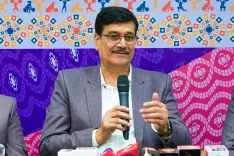
CM Bhajan Lal Sharma greets Rajasthan weavers on Handloom Day
Synopsis
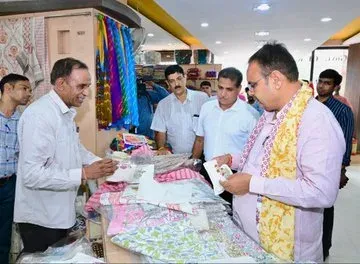
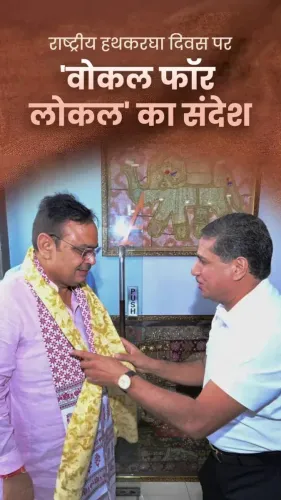
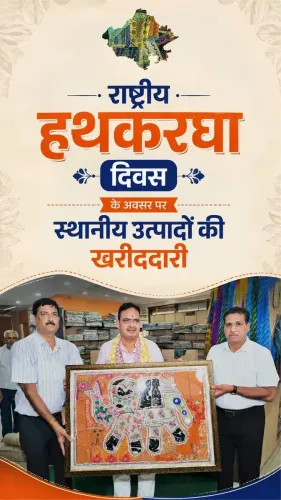
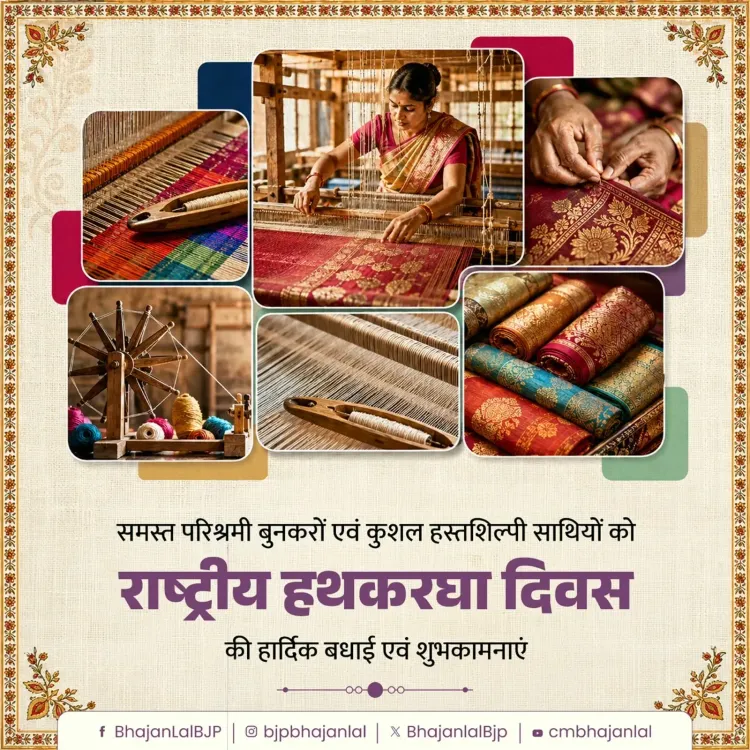
On National Handloom Day 2026, Rajasthan Chief Minister Bhajan Lal Sharma greeted weavers and artisans, reaffirming his government's commitment to empowering the state's rich handloom and handicraft sector under the 'Aapno Agrani Rajasthan' vision.
Key Takeaways
Rajasthan CM Bhajan Lal Sharma posted greetings to weavers and artisans on National Handloom Day, 7 August 2026 .
He described Rajasthan's handloom and handicraft tradition as a 'powerful identity of our cultural heritage and self-reliant economy.' The message was anchored to the state campaign #AapnoAgraniRajasthan ('Our Leading Rajasthan').
National Handloom Day has been observed on 7 August since 2015 , marking the 1905 Swadeshi Movement anniversary.
Rajasthan's craft sector includes globally recognised textiles such as Kota Doria and Bandhani .
Every year on 7 August, India pauses to honour the hands that keep its oldest craft traditions alive — and this year, Rajasthan Chief Minister Bhajan Lal Sharma used National Handloom Day 2026 to renew his government's pledge to the state's weavers and artisans.
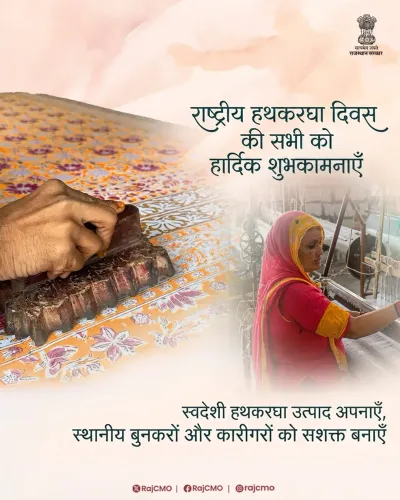
Posting in Hindi on the occasion, CM Sharma extended 'heartfelt congratulations and best wishes to all hardworking weavers and skilled handicraft artisans,' describing Rajasthan's handloom and handicraft tradition as 'a powerful identity of our cultural heritage and self-reliant economy.' The message invoked the state's signature campaign hashtag #आपणो_अग्रणी_राजस्थान ('Our Leading Rajasthan'), framing artisan empowerment as central to that vision.
A day rooted in the Swadeshi spirit
National Handloom Day has been observed on 7 August every year since 2015, a date chosen deliberately — it marks the anniversary of the launch of the Swadeshi Movement in 1905, when the call to champion Indian-made goods first echoed across the country. That historical weight gives the day a resonance well beyond a routine calendar observance: it ties contemporary craft promotion directly to the founding idea of economic self-determination.Rajasthan's craft identity — Kota Doria, Bandhani and beyond
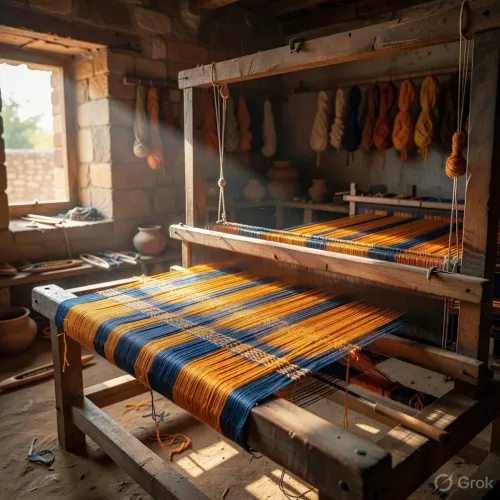
Rajasthan carries one of India's richest handloom legacies. Textiles such as Kota Doria and Bandhani have earned the state a distinct place in both domestic and export markets, while handicraft clusters across its rural and semi-urban belt sustain livelihoods for thousands of artisan families. The sector sits at the intersection of cultural preservation and rural employment — which is precisely why state governments return to it as a policy priority year after year. At the national level, programmes such as the National Handloom Development Programme and the Handloom Weavers Comprehensive Welfare Scheme have channelled central support to state-level artisan clusters through the 2010s and into the current decade. These schemes dovetail with the broader Atmanirbhar Bharat self-reliance push launched in 2020, which explicitly included traditional artisans within its economic empowerment framework. For Rajasthan's weavers, the real test of such pledges will come in budget allocations and participation in national handloom expos — moments where political commitment translates into rupees and market access.Point of View
But it signals the BJP-led Rajasthan government's intent to keep artisan welfare visible within its 'Aapno Agrani Rajasthan' brand. Linking local craft traditions to Atmanirbhar Bharat rhetoric is a well-worn but politically effective move — it simultaneously appeals to rural artisan communities and aligns state messaging with central government priorities. The real measure of commitment will be whether upcoming state budgets translate these pledges into expanded cluster funding or new market-access schemes for weavers. Until then, the statement reads as political affirmation rather than policy announcement.
NationPress
21 Sept 2026
Frequently Asked Questions
When is National Handloom Day celebrated in India?
National Handloom Day is celebrated every year on 7 August . It was instituted in 2015 to honour India's handloom weavers and to mark the anniversary of the launch of the Swadeshi Movement on 7 August 1905.
What did Rajasthan CM Bhajan Lal Sharma say on National Handloom Day 2026?
CM Bhajan Lal Sharma extended greetings to all weavers and artisans, called Rajasthan's handloom tradition a 'powerful identity of our cultural heritage and self-reliant economy,' and reaffirmed his government's commitment to empowering local craftspeople under the 'Aapno Agrani Rajasthan' vision.
What are the famous handloom textiles of Rajasthan?
Rajasthan is known for several distinctive handloom and craft traditions, most notably Kota Doria — a fine cotton-silk weave from the Kota region — and Bandhani , the traditional tie-dye textile associated with regions such as Jaipur and Jodhpur.
What is the Atmanirbhar Bharat scheme and how does it relate to weavers?
Atmanirbhar Bharat is a national self-reliance initiative launched in 2020 that includes support for traditional artisans and local manufacturing. It provides a broader policy framework within which state-level handloom and handicraft promotion programmes operate.
Who is Bhajan Lal Sharma?
Bhajan Lal Sharma is a BJP leader who has served as Chief Minister of Rajasthan since December 2023 , when the party returned to power in the state.