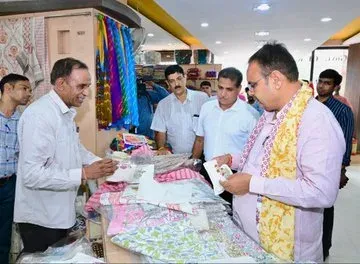
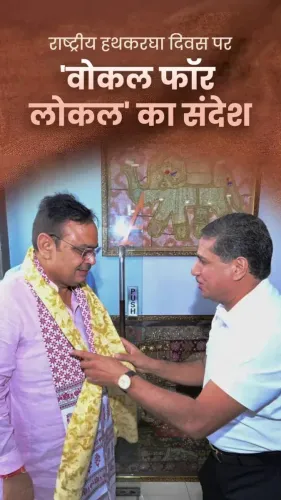
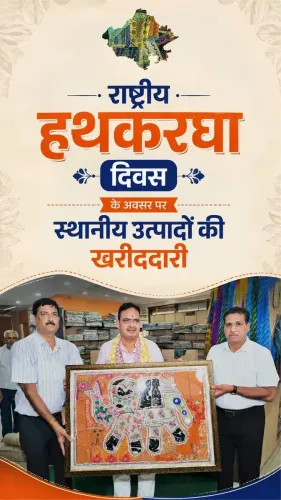
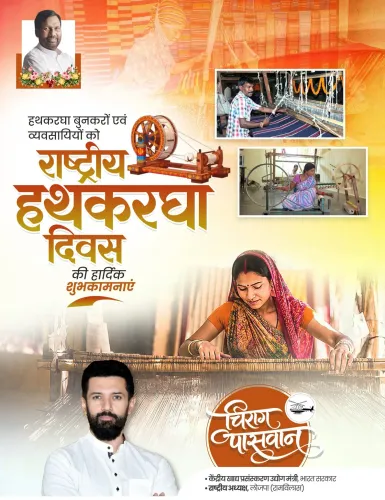
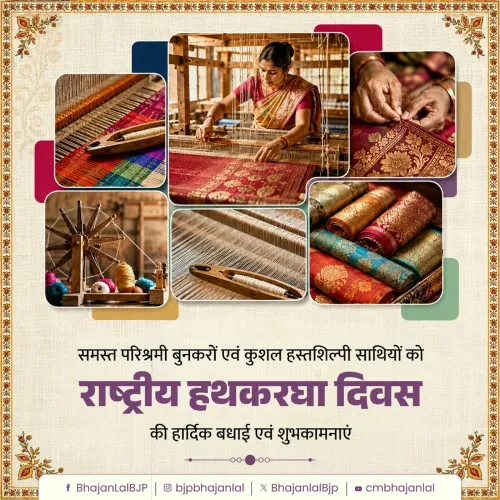
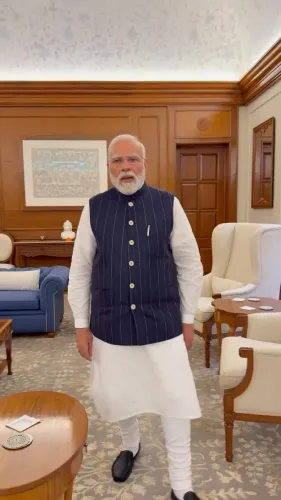
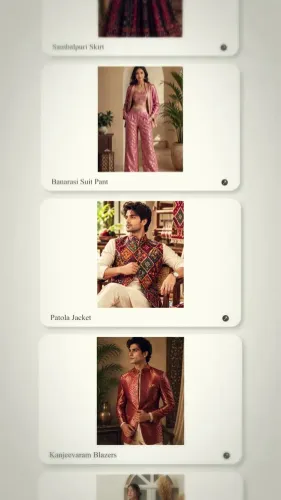
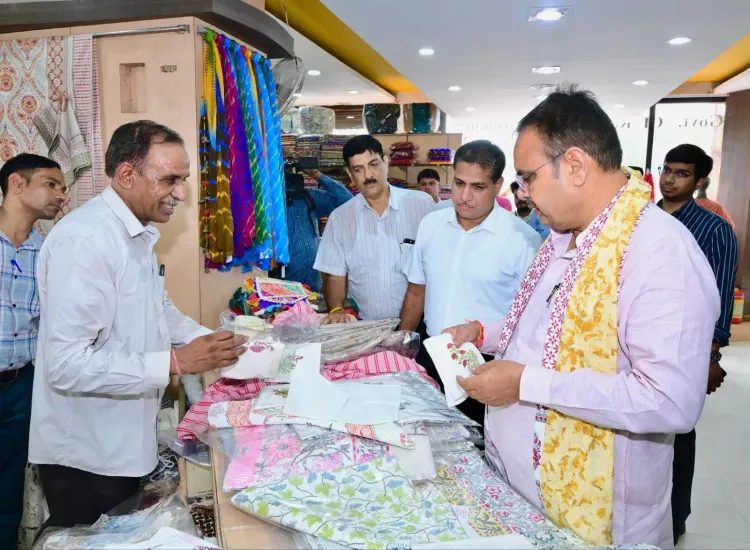
CM Bhajan Lal shops khadi at Jaipur's Handloom House on National Handloom Day
Synopsis
On National Handloom Day 2026, Rajasthan CM Bhajan Lal Sharma bought khadi products at Jaipur's Rajasthan Handloom House, calling handloom an inseparable part of India's heritage and urging citizens to go 'Vocal for Local' in support of weavers and artisans.
Key Takeaways
Rajasthan CM Bhajan Lal Sharma purchased khadi products at the Rajasthan Handloom House, Ajmeri Gate, Jaipur on 7 August 2026 .
National Handloom Day is observed every 7 August since 2015 to mark the 1905 Swadeshi Movement .
Sharma invoked PM Modi's 'Vocal for Local' campaign and the Atmanirbhar Bharat initiative, both central to BJP's economic messaging since 2020.
He called handloom 'an inseparable part of our glorious heritage' and emphasised the duty to pass it to the next generation.
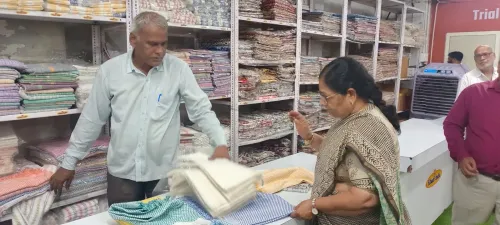
Rajasthan's handloom and handicraft sector supports a large base of weavers and artisans across clusters statewide.
On National Handloom Day, 7 August 2026, Rajasthan Chief Minister Bhajan Lal Sharma walked into the Rajasthan Handloom House at Ajmeri Gate, Jaipur, and bought khadi products — a deliberate, visible act of solidarity with the state's weavers and artisans.
Sharing the moment on X, the Chief Minister called Rajasthan's handloom tradition a living testament to generations of skill and creativity: 'हथकरघा हमारी गौरवशाली विरासत का अभिन्न हिस्सा है' — 'Handloom is an inseparable part of our glorious heritage, and it is our duty to protect, promote, and pass it on to the next generation.'
What National Handloom Day marks — and why 7 August
National Handloom Day has been observed every 7 August since 2015, when the Ministry of Textiles chose the date to commemorate the Swadeshi Movement of 1905 — the mass pledge to reject foreign cloth and champion Indian craftsmanship. The choice was deliberate: the same spirit that once drove a freedom movement now underpins a push for economic self-reliance.
Vocal for Local: the campaign behind the visit
CM Sharma explicitly invoked Prime Minister Narendra Modi's 'Vocal for Local' call, which gained momentum from 2020 onward as part of the Atmanirbhar Bharat initiative launched that year. The campaign asks citizens — and leaders — to actively choose indigenous goods over imports, with handloom and khadi products positioned as flagship symbols of that choice. By making his purchase public, Sharma translated the slogan into a photo-op with policy weight behind it.
Rajasthan's weaving clusters — from the block-print artisans of Sanganer to the tie-dye craftspeople of Jodhpur — feed a handicraft economy that supports hundreds of thousands of households across the state. A Chief Minister's endorsement, however ceremonial, keeps that ecosystem visible at the policy level.
The kicker: when a state's top elected official queues up to buy khadi, the message to the market is simple — the loom is not a relic. It is a running engine, and the government intends to keep it that way.
Point of View
Tying Rajasthan's artisan economy to the Atmanirbhar Bharat narrative. For weavers, the symbolism matters less than what follows in budget allocations and procurement policy — the real test of whether the visit is a one-day gesture or the start of a sustained policy push.
NationPress
22 Sept 2026
Frequently Asked Questions
When is National Handloom Day celebrated in India?
National Handloom Day is celebrated every year on 7 August . It was first observed in 2015 by the Ministry of Textiles to commemorate the Swadeshi Movement of 1905 and honour India's weavers.
Why did CM Bhajan Lal Sharma visit Rajasthan Handloom House?
On National Handloom Day, 7 August 2026 , CM Sharma visited the Rajasthan Handloom House at Ajmeri Gate, Jaipur to purchase khadi products and publicly support the state's weavers and artisans.
What is the 'Vocal for Local' campaign?
'Vocal for Local' is a campaign championed by Prime Minister Narendra Modi from 2020 onward under the Atmanirbhar Bharat initiative, urging Indians to prefer and promote indigenous goods, including handloom and khadi products.
What is Rajasthan Handloom House?
Rajasthan Handloom House is a state-run retail outlet in Jaipur that showcases and sells traditional Rajasthani handloom textiles and khadi products, supporting local weavers and artisans.
What is Atmanirbhar Bharat and how does it relate to handloom?
Atmanirbhar Bharat — meaning 'Self-Reliant India' — is an initiative launched by the central government in 2020 to boost indigenous manufacturing. Handloom and khadi are promoted as flagship symbols of this self-reliance drive.