CM Yogi Backs UP Textile Push With Scholarships, PM MITRA Park
Synopsis
On National Handloom Day 2026, CM Yogi Adityanath announced scholarships for ~450 Varanasi TFC students, a 1,000-acre PM MITRA Park in Lucknow, and five Sant Kabir Textile Parks across Uttar Pradesh to modernise the state's textile sector.
Key Takeaways
Approximately 450 students at Varanasi's Trade Facilitation Centre received scholarships in the past year for training in design, technology, and packaging.
A PM MITRA Park spanning 1,000 acres is being established in Lucknow to strengthen UP's textile industry under the Union government's 2021 scheme.
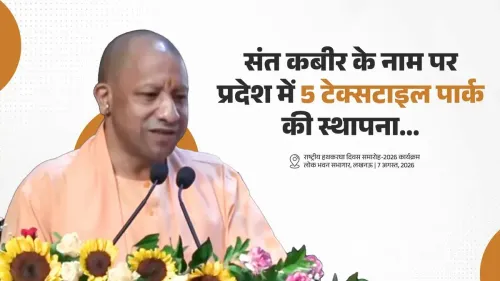
Five textile parks named after Sant Kabir are being set up across Uttar Pradesh to bring infrastructure closer to existing weaver clusters.
The announcements were made on National Handloom Day, 7 August , which marks the legacy of the 1905 Swadeshi Movement.
UP's strategy combines a centralised mega-park model with distributed state-funded parks and skill scholarships to modernise traditional handloom clusters.
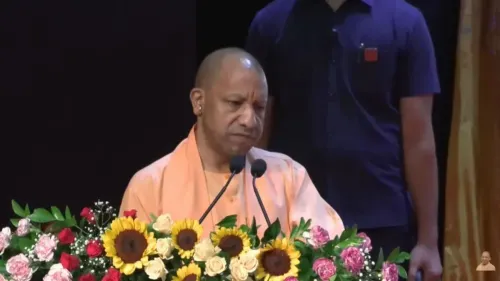
On National Handloom Day, 7 August 2026, Chief Minister Yogi Adityanath laid out Uttar Pradesh's most ambitious textile infrastructure roadmap yet — scholarships flowing to weavers' children in Varanasi, a thousand-acre park taking shape in Lucknow, and five new textile parks carrying the name of a saint who once spun thread into poetry.
Varanasi's TFC: Skill Hub at the Heart of the Loom Belt
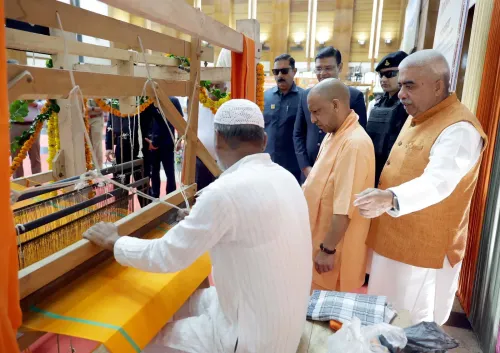
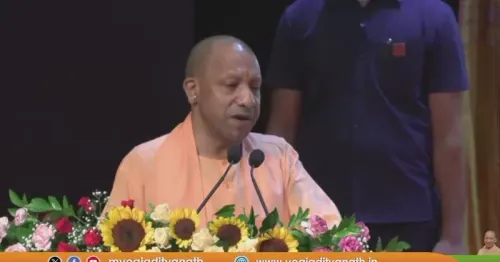
Speaking on the occasion, CM Yogi said that approximately 450 students linked to the Trade Facilitation Centre (TFC) in Varanasi received scholarships in the past year. The TFC is not merely a training hall — it plugs students directly into disciplines that the handloom trade has historically lacked: design, technology, and packaging. For a sector where artisans have long excelled at craft but struggled at commerce, that combination is deliberate.
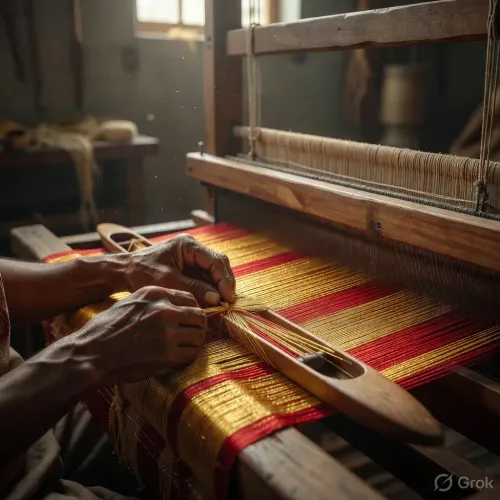
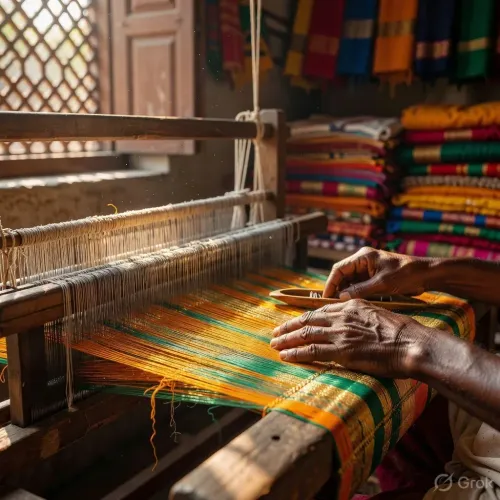
Varanasi's handloom identity runs centuries deep, but the cluster has faced sustained pressure from power-loom competition and shrinking urban markets. The TFC scholarships are the state's bet that equipping the next generation with design and branding skills can shift that equation.
PM MITRA Park: 1,000 Acres of Textile Ambition in Lucknow
The larger infrastructure anchor is the PM MITRA Park — short for Mega Integrated Textile Region and Apparel — being established on 1,000 acres in Lucknow. The Union government announced the PM MITRA scheme in 2021, selecting seven states for integrated textile parks that bundle spinning, weaving, processing, dyeing, and garmenting under one roof. Uttar Pradesh secured one of those slots, and the Lucknow park is now in development.
The logic is scale. A fully operational PM MITRA park is designed to attract anchor investors, generate downstream employment in the tens of thousands, and create a supply chain dense enough to compete with established textile corridors in Gujarat and Tamil Nadu. For UP, it is also a statement: the state that produces some of India's most prized handloom fabric — Banarasi silk, Lucknowi chikankari — wants industrial muscle to match its craft legacy.
Five Sant Kabir Textile Parks: A Saint's Name on a Modern Mission
Running parallel is a distinctly UP-flavoured initiative: five textile parks named after Sant Kabir, the 15th-century weaver-poet from Varanasi whose verses on equality and labour still resonate in the region's loom communities. The choice of name is not incidental — Kabir was himself a weaver, and invoking him ties the industrial project to a cultural identity that artisans across eastern UP recognise.
Details on timelines and locations for the five parks remain in the pipeline, but the government has signalled that work is actively advancing. Together with the PM MITRA Park, they represent a two-track approach: one mega-integrated hub for industrial scale, and five distributed parks to bring infrastructure closer to existing weaver clusters.
National Handloom Day and the Politics of Timing
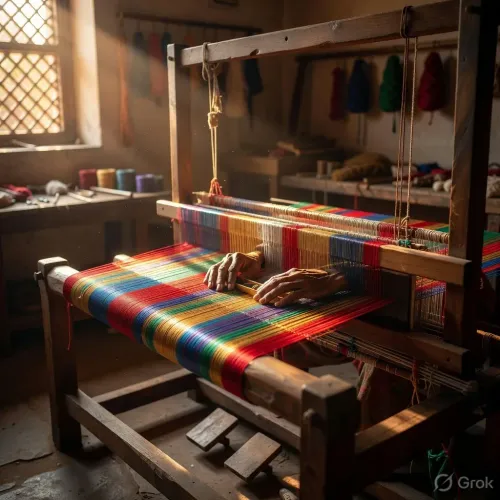
National Handloom Day is observed every 7 August to honour the 1905 Swadeshi Movement, when the call to buy Indian cloth became a political act. Announcing textile investments on this date is standard political choreography — but the specifics announced today go beyond symbolism. Scholarships, a central-scheme park, and a state-funded park network together constitute a layered policy stack, not a single headline gesture.
The real test will come in construction timelines, land acquisition completions, and whether TFC scholarship holders translate training into livelihoods. Uttar Pradesh's textile ambitions are now on record — the looms are watching.
Point of View
Who are a significant electoral constituency. The real policy test is whether these announcements translate into operational infrastructure; UP has a history of ambitious scheme announcements that stall at land acquisition and construction phases. If the Lucknow PM MITRA Park delivers first-phase operations on schedule, it could reframe UP as a serious rival to India's established textile manufacturing corridors.
NationPress
21 Sept 2026
Frequently Asked Questions
What is the PM MITRA Park being set up in Lucknow?
PM MITRA stands for Mega Integrated Textile Region and Apparel. The Union government launched the scheme in 2021 to build integrated textile parks in seven states; Uttar Pradesh is developing its park on 1,000 acres in Lucknow to attract investment and generate large-scale textile employment.
What is the Trade Facilitation Centre in Varanasi?
The Trade Facilitation Centre (TFC) in Varanasi is a government facility that provides training and scholarships to students in areas like design, technology, and packaging, specifically to support the local handloom and textile sector.
Why are the new UP textile parks named after Sant Kabir?
Sant Kabir was a 15th-century weaver-poet from Varanasi whose work is deeply rooted in the culture of UP's loom communities. Naming the five textile parks after him connects the industrial initiative to a shared cultural identity among the region's artisans.
When is National Handloom Day and why is it celebrated?
National Handloom Day is observed every year on 7 August to commemorate the 1905 Swadeshi Movement, when the call to use Indian-made cloth became a symbol of resistance and national identity.
How many students got scholarships from the Varanasi TFC?
According to CM Yogi Adityanath's statement on 7 August 2026, approximately 450 students linked to the Varanasi Trade Facilitation Centre received scholarships in the past year.