CM Yogi Honours Weavers on National Handloom Day in Lucknow
Synopsis
On National Handloom Day, CM Yogi Adityanath honoured weavers in Lucknow with the Sant Kabir State Level Handloom Award, distributed scheme cheques under two UP welfare programmes, and exchanged MoUs with major handloom buyers to strengthen market linkages for artisans.
Key Takeaways
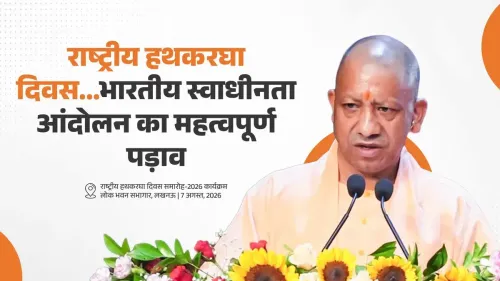
National Handloom Day is observed on 7 August every year since 2015 to honour weavers and India's Swadeshi textile heritage.
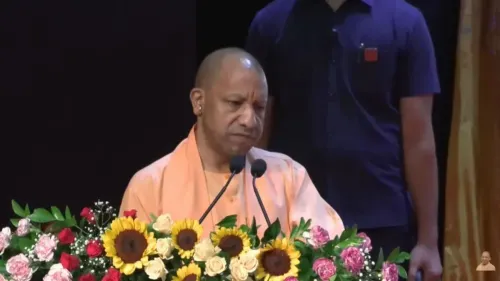
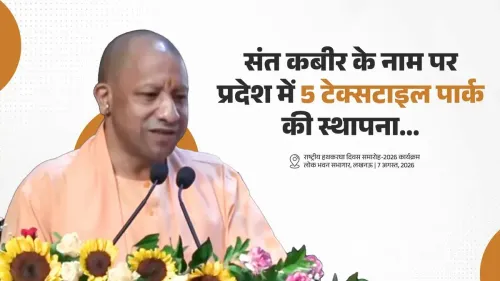
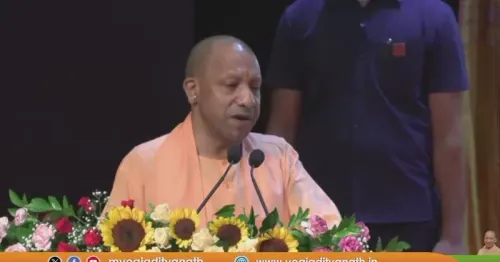
CM Yogi presented the Sant Kabir State Level Handloom Award to outstanding weavers and artisans at a Lucknow ceremony on 7 August 2026 .
Beneficiaries of the Mukhyamantri Handloom and Powerloom Industry Development Scheme and the Jhalakari Bai Kori Handloom and Powerloom Development Scheme received cheques at the event.
MoUs were signed with major buyers of handloom products to create direct market linkages for UP artisans.
CM Yogi framed artisan welfare as the top priority of the 'double engine government' , signalling coordination between state and central schemes.
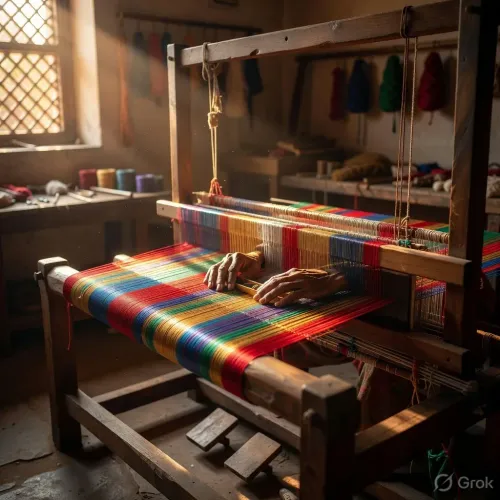
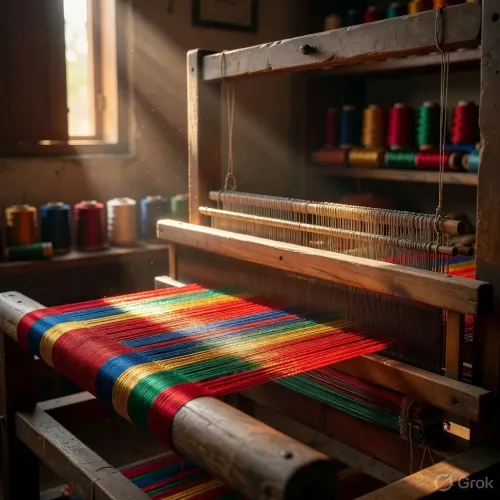
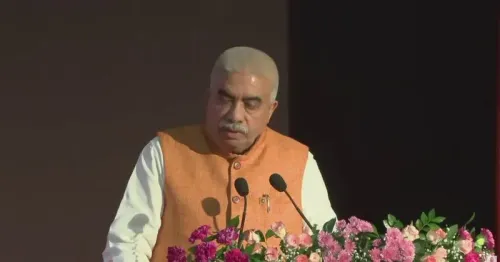
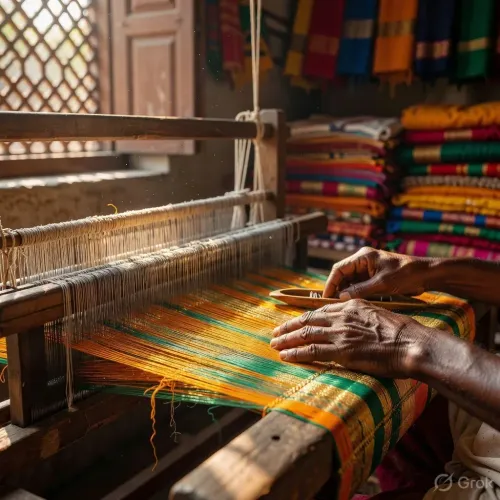
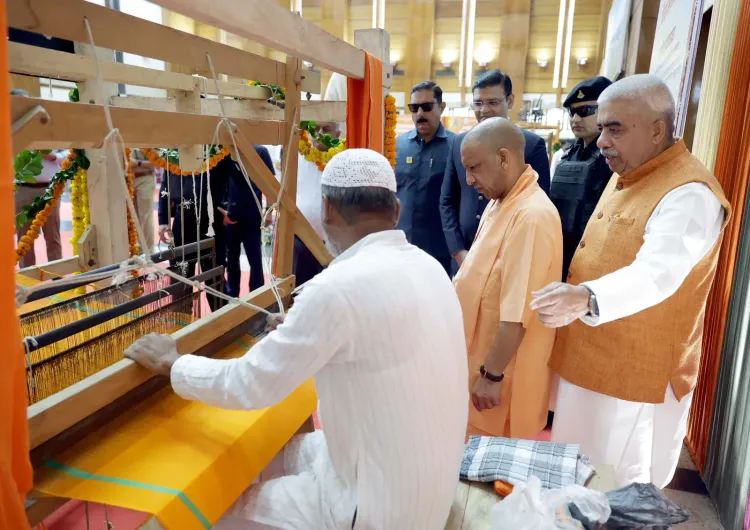
On a day India sets aside every year to celebrate the loom and the hand that works it, Uttar Pradesh Chief Minister Yogi Adityanath stood among the artisans in Lucknow on 7 August 2026 and made the state's priorities concrete — awards, cheques, and signed agreements on the same stage.
The occasion was National Handloom Day, observed annually on 7 August since 2015 to honour the weaving community and mark India's Swadeshi heritage. At a state ceremony in Lucknow, CM Yogi presented the Sant Kabir State Level Handloom Award to weavers and artisans who demonstrated outstanding craft. The award is named after the 15th-century poet-saint Kabir, himself from the weaver community — a deliberate choice that fuses cultural memory with institutional recognition.
Cheques and MoUs: Welfare Delivered on Stage
Beyond the awards, the ceremony served as a live disbursement event. Beneficiaries of two state schemes — the Mukhyamantri Handloom and Powerloom Industry Development Scheme and the Jhalakari Bai Kori Handloom and Powerloom Development Scheme — received cheques directly at the function. The second scheme carries the name of Jhalkari Bai, a warrior of the 1857 revolt from the Kori weaver community, anchoring welfare delivery in the community's own historical identity.
The event also saw the exchange of Memoranda of Understanding with major buyers of handloom products — a market-linkage step aimed at connecting artisans directly to commercial demand rather than leaving them dependent on intermediaries.
The 'Double Engine' Frame and What It Signals
CM Yogi described the dignity, self-respect, and prosperity of artisans as the top priority of the 'double engine sarkar' — the BJP's shorthand for aligned state and central governments working in tandem. The framing is deliberate: it positions welfare delivery for traditional artisans not as charity but as a coordinated economic strategy, combining state-specific schemes with the national handloom policy architecture built since 2015.
Uttar Pradesh has one of India's largest concentrations of handloom and powerloom clusters — from Varanasi's Banarasi silk to the cotton weaves of Bhadohi — and the political economy of supporting these communities cuts across caste, region, and economic strata. Keeping these artisans inside the formal support system, with market access intact, is as much economic policy as it is electoral arithmetic.
The MoUs signed on 7 August will be the real test: sustained off-take agreements, not one-day ceremonies, determine whether weavers see income stability through the year ahead.
Point of View
Cultural symbolism — the names of Kabir and Jhalkari Bai — and market-linkage agreements in a single high-visibility event. For UP's sprawling weaver communities, the schemes represent real income support, but the MoUs are the policy variable worth tracking; their conversion into sustained commercial orders will determine whether this year's ceremony translates into durable livelihoods. The 'double engine' framing also reinforces the BJP's pre-election narrative that state-centre alignment delivers faster welfare outcomes than opposition-ruled states can manage. Uttar Pradesh's handloom sector, with clusters like Varanasi at its heart, remains a politically and economically significant constituency that no government can afford to neglect.
NationPress
21 Sept 2026
Frequently Asked Questions
What is National Handloom Day and when is it observed?
National Handloom Day is observed on 7 August every year. It was instituted by the Government of India in 2015 to honour handloom weavers and promote India's textile heritage, coinciding with the anniversary of the Swadeshi movement.
What is the Sant Kabir State Level Handloom Award?
The Sant Kabir State Level Handloom Award is a state government recognition given by Uttar Pradesh to weavers and artisans for outstanding work in the handloom sector. It is named after the 15th-century poet-saint Kabir , who belonged to the weaver community.
What is the Jhalakari Bai Kori Handloom and Powerloom Development Scheme?
It is a Uttar Pradesh welfare scheme named after Jhalkari Bai , a warrior of the 1857 revolt from the Kori weaver community. The scheme targets the development of handloom and powerloom sectors and provides financial support to beneficiary artisans.
What schemes did CM Yogi distribute cheques for on National Handloom Day 2026?
CM Yogi distributed cheques to beneficiaries of the Mukhyamantri Handloom and Powerloom Industry Development Scheme and the Jhalakari Bai Kori Handloom and Powerloom Development Scheme at the Lucknow ceremony on 7 August 2026 .
What were the MoUs signed at the UP Handloom Day event about?
MoUs were exchanged with major buyers of handloom products to create direct market linkages for UP artisans, aiming to connect weavers to commercial demand and reduce dependence on intermediaries.