CM Yogi Reviews UP Handloom and Khadi Departments in Lucknow
Synopsis
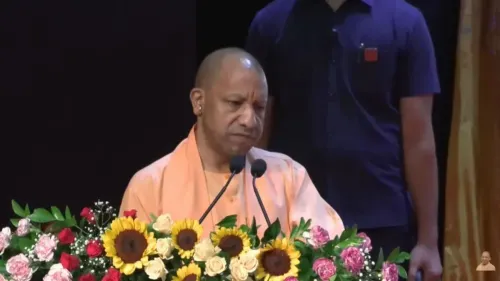
Chief Minister Yogi Adityanath reviewed the Handloom, Textiles, and Khadi and Village Industries departments in Lucknow on 8 June 2026, directing officials to align training programmes with actual industry needs as UP consolidates its position among India's leading textile and apparel states.
Key Takeaways
CM Yogi Adityanath chaired a review meeting of the Department of Handloom and Textiles and the Khadi and Village Industries Department in Lucknow on 8 June 2026 .
The Chief Minister stated that Uttar Pradesh is strengthening its standing among India's leading states in textile investment, production, and employment.
He directed that industries must receive timely access to trained and skilled human resources .
Training programmes are to be made more employment-oriented by assessing the actual needs of industries.
The review builds on existing frameworks including the UP Textile Policy 2017 , the Skill India Mission , and the One District One Product scheme.
Key beneficiaries include handloom weavers , textile MSMEs , rural artisans , and youth trainees across the state.
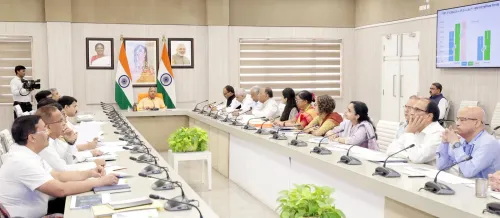
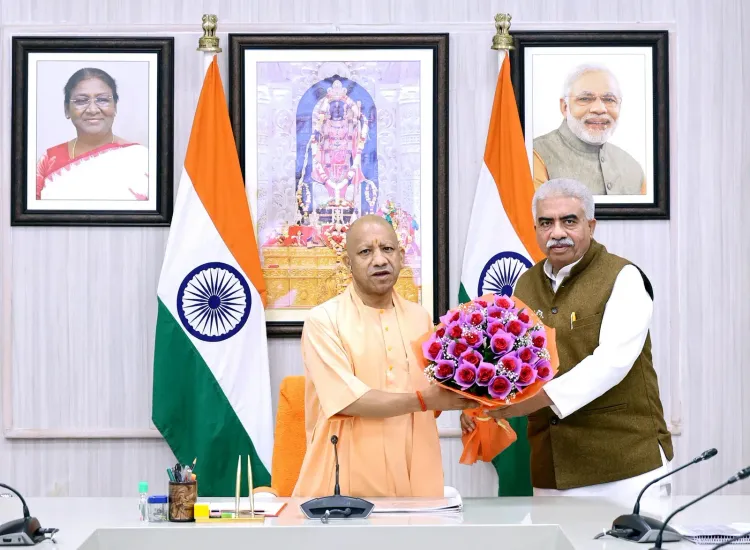
The Chief Minister's Office of Uttar Pradesh announced on Monday, 8 June 2026, that Chief Minister Yogi Adityanath chaired a review meeting in Lucknow to assess the functioning of the Department of Handloom and Textiles and the Khadi and Village Industries Department.
What the Chief Minister Said
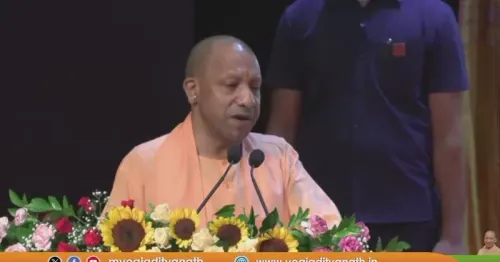
Addressing officials at the review, CM Yogi Adityanath stated that Uttar Pradesh is strengthening its position among the country's leading states in the textile and apparel sector from the standpoint of investment, production, and employment. In Hindi, he said: 'उत्तर प्रदेश वस्त्र एवं परिधान क्षेत्र में निवेश, उत्पादन और रोजगार की दृष्टि से देश के अग्रणी राज्यों में अपनी पहचान मजबूत कर रहा है' ['Uttar Pradesh is consolidating its identity among the leading states of the country in terms of investment, production and employment in the textile and apparel sector']. He directed that industries must be ensured timely access to trained and skilled human resources, and that training programmes be made more useful and employment-oriented by assessing the actual needs of industries.
Context
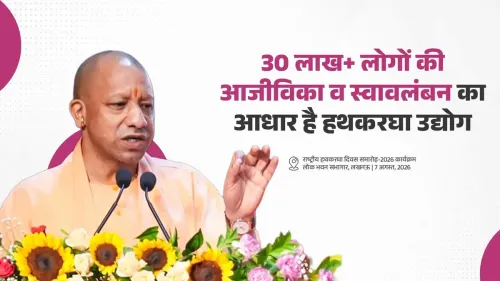
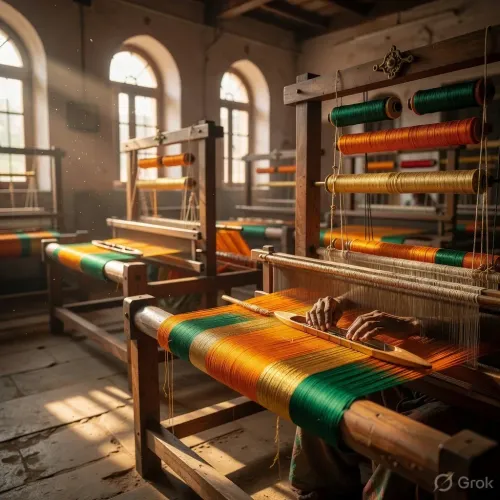
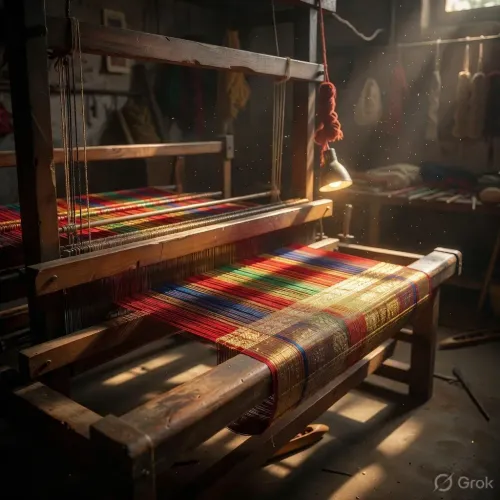
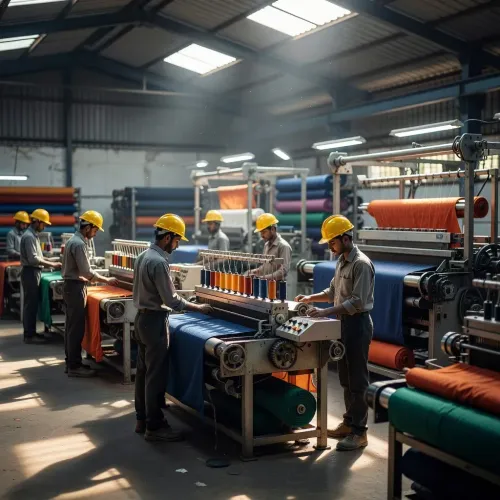
Uttar Pradesh has long been home to significant textile clusters, with Varanasi known for its silk and brocade weaving, Kanpur for leather and garment manufacturing, and Lucknow for its distinctive chikankari embroidery. The state's handloom and khadi sectors employ a large number of weavers, rural artisans, and micro-enterprise workers, making skill alignment a recurring administrative priority. Review meetings of this kind form part of a regular practice to ensure departmental programmes remain responsive to ground-level industrial demand.
Policy Backdrop
The Uttar Pradesh Textile Policy 2017 laid the groundwork for attracting large-scale investment and expanding garment manufacturing capacity across the state. The national Skill India Mission, launched in 2015, provided an overarching framework for aligning vocational training with industry requirements, including the textiles sector. The state's One District One Product (ODOP) scheme, introduced in 2018, has further spotlighted district-specific textile and handicraft products, creating additional demand for specialised, industry-ready workers. The National Handloom Development Programme has provided sustained support to weavers through central and state interventions for several decades.
Stakeholders and Impact
The directives from the review meeting are most immediately relevant to handloom weavers, textile MSMEs, rural artisans, and youth trainees enrolled in state-run skill programmes. A closer alignment between training curricula and actual industry requirements could improve placement rates and reduce the skills mismatch that has historically limited productivity gains in the sector. Both the Department of Handloom and Textiles and the Khadi and Village Industries Board are expected to translate the Chief Minister's guidance into updated training modules and outreach programmes.
What's Next
The immediate focus will be on whether the two departments roll out revised, industry-linked training programmes in response to the Chief Minister's directions. Observers will also watch for any announcements related to new textile parks, cluster development proposals, or skill-partnership agreements with private industry players in forthcoming state budget or policy updates. The review signals continued political attention to Uttar Pradesh's ambition to be a nationally dominant textile manufacturing and employment hub.
Point of View
Leveraging both traditional handloom strengths and modern garmenting capacity. By explicitly directing that training programmes be anchored to industry demand rather than administrative targets, the Chief Minister is signalling a shift toward outcome-based skill development — a theme consistent with the broader national push under the Skill India framework. The dual focus on handloom and khadi alongside modern apparel investment is politically significant, as it allows the government to appeal simultaneously to rural artisan communities and urban industrial investors. Whether the two departments can operationalise these directions into measurable employment outcomes will be the real test of this administrative exercise.
NationPress
19 Sept 2026
Frequently Asked Questions
What did CM Yogi Adityanath say at the UP handloom and textile review meeting?
CM Yogi Adityanath said that Uttar Pradesh is consolidating its position among India's leading states in textile investment, production, and employment, and directed officials to ensure industries receive trained, skilled workers by making training programmes more employment-oriented and aligned with actual industry needs.
Which departments were reviewed at the Lucknow meeting on 8 June 2026?
The review covered the Department of Handloom and Textiles and the Khadi and Village Industries Department of the Government of Uttar Pradesh.
What is the One District One Product scheme in UP textiles?
The One District One Product (ODOP) scheme, launched in 2018 , promotes district-specific products including textiles and handicrafts across Uttar Pradesh, helping artisans and small businesses access markets and government support.
How important is the textile sector to Uttar Pradesh's economy?
Uttar Pradesh has major textile clusters in Varanasi (silk and brocade), Kanpur (garments), and Lucknow (chikankari embroidery), and the sector employs large numbers of weavers, rural artisans, and MSME workers, making it a key driver of employment in the state.
What is the UP Textile Policy 2017?
The Uttar Pradesh Textile Policy 2017 was introduced to attract large-scale investment and expand garment manufacturing capacity in the state, forming the policy foundation for subsequent skill and industrial development initiatives in the sector.